

Bazaar Arabia Goes Behind The Scenes: The Making Of An Iconic Prada Dress
In typical Prada fashion, the journey of this take on the 1950s frock began life not as a mere design, but an interrogation of femininity itself. Here’s how it was made; from first sketch to final stitch
Breathing new life into the iconic silhouette of the 1950s, Prada’s elegant slate-gray Shetland wool dress encapsulates the house’s signature contradictions. Refined yet raw, its sculptural cut captures the classic proportions: a shaped bust, a cinched waist, and softly contoured hips – but with an off-kilter approach.
Craft is Key
The dress comprises over 24 painstaking hours of craftsmanship, of which 10 are dedicated to assembly, while roughly three are reserved for the artisanal, manual distressing.
Pattern Development
The journey begins with designing the blueprint – defining the lines and volumes that will give the dress its structure. Multiple prototypes are tested, balancing fabric weight and shape. As Prada put it, “Proportions are altered, adjusting the behaviour of clothes and the rapport between body and dress.”
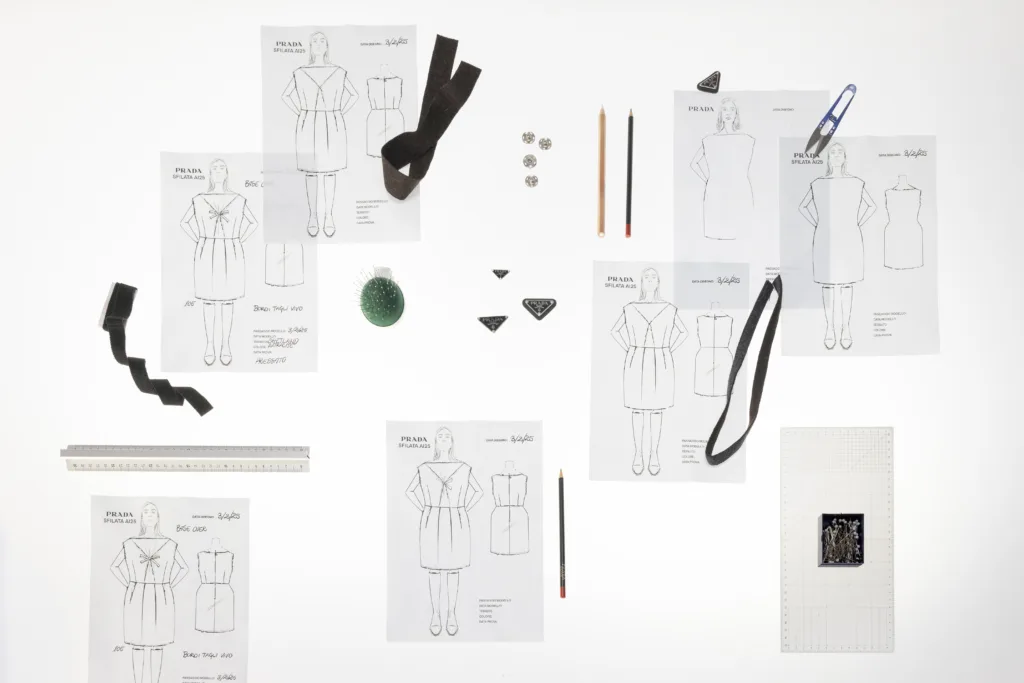
Fusing Foundations
Bringing together two masterful crafts: pattern making and tailoring, the dress’ creation combines precise techniques with creative intuition.

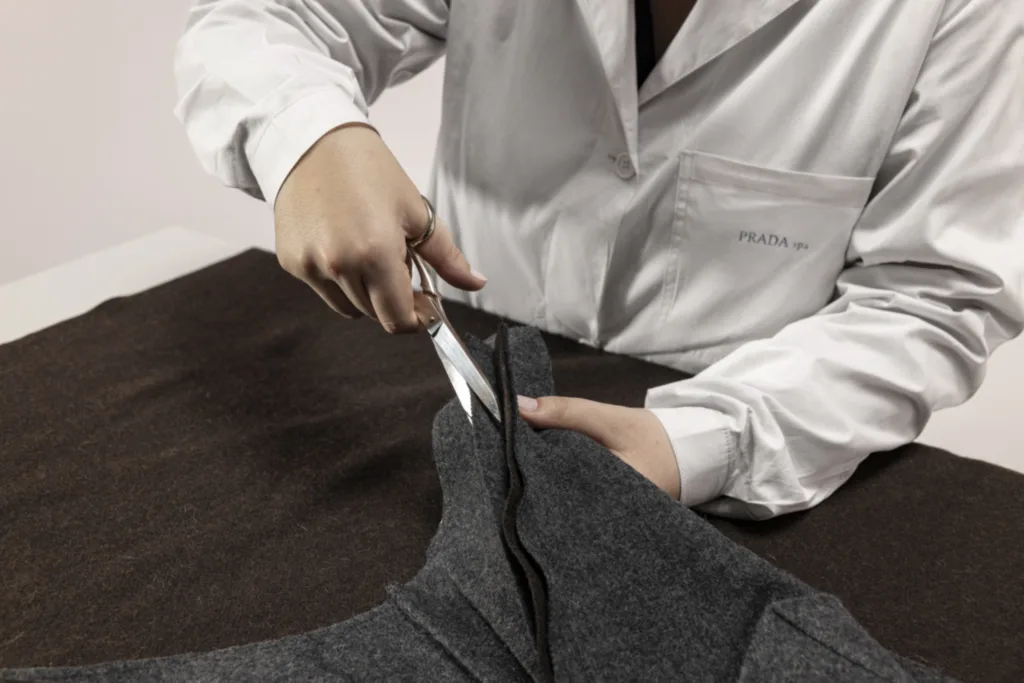
Precision Cutting
The fabric is cut, focusing on dart placements and pleats that flow across the bodice and skirt. These pleats aren’t just stitched; they’re layered with contrasting double inserts, raw-edged and finished with zig-zag stitching, creating depth, texture and deliberate imperfections.
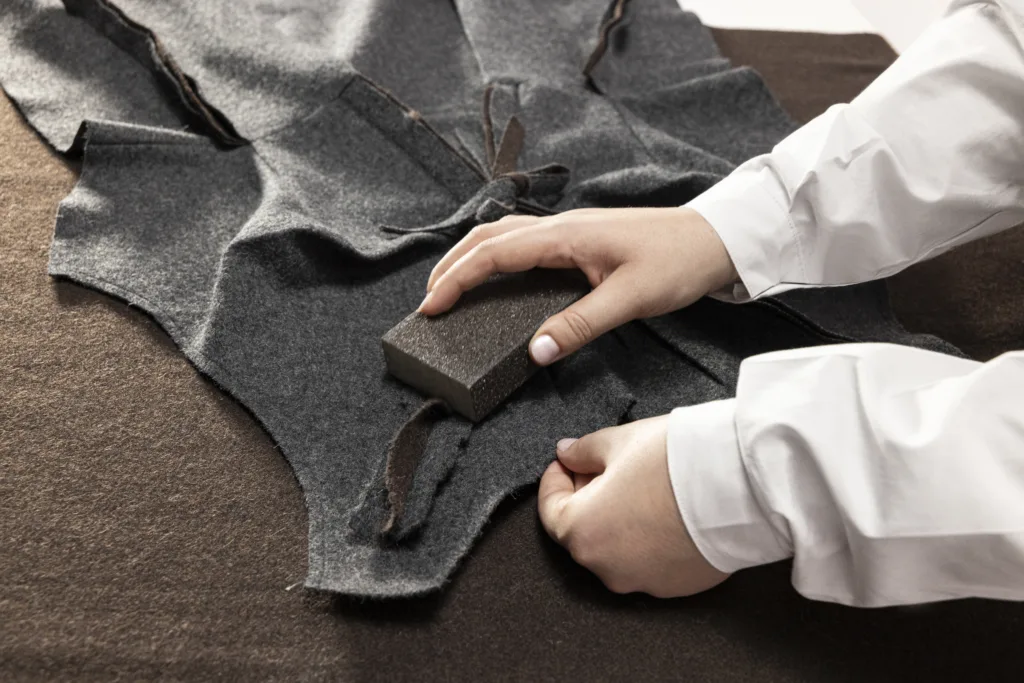
Handcrafting Crests
The crests are then cut individually by hand. Each is subtly distressed using an unconventional savage technique: irregular fraying with scissors, then enhanced with an abrasive brush. The result? A tactile surface with a hand-scratched effect, feeding into the idea of questioning “our collective perception of… notions of beauty, [and] about how those perceptions can constantly change.
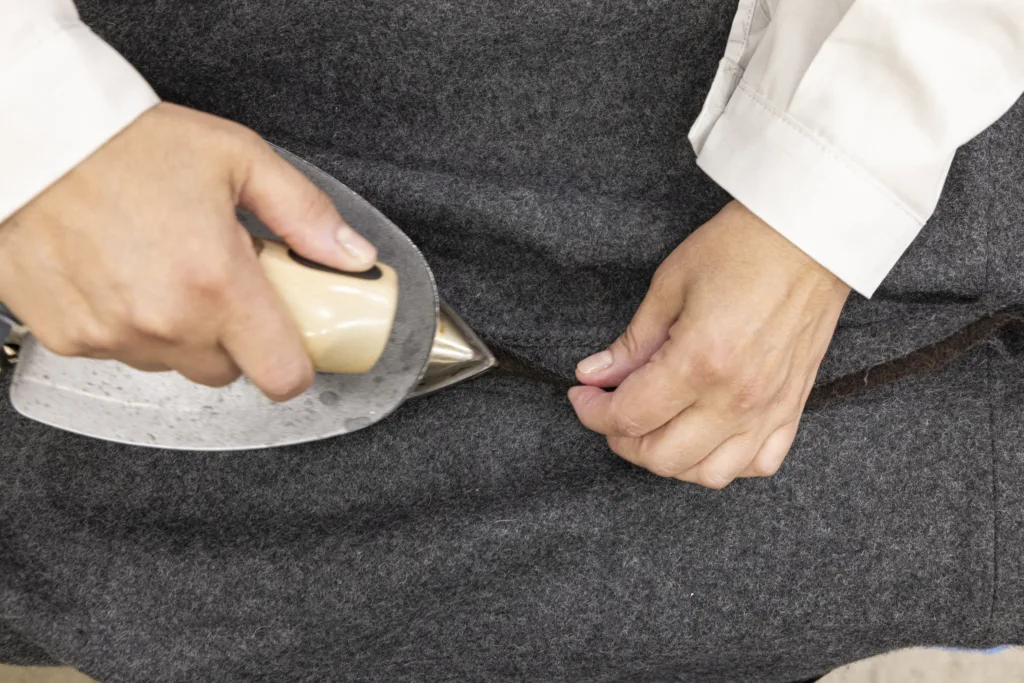
Meticulous Pressing
A cornerstone of the Prada DNA, pressing is far more than ironing; it’s more the precise act of shaping and finalising each piece. Every curve and pleat is carefully moulded with millimetre precision, in this case, bringing in fullness at the hips and setting the dress’ movement; a final flourish that elevates the entire design.
Finishing Touch
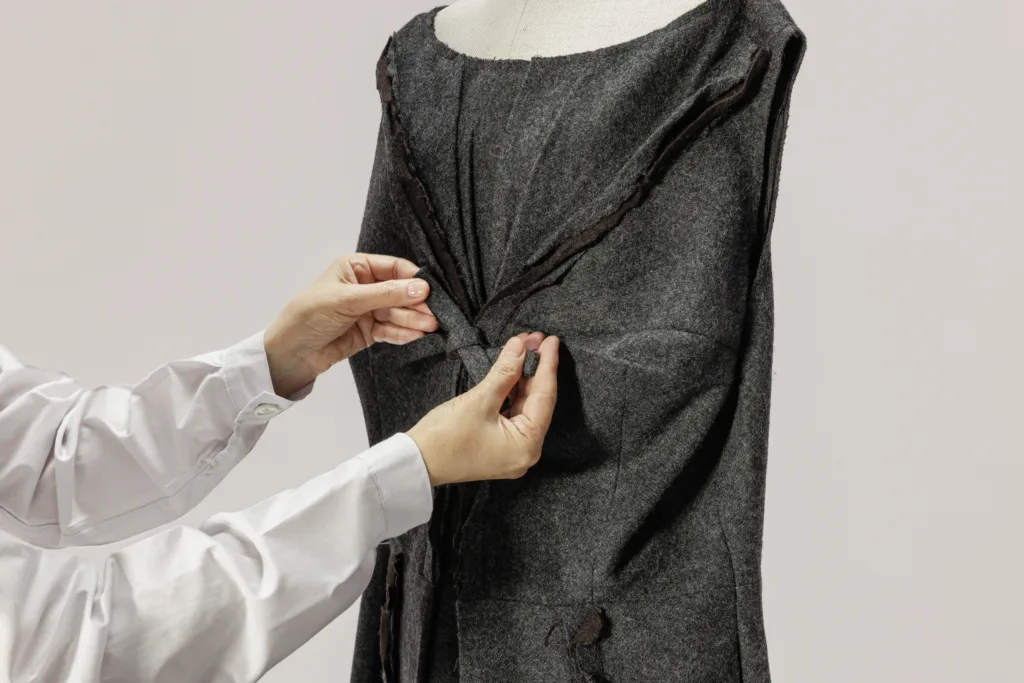
Adding charm, two raw-edged buttonholes at the front hold a two-toned ribbon cut from the same fabric and hand-tied into a delicate bow.
Images and Film: Supplied
From Harper’s Bazaar Arabia September 2025 Issue.