
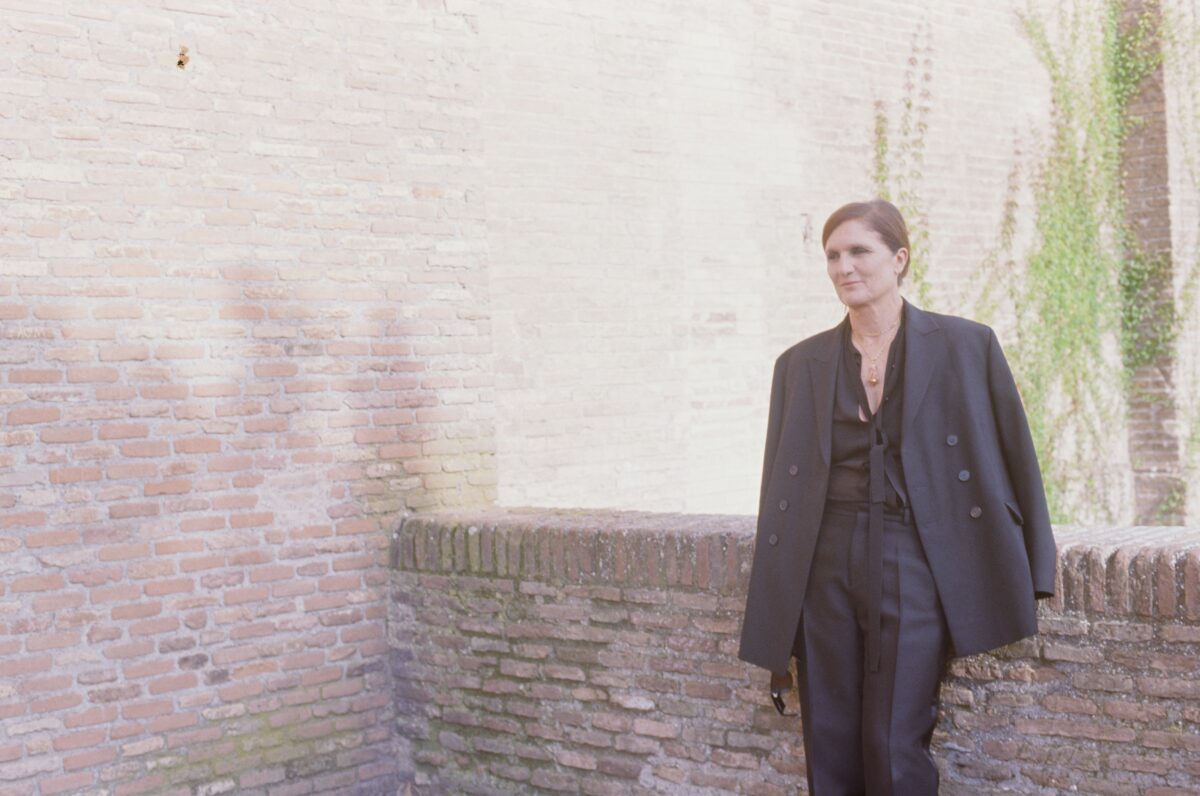
Maria Grazia Chiuri Returns To The City That Shaped Her Eye
The Fendi Chief Creative Officer is ensconced once more in the heart of the Eternal city
Together, story, dialogue, recap and close-up, this text seeks to compose a kind of portrait of Maria Grazia Chiuri, one of the designers most intent on asking what it means to create a collection in a global landscape where fashion reveals itself to be both powerful and suddenly fragile. Back in Italy after her long experience at Dior as creative director of the womenswear lines, she now takes on the role of chief creative officer at Fendi with an activist spirit – entirely in keeping with her character. It is a role in which the demands of creativity, production and a substantial heritage intertwine to shape a new vision that makes fashion a tool for awareness and an art of what is possible.
Over the course of her career, Chiuri has witnessed profound transformations in the system. Reflecting on the present and comparing it with her early years at Fendi, she often stresses how radically everything has changed over time. The pace, the way of working, the relationship with creativity and the internal dynamics of the maisons: at first everyone did everything; then marketing, buyers, merchandising and complex market dynamics entered companies that had once been semi-artisanal enterprises. Such a decisive and substantial shift produced an entirely new dimension from the one that existed when she began.
As I put some notes and a great many readings in order, one image suddenly comes back to me with perfect clarity. Perhaps it was just after the pandemic, or immediately before; it hardly matters. Chiuri and I are in Florence, having dinner in the garden of a grand hotel restaurant, one of those places that suddenly reveal themselves beyond the dim threshold of austere old palazzi, lined along the street with their compact façades of plaster or pietraforte stonework. Rachele Regini, her daughter, who works with her, is there too.
What returns to me most are the stories that punctuated the conversation. The city in which I had also studied and lived for years prompts Maria Grazia to remember her own life there. She tells me how, shortly after leaving school, she went to work for Chiara Boni, who had seen her end-of-year show at IED in Rome, where she had just graduated. Boni had her own label, You Tarzan Me Jane (the title of a feminist play the designer had seen in London, as well as an ironic inversion of the famous “Me Tarzan, You Jane” associated in the popular imagination with the films starring Johnny Weissmuller), and a shop of the same name on Via del Parione, not far from Via de’ Tornabuoni, which at the time was not yet the fashion and luxury flagship street we know today.
You Tarzan Me Jane was an extraordinary shop that reflected the radical atmosphere of those years: there were no changing rooms, only a huge circus tent where customers tried on clothes together. There were coloured neon lights and Tarzan in many different guises. I even bought two skirts there: one orange with flowers and another with large polka dots.
When she began, the figure of the designer was emerging as decisive to the entire production system: nobody was content simply to use the finest materials; they constantly experimented with their possibilities and limitations, pushing them through new techniques. In this close dialogue between creativity and production, clothes took shape that were destined to interpret the contemporary world.
Few countries have been as successful as Italy in bringing together artisanal techniques, innovation and advanced industrial strategies. For Chiuri, visiting companies remains essential. She wants to understand how production works and investigate new opportunities: designing a collection, a garment or an accessory is not simply an author’s creative gesture, but also demands continual research into forms, materials and techniques. It often means challenging practices accumulated over time in order to open up further expressive possibilities.
Chiuri recalled that first working experience, preceded only by a brief collaboration with a shoe factory in the province of Naples. Her picaresque storytelling became, for me – someone who has always looked at Italian fashion while trying to bring its qualities and particularities to the fore – a snapshot of the adventurous vitality from which Made in Italy would emerge. Through facts, dreams, visions, leading characters, supporting players, creators and chance passers-by came a concrete portrait of the environment in which it built its own narrative, defining itself in close relationship with the social, political and cultural history of our country until it became a global phenomenon.
As Chiuri recounted that apprenticeship, I found myself thinking of all the figures who, in different ways, helped define the collective fresco of that unrepeatable era. In her case, learning meant doing everything, never holding back: designing the clothes, following their production, dealing with suppliers both to secure a good deal and to find new and unexpected solutions.
When she began, the figure of the designer was emerging as decisive to the entire production system: nobody was content simply to use the finest materials; they constantly experimented with their possibilities and limitations, pushing them through new techniques. In this close dialogue between creativity and production, clothes took shape that were destined to interpret the contemporary world
Few countries have been as successful as Italy in bringing together artisanal techniques, innovation and advanced industrial strategies. For Chiuri, visiting companies remains essential. She wants to understand how production works and investigate new opportunities: designing a collection, a garment or an accessory is not simply an author’s creative gesture, but also demands continual research into forms, materials and techniques. It often means challenging practices accumulated over time in order to open up further expressive possibilities.
Paradoxically, it was precisely her crucial ten-year experience at Dior that gave her a deeper understanding of the Italian system and strengthened her awareness of her design roots. Her training was shaped within a production context in which creativity still encounters industrial expertise and the wonders of craftsmanship, and in which a garment is never an absolute work, autonomous from the body, but an object complementary to it. Minimal architecture, hut, shelter.
Chiuri has often explained how her path, beginning with accessories and continuing through ready-to-wear and couture, gave her a broad view of the fashion world. Not only creatively, but also in terms of production processes and the organisation of the maisons. She has also stressed the importance of working alongside the founders of companies, an experience that taught her the value of collaboration and the team.
A formation matured within a production context in which creativity still encounters industrial expertise and the wonders of craftsmanship, and in which a garment is never an absolute work, autonomous from the body, but an object complementary to it. Minimal architecture, hut, shelter.
Chiuri has often explained how her path, beginning with accessories and continuing through ready-to-wear and couture, gave her a broad view of the fashion world. Not only creatively, but also in terms of production processes and the organisation of the maisons. She has also stressed the importance of working alongside the founders of companies, an experience that taught her the value of collaboration and the team.
They were the ones who placed great trust in her, understanding that her talent needed a place in which to be honed. This awareness found its first explicit expression in the words “We Should All Be Feminists” on a white T-shirt in her first Dior show.
“For the radical wing, it seemed impossible to reconcile being a feminist with making fashion. Reading Chimamanda Ngozi Adichie (famous for a TEDx Talk and a subsequent essay with that title, ed.), and then coming into contact with her, was crucial: she came from a completely different world, she had no idea what fashion was as a system, yet she had an extremely effective language and spoke about women in a funny way.”
A garment is never an absolute work, autonomous from the body, but an object complementary to it. Minimal architecture, hut, shelter.
Since working independently, Maria Grazia Chiuri has chosen to entrust the representation of her work to women photographers, in order to build communication that is more precise, more comprehensible in its motivations and more direct in articulating a language of gender. She chooses artists of every age and background who can evoke atmospheres and emotions that often surprise even her. Among them are Alique, Cass Bird, Sarah Blais, Maripol, Laura Coulson, Graciela Iturbide, Brigitte Niedermair, Sarah Moon, Kristin-Lee Moolman, Vanina Sorrenti, Nan Goldin, Coco Capitán, Julia Hetta, Bettina Rheims, Brigitte Lacombe, Sarah Waiswa, Fabiola Zamora and Jo Ann Callis.
The essential purpose of these collaborations is to move beyond what Adriana Cavarero expresses in Nonostante Platone. Figure femminili nella filosofia antica (1990): “Woman has no language of her own, but rather uses the language of the other. She does not represent herself in language, but accepts through it the representations of her produced by man. Thus woman speaks and thinks, is spoken and thought about, but not from herself.”
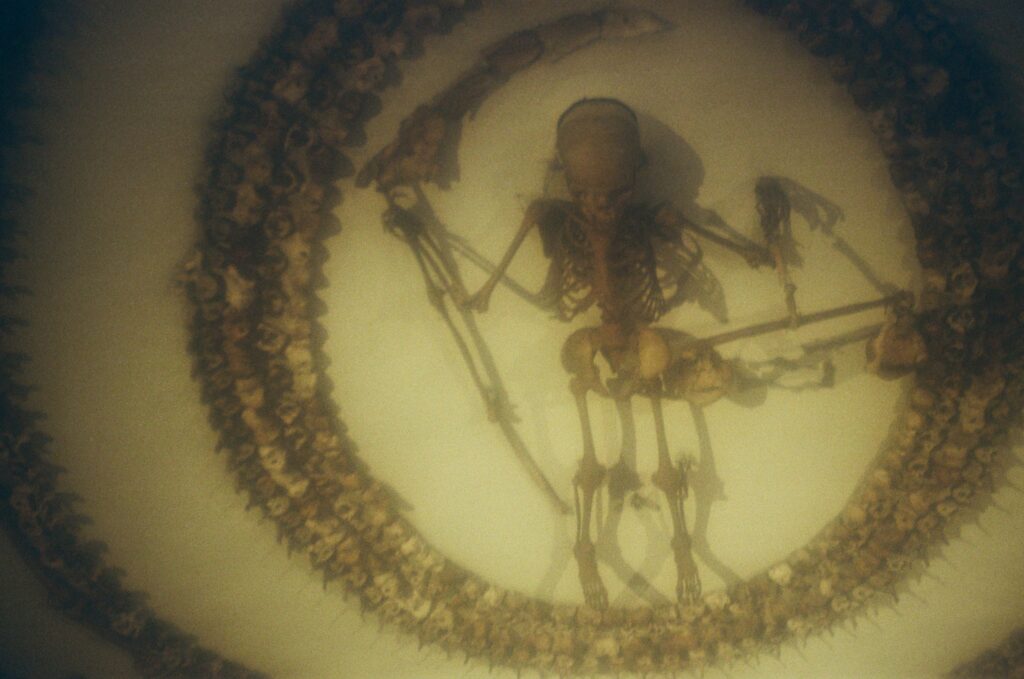
The female gaze sees the female body differently: it transforms it into a universal body, abstracted from every sexualised dimension, or expresses its sensual charge without fear. In any case, there is no malice or submission, no hidden meanings or ulterior motives. The images stand by their sincerity: they are feminine, from whatever angle they are viewed. And so are the subjects, the clothes, the eye that focuses and the hand of the photographer. The femininity of the photographs transcends definitions of space and time, both in the more narrative images and those made abstract by the clinical cleanliness of a studio: every composition sheds light on the intimate and public dimension of femininity as a way of being, action and performance. They are women who look at you as you look at them.
Less me, More us
This is the strong, clear statement with which Chiuri begins her return to Fendi, presenting the AW 26–27 collection. It is a necessary declaration of intent, proposing a precise way of confronting the complexity of the fashion system: valuing collective work, sharing responsibility, listening. A plurality that does not erase individuality, but recognises that every creative process is born from relationships, exchanges and continual mediation.
“Less me, more us” also represents, in Chiuri’s biography, the next step after Carla Lonzi’s manifesto-like “I say I”, an author read and loved by the designer, who, as creative director, was instrumental in securing Dior’s support for the exhibition of the same name at Rome’s GNAMC in 2021.
To use the phrase “Less me, more us” now means, for her, claiming the right to speak in her own voice within a historically male working environment, reaffirming sisterhood, complicity and shared commitment. It is a legacy from her early years at Fendi, where – she has recounted on numerous occasions – “we” was used instead of “I” at the express wish of the “signore”, the sisters Paola, Anna, Franca, Carla and Alda. At the company, people collaborated spontaneously and continuously, and everything grew out of the exchange between individuals.
For Chiuri, it became natural then to imagine working in fashion as a shared experience, built more on relationships and collective participation than on hierarchies. She has also said that dialogue with others feeds her creativity, because limiting fashion to the creation of beautiful clothes is profoundly reductive. Fashion, in Chiuri’s view, can only be an inclusive, interdisciplinary dialogue that tells the story of the present and those who inhabit it.
In this vision, clothes become part of a wider story, woven together with memories, objects and personal experiences, much as in music, where different elements coexist within the same playlist.’In this vision, clothes become part of a wider story, woven together with memories, objects and personal experiences, much as in music, where different elements coexist within the same playlist. Everyday garments, or pieces belonging to family memory, can also take on new meanings.
The importance of working collectively with one’s team is, as always, decisive: even in difficult moments, dialogue and lightness make it possible to move forward without losing sight of what truly matters at those stages. As an author curious about her own time, Chiuri is aware that the challenges facing fashion today are very different from those of the past: we need to work with wardrobe elements capable of becoming a repertoire of possibilities for contemporary women and men, through an imaginative synthesis and a sense of responsibility that can no longer be postponed.
Rome
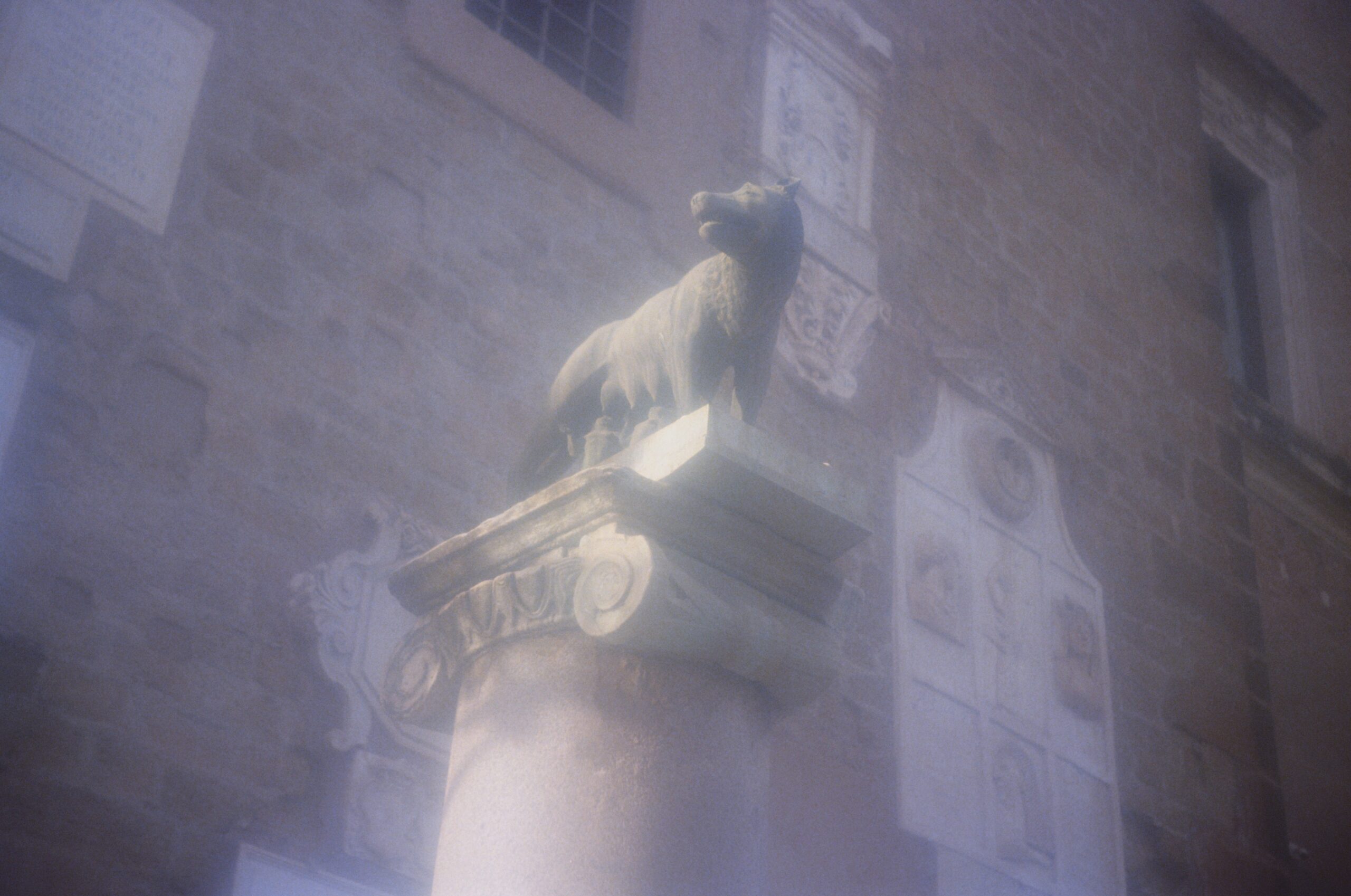
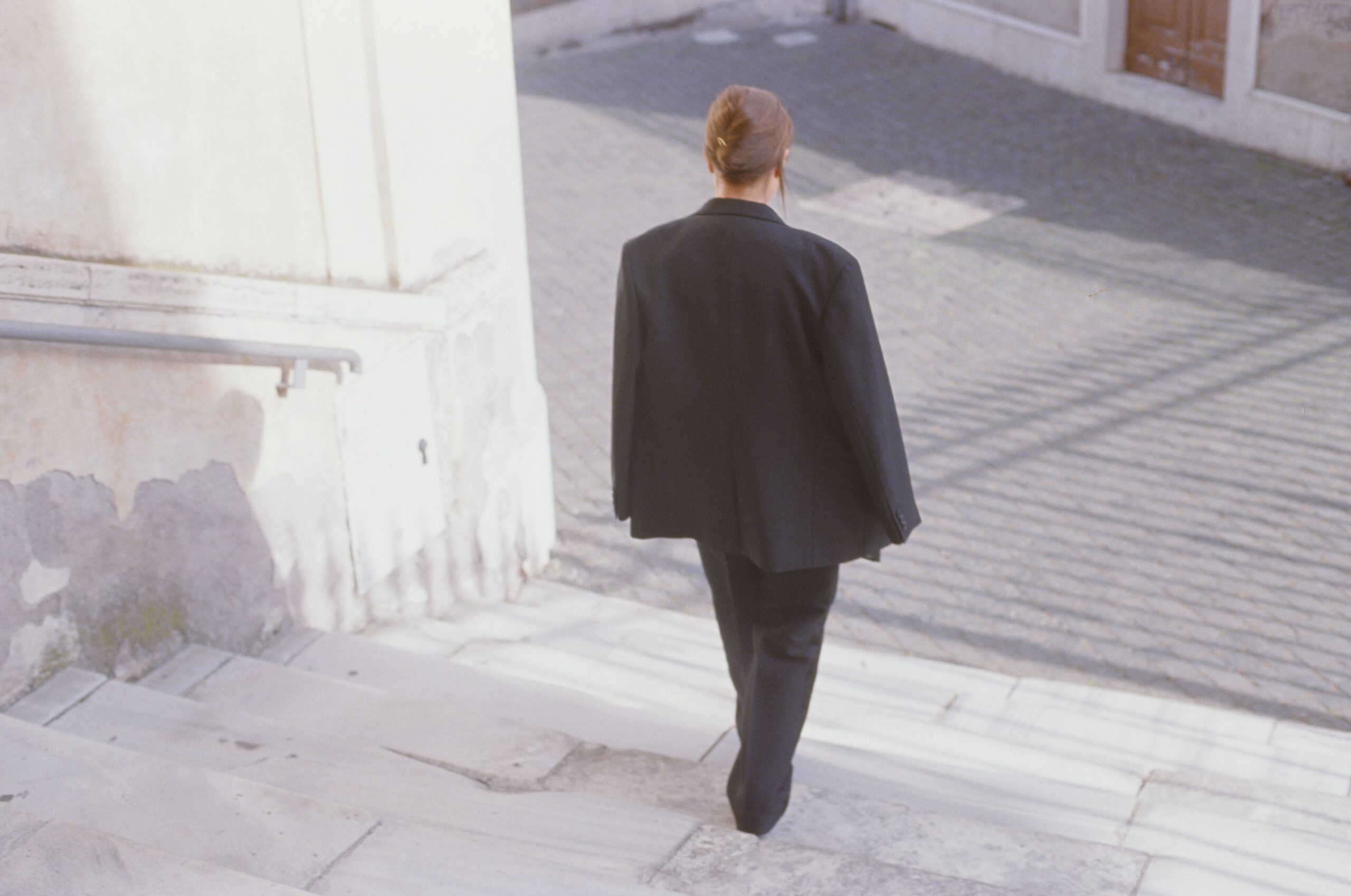
Chiuri has returned to her city, the place where she prefers to live. As a very young woman, she crossed it every day on her way to Fendi, when the headquarters were in the centre at Fontanella Borghese; then to Valentino, in Piazza Mignanelli; and now once again to Fendi, but at the Palazzo della Civiltà Italiana in EUR. Getting there from her home means crossing the capital in a journey that becomes, each time, a kind of recap of the city itself.
She has told me that on the way she often thinks of the Maison’s incomparable fur workshops and remembers a line from Silvia Giacomoni’s L’Italia della moda (Mazzotta, 1984): “When people asked why the most beautiful furs in the world – those of Fendi – should be made in Rome, the designer Karl Lagerfeld, who designed them, replied that only in warm countries, where they are not a necessity, can skins lend themselves to every game of imagination.”
It was here that Chiuri learned to observe and love art through visits, as a student, to the GNAMC. But Rome is above all a city where layers of time overlap indiscriminately, where styles coexist to stimulate the imagination, a place she continues to explore with an omnivorous curiosity.
Returning here represents the synthesis of a human and professional journey contained within that “beautiful confusion”, recalling the title Ennio Flaiano proposed to Federico Fellini for the film 8½. For Chiuri, Rome is also the ideal meeting point with Countess Mimì Pecci Blunt, a cosmopolitan aristocrat and central figure in European cultural life between the 1920s and 1950s: a patron, collector and champion of artistic and theatrical avant-gardes.
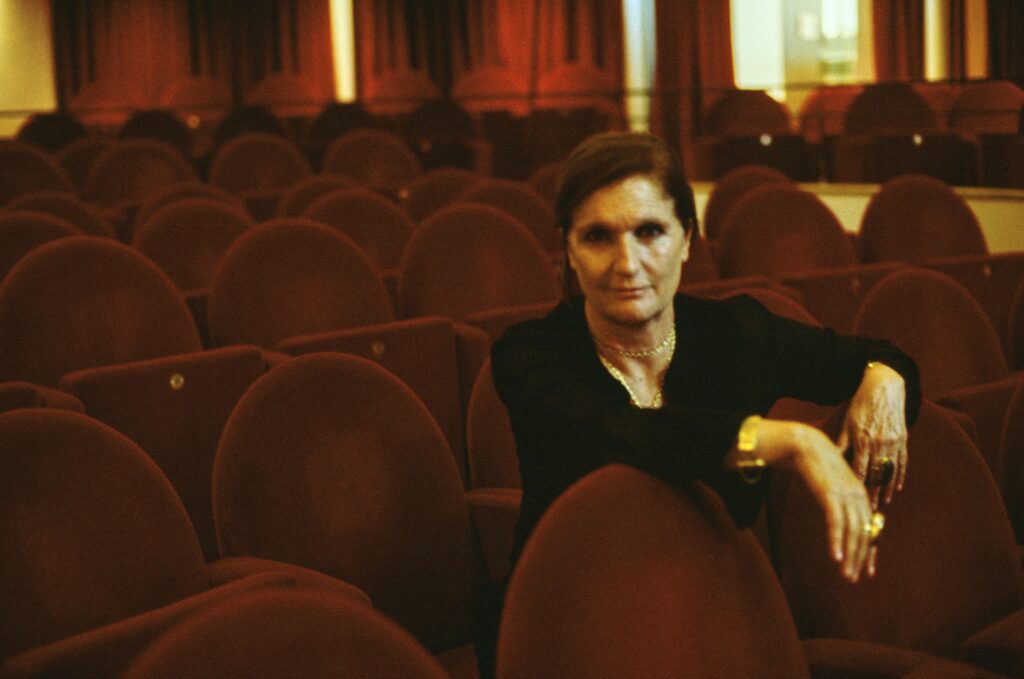
In 1958 she founded the Teatro della Cometa in Rome, imagining it as a space for an interdisciplinary culture capable of bringing together performance, visual art, music and contemporary research. After decades of closure and neglect, the designer decided to restore and reopen it, seeing the Cometa not only as a historic site of Roman culture, but also as a symbol of the relationship between creativity, craftsmanship, experimentation and community that runs through her own understanding of fashion.
In this place where reality and fiction mingle, Chiuri recomposes, in her own way, the characters, landscapes, stories and mythologies of the city. Her thinking, contrary to every systemic way of seeing, favours questioning, daydreaming and the stumble, but also the poetic intuition that accompanies all the creative figures whose wider vision leads towards a network of stellar affinities.
The designer decided to restore and reopen the Cometa, seeing the theatre as a symbol of the relationship between creativity, craftsmanship, experimentation and community.
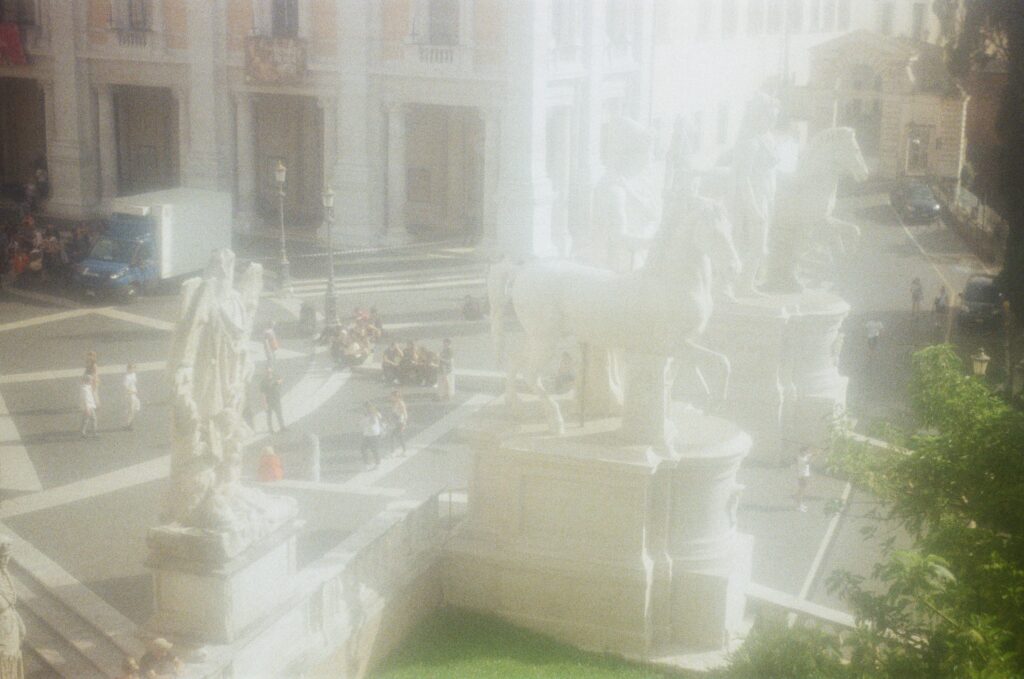
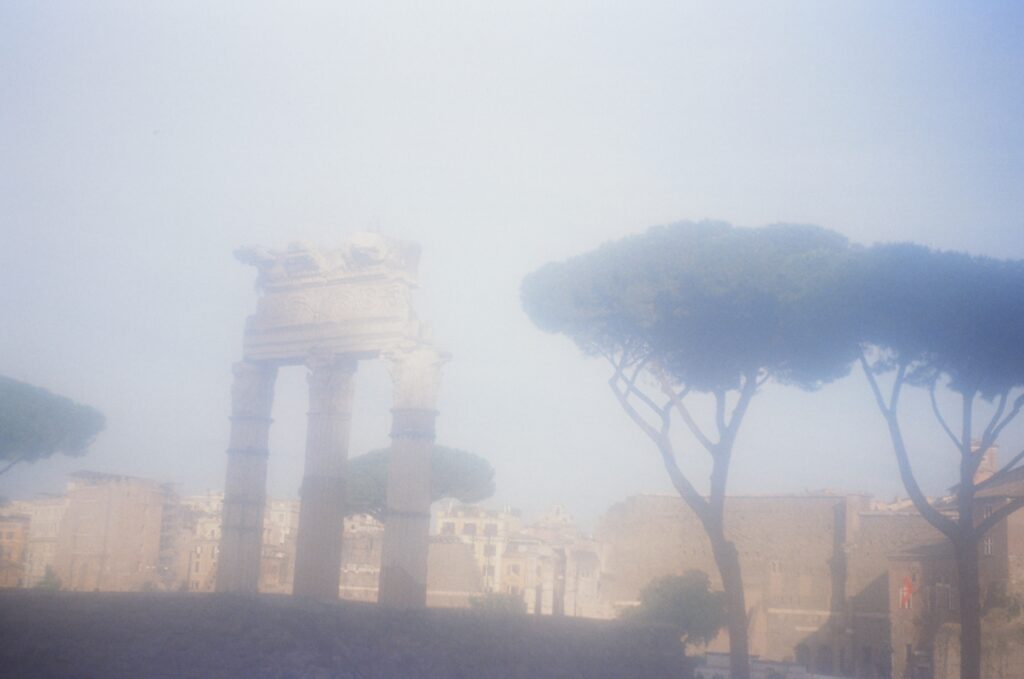
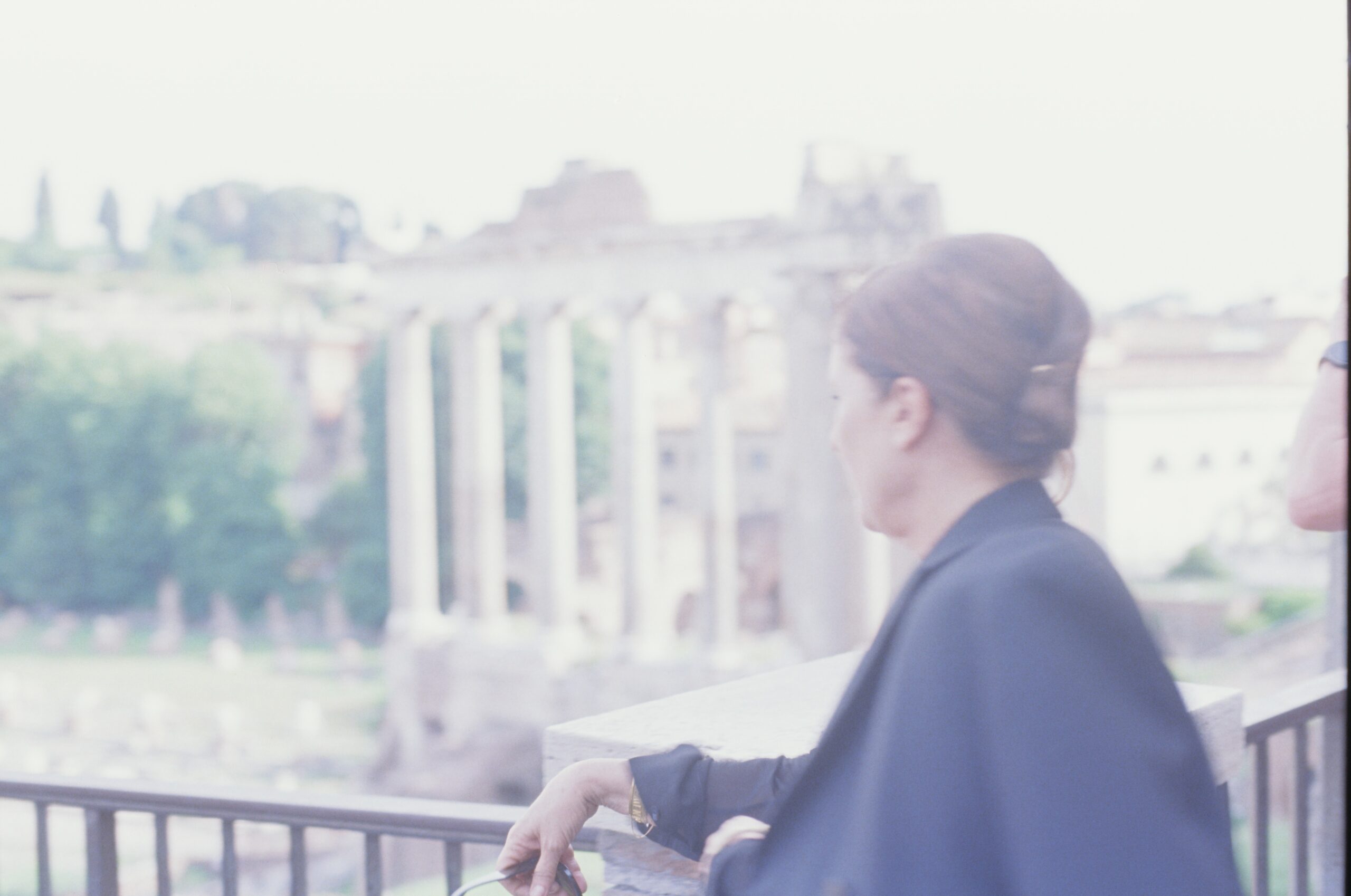
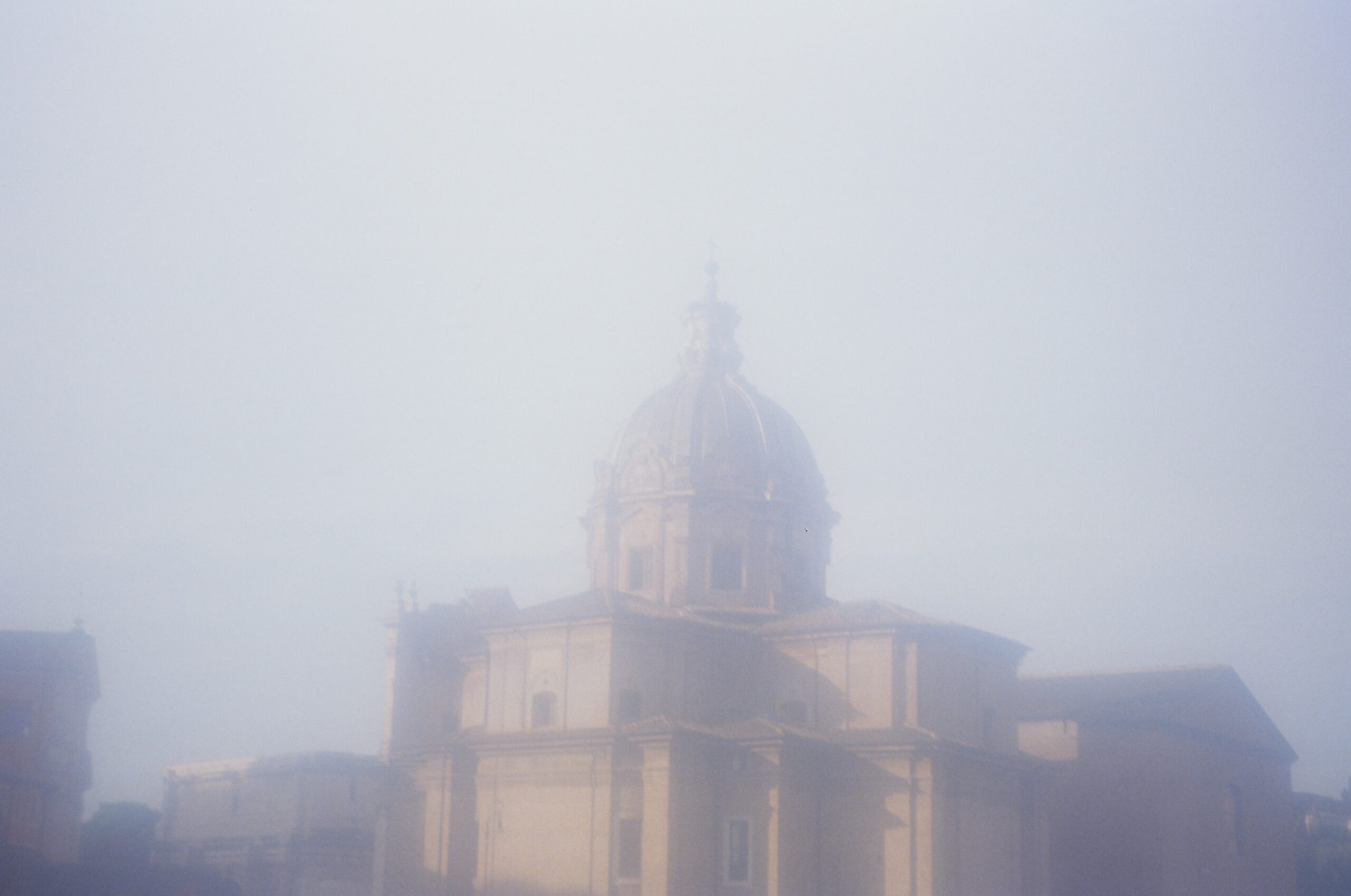
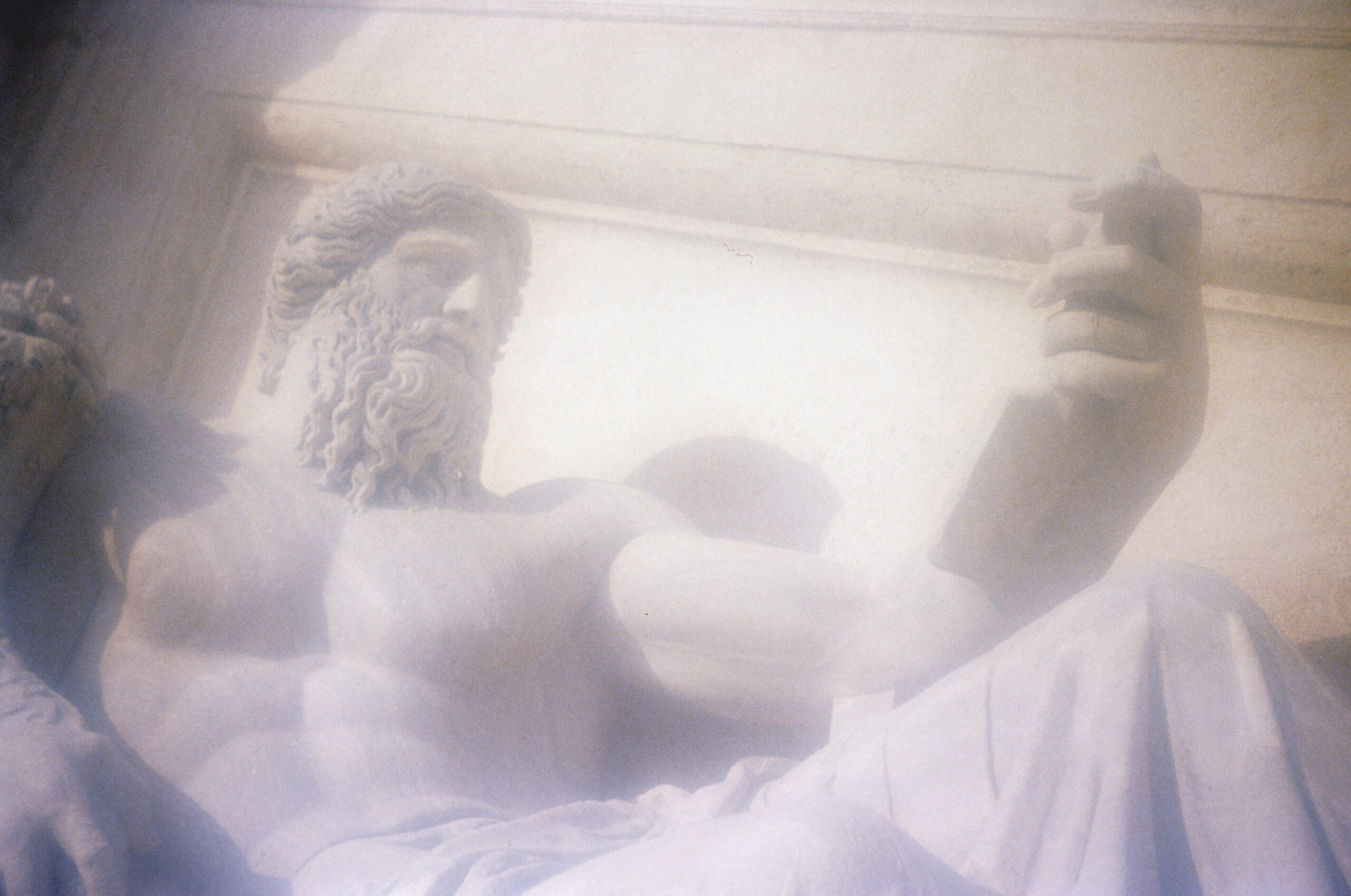
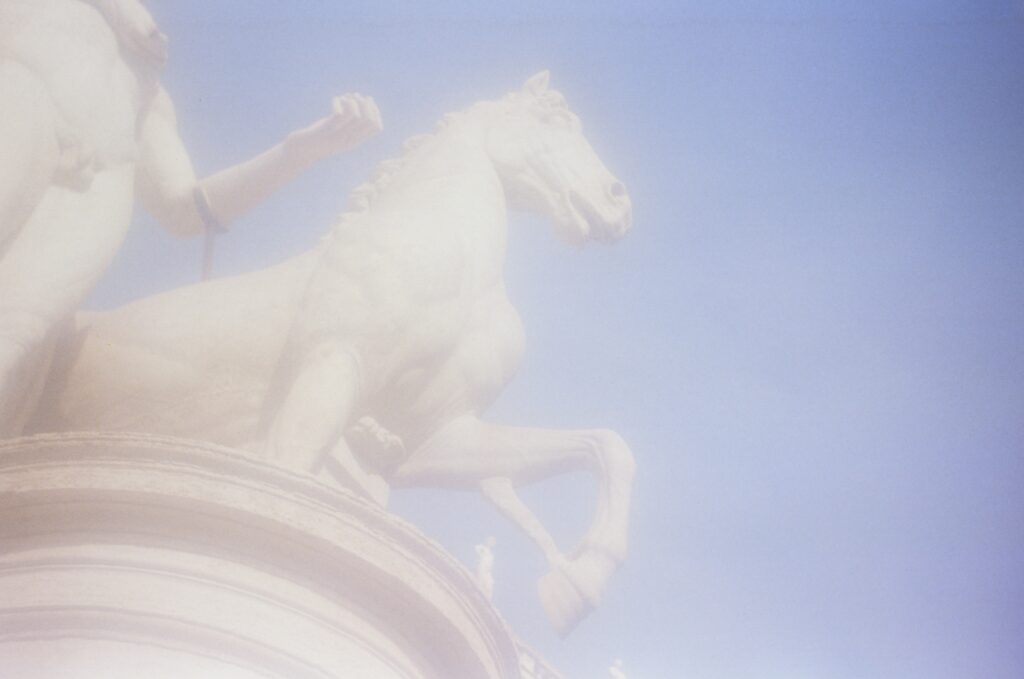
Lead Image Credit: Maria Grazia Chiuri (1964), chief creative officer of Fendi since October 2025, and her Rome: the Imperial Fora
Photos: Anna Biolay