
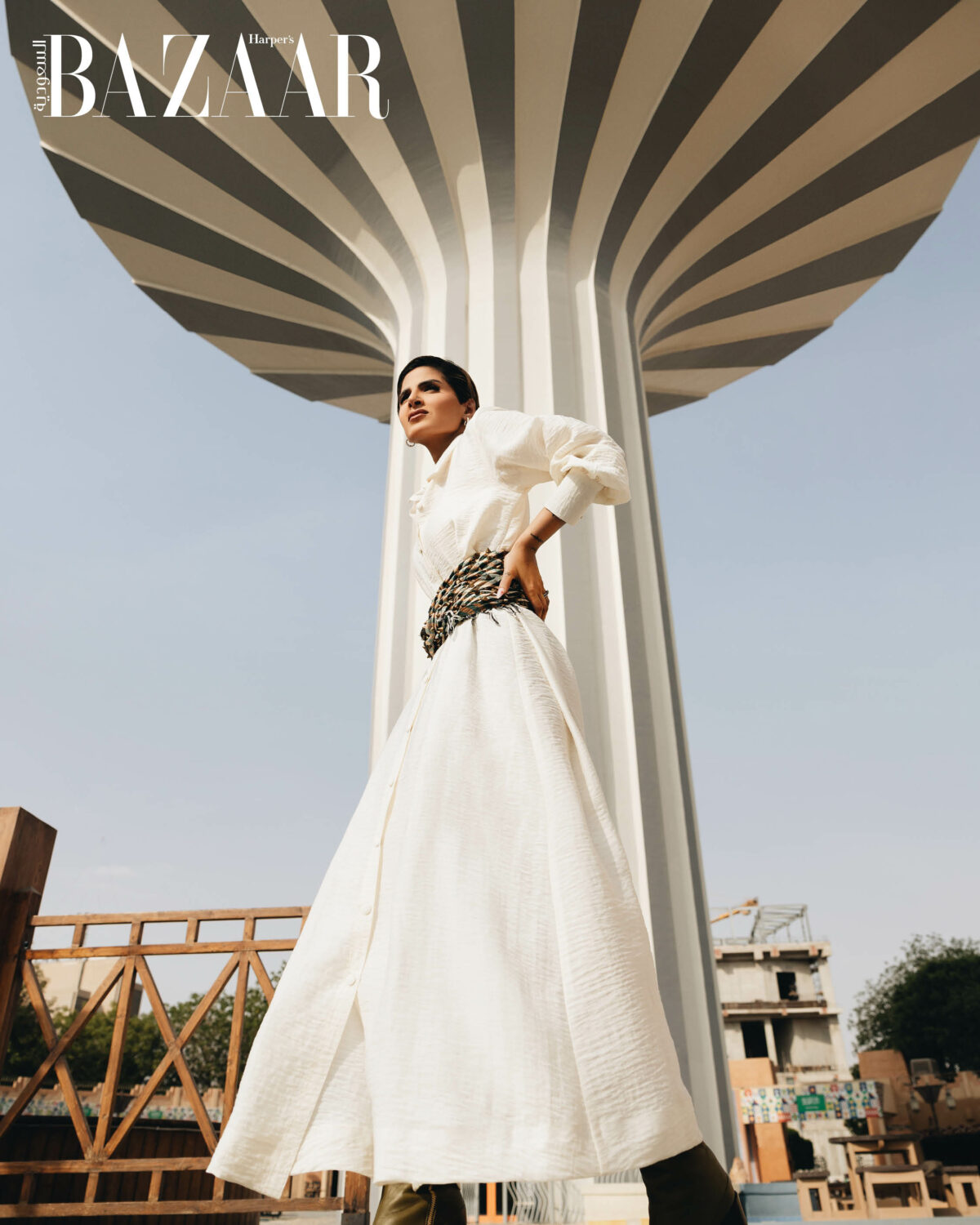
Is There An Appropriate Way To Do Appropriation? What Brands Need To Know Before Looking To KSA For Inspiration
Contributing Fashion Editor Marriam Mossalli lays out how brands can incorporate Saudi culture and sartorial heritage into their collections in a way that won’t get them ‘cancelled’
No two words scare fashion designers more than these: cultural appropriation.
It’s what they all fear in a world where cancel culture is as rampant as ’90s fashion references and Kardashian-centric gossip. It literally fuels Instagram engagement these days; and for the first time ever – bad PR is not good PR.
I wanted to use my voice to broach a topic that many in my industry are often too timid to even whisper. And why shouldn’t they be? When every nine minutes, a designer is killed by cancel culture.* I maybe courageous or just stupid, but I’ve always believed there is power in knowledge. How do we learn from all these cancelled brands and designers? Or are we simply scaring creatives from seeking inspiration from cultures other than their own?
With the Kingdom of Saudi Arabia opening up and the world eager to be acquainted with this new – and much younger, luxury consumer, the potential of international brands falling into the trap of cultural (mis)appropriation is high. The Al-Quttan prints of Asir are like mythological sirens calling designers to their fashion death. While brands wanting to feature their newfound love – and knowledge, are eager to leverage our unique landscapes of NEOM or AlUla; but it doesn’t always turn out right: just ask the international brands who have shot models in miniskirts in the historic AlBalad of Jeddah; definitely not a good look – both for the model and the brand.

But not all hope is lost…
As a young Saudi girl, I always had the dream of seeing the abaya be worn around the world by women from all corners of the globe. As a young Saudi fashion editor, I was always excited whenever I saw our bisht on Peter Dundas’ Cavalli runway or Stephane Rolland’s couture presentation. Seeing interpretations of our shalky fabric everywhere from Gucci to MANGO was something we applauded, not condoned. But when you are a marginalised culture it’s easy to get lost in the international hype. It’s only recently that brands have been scrutinized for their inclusion of the kuffiya print.

So what can brands do? The answer is: a lot.
First of all, try speaking to actual Saudis. We can be the greatest resource. A lot of the societal nuances aren’t readily found in a book or a quick google search. Yes, we may wear miniskirts in private or when we travel, but we’re definitely not strutting them on the streets of downtown Jeddah!
Second, work with seasoned creatives to guide the creative team. Whether it’s the initial design or producing visual content, such as a lookbook, campaign or editorial, use professionals who know how the local consumer – how she/he thinks, and what she/he wears. For this, our City Girls shoot, which frames these words, we used a fully local team and asked the talents for their input in how they dress in their respective cities, rather than oblige an outsider’s point of view. The result is a 100 per cent locally produced shoot that is authentic, and therefore, more impactful to the Saudi reader.
Work with local artisans. And if collaboration is not possible, provide compensation to organisations supporting the local crafts and the artisans, who create them. Italian-made coats from Samuele Cipriani’s newest collection are inspired by Asir and those designs will give a percentage to a local charity that supports female artisans.
If you’re going to take a heritage print or inspiration from a heritage site, speak to experts. Saudi has many historians and organisations ready and willing to help. Saudi Style Council, a not-for-profit, can share a list of them. From Mansoojat to Art of Heritage, the goal for Saudi Style Council is to encourage brands to be inspired by our country; albeit appropriately.
And lastly, don’t be mean! This isn’t for the brand, but for everyone else. We are so eager to call out and jump down the social media throats when things are wrong. Instead, we can point out the flaw, and give constructive feedback on how to do better. Intention must count for something. And I hope as a country, we can encourage more creatives to learn about our culture and be inspired by it. Tufadil
[You’re welcome].
*A totally made up statistic
PHOTOGRAPHY: Lina Mo
From Harper’s Bazaar Saudi’s Autumn 2021 issue.