
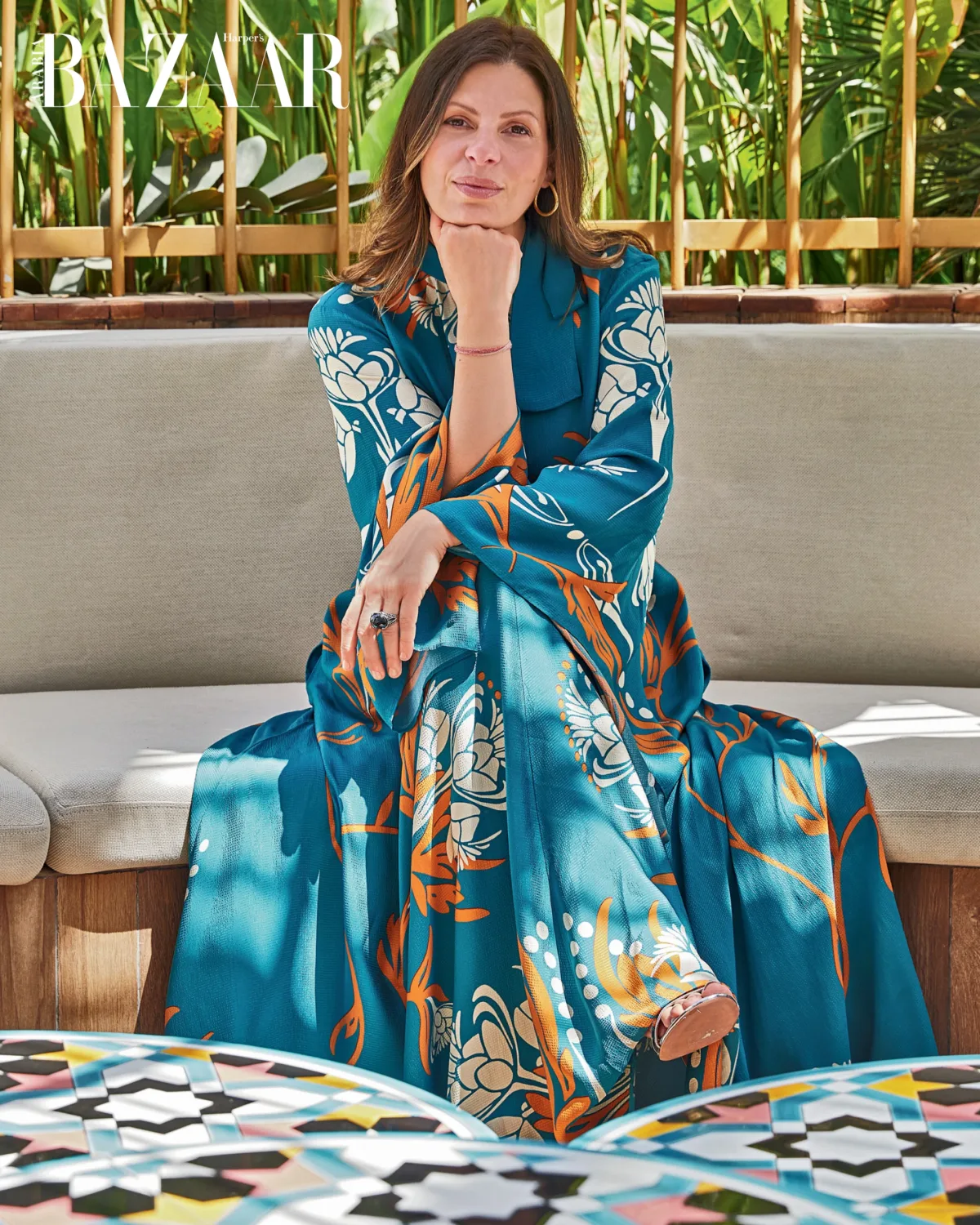
Step And Retreat: Anastasia Achilleos On Why Ramadan Offers A Reset And A Return To Self
Anastasia Achilleos discusses why Ramadan acts as a recalibration back to one’s self, working on the same principals as a wellness escape
I remember that first moment,” – when we say these words, we are actually speaking from the perspective of the limbic system, harking back to core memories. It is part of our biology, where memory, emotion and scent are inseparably linked. This same system also governs decision-making, particularly the deep emotional responses behind our choices. It does not control language or logic, but instead how things make us feel. And it is precisely this feeling-led intelligence that explains why certain experiences stay with us, why they imprint so deeply and why moments of pause and presence, like Ramadan, resonate in the body long after time moves on.
I remember the first moment I felt a quiet, undeniable WOW in the presence of women of the Middle East. The reverence for privacy, ritual, elegance and tradition was evident. It was not loud. It was coherent. And it stayed with me. This understanding of embodied femininity crystallised very early in my career during my chapter at The Urban Retreat in Harrods, Knightsbridge. Long before wellness became cultural currency, it was regarded as one of Europe’s most influential luxury spa destinations and a global launchpad for beauty industry innovation. What happened there translated into editorial trends, favoured by international celebrities, fashion insiders, and royalty. In 2018, it introduced The Best of British Beauty Experts, spotlighting home-grown, best-in-class leaders like perfumer Roja Dove, and my skin sculpting treatments and products. And as impactful as it was to my
career, the most profound imprint there did not come from London. It came from the Middle East. And it came from women. Since then, I feel fortunate to share intimate moments visiting this region, moving alongside these women through evolving chapters of life.
The most profound observation woven through these moments, as Ramadan approaches each year, is that I have always felt the same current, a palpable enthusiasm, a reverence for the pause, and a deep desire to connect to one another, to community, and to something deeply personal within each of them. Within the global wellness economy, retreats have become one of the most rapidly expanding segments of wellness travel reflecting a growing understanding of the need for nervous-system regulation, emotional restoration and sustainable rhythm. “Long before retreat culture was defined or formalised, Ramadan embodied these same principles. It served as a recalibration back to self, integrated into daily living.” It occurs to me that Ramadan functions as a living retreat. It alters daily rhythm, reduces stimulation, softens external demands, and invites inward attention and reflection. Retreats aim to cultivate this state. Ramadan lives it.
From a nervous-system perspective, regulation is ultimately a return to self. Ramadan creates the same conditions that modern retreats deliberately design. Intentional fasting gently shift the body from stress response into regulation. As the nervous system settles, the body moves from bracing to listening, allowing meaningful inner pivots to arise naturally. At its core, Ramadan feels as though it brings the heart, brain and nervous system into coherence. The most transformative retreats are not places we travel to, but states we return to again and again, within ourselves.
Being in service of women is a profound honour, not just on International Women’s Day, but every single day. In the UAE’s Year of Family, this feels deeply aligned, honouring the way women hold families and futures together, often invisibly. I wish you all peace in your hearts with your cherished ones, and expansion that is limitless.
Photography by Efraim Evidor
Note: This content was created and printed prior to February 28, 2026
From Harper’s Bazaar Arabia March 2026 Issue