
Ruwaida Abela Northen On The Importance Of Becoming Your Own Icon
Ruwaida Abela Northen’s journey to becoming her own icon began with embracing the heritage she once rejected
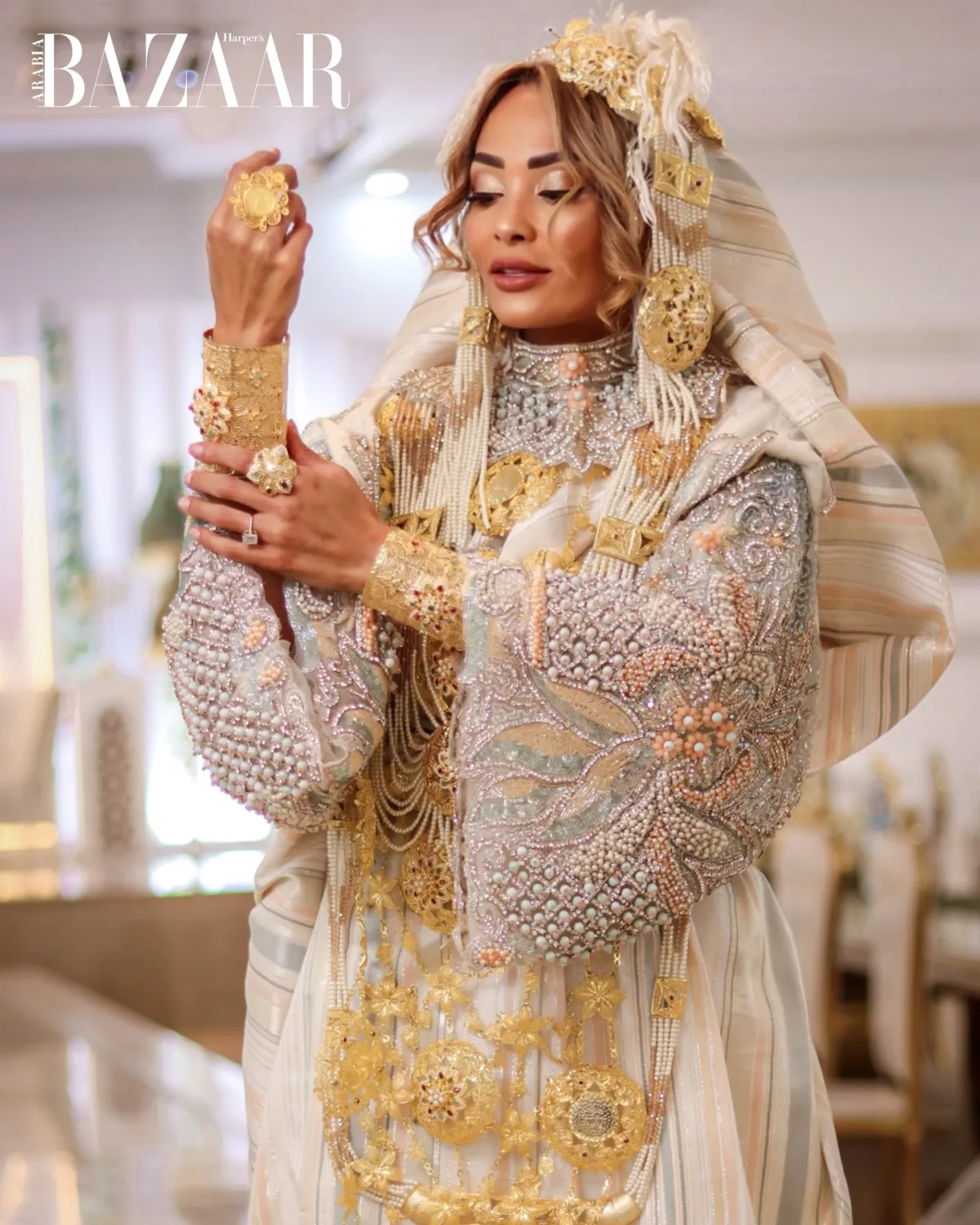
It took an hour and a half to drape the fabric – which was pure silk woven in genuine silver thread – and layer the jewellery, piece by piece, in a very specific order. An older woman I had never met before did it, because this is an art, and not everyone can. The gold belonged to my mum – real and heavy, but I had never felt lighter.
It was my brother’s wedding earlier this year, and the dress I wore was a traditionally Libyan one. As she worked, I felt something I never expected to feel: a connection. To my country, and to the women who came before me, women whose lives are stitched into mine.
The photograph from that evening is one of my favourites. Not because I look glamorous – I know I do. But because the last time someone tried to put me in that dress, I cried. It was my first wedding 20 years ago, also in Libya, and I refused. To my younger self the dress looked old-fashioned and hopelessly uncool. I wanted something modern, international, that belonged in a magazine rather than to the generations of women who had worn it before me.
I grew up in the era of icons. Not influencers or content creators. Icons. Princess Diana was on every glossy cover. Madonna was constantly reinventing herself. Cindy Crawford made beauty look effortless. Kate Moss made imperfection desirable. Later came Britney Spears, who somehow embodied every teenage girl’s dream and every mother’s nightmare at the same time.
They were larger than life – untouchable. And even though none of them looked like me, I wanted to be them anyway, the way most girls in the nineties did. Not famous, necessarily, but as beautiful and as sure of myself as they appeared to be.
Instead, life had other plans. There were marriages and heartbreaks. Four children. Career moves across continents, hotel openings and de-flaggings and business plans. Successes I never saw coming, and failures I probably should have. There was divorce, reinvention and the unexpected gift of finding love again. And there was the body I spent years fighting with, and the peace that followed.
For most of my life I believed icons were people you were meant to become. Now I think their purpose is different. They don’t tell you who to be. They make a bigger life feel possible. The irony is that most truly iconic women never set out to become one. They are too busy becoming themselves. Diana was not trying to become queen of people’s hearts. Jane Birkin was not trying to have a bag named after her. They became unforgettable because they weren’t trying to be. What made them iconic was sticking to their truth. Even when the world disapproved.
But there comes a point when you have to stop looking outward. The person you’ve spent decades building deserves some of that attention too. As I turned forty, something unexpected happened. I stopped searching for the woman I wanted to become, not because I was famous, or perfect, or had finally figured everything out. I hadn’t. It was because, for the first time in my life, I genuinely admired the woman staring back at me. She had survived heartbreak, built a business, started over when doing nothing would have been easier. She was raising four children, making mistakes and taking risks. She’d come through all of it, and it had cost her something.
Perhaps that is what becoming your own icon really means simply reaching the point where your life is not an audition for someone else’s. Where you stop apologising for where you come from, and the woman in the mirror is no longer a project but someone you’ve become. Happily. Age has handed me something youth never could: a real appreciation for where I come from.
Which is how I ended up reaching for that dress with glee, the same one I’d once refused in tears. The most iconic I have ever felt had nothing to do with fame, or fashion or a magazine cover. Becoming yourself, it turns out, is not always about moving forward. Sometimes it is about finding your way back. To parts of yourself you were too young to appreciate. Finally old enough to understand that the less we borrow our identity from others, the more there is to value in our own.
Images Supplied
From the Harper’s Bazaar Arabia September 2026 issue