
What Has The Death of Mainstream Culture Done To Taste?
We used to watch, wear and want the same things. Now, culture is fractured into millions of personalised worlds…
As Sara Pollack, the Global VP of Consumer Marketing at Pinterest, puts it, “There isn’t one trend anymore – there are thousands of micro-trends happening at the same time, shaped by what people are actively searching for and saving.” Culture hasn’t collapsed; it has multiplied.
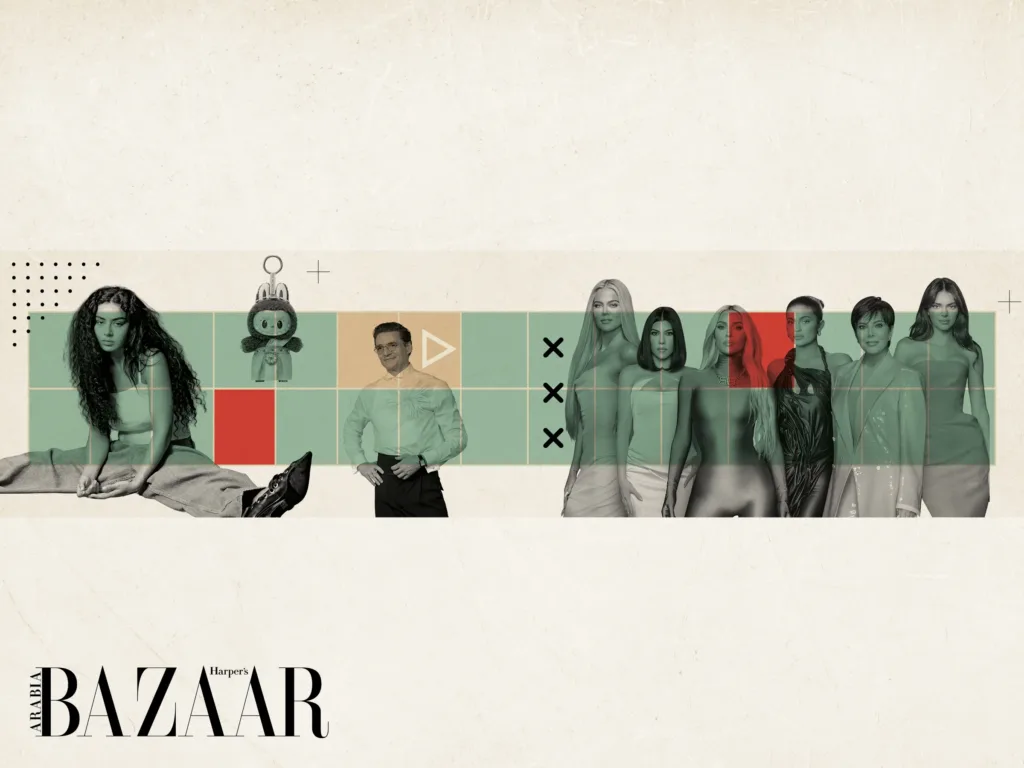
There are still some things that cut across the noise, of course. Pop is still pop. Taylor Swift is still Taylor Swift. The Kardashian family remain, somehow, permanently installed in the cultural subconscious. But the platforms that once propelled them into global ubiquity are also now doing something else entirely: efficiently fracturing that mass audience into millions of micro-realities.
One simple scroll throws up 30 different aesthetics. Not variations on a theme… entirely different worlds. During unstable, unprecedented times like these, that can feel as disorienting as it is illuminating. Missile interceptions followed by Chalamet ballet memes. Rama Duwaji’s iftar outfits next to incredulous manosphere deep-dives. A new hair trend. Bombs in Beirut. Pedro Pascal without a moustache. All in the space of two minutes.
But that particular mincer for your nervous system is an article in its own right. For now, let’s stay with culture, and observe what this has all done to taste. A woman in Dubai adding a Cartier Baignoire to her wrist stack. Someone in Stockholm in crisp shirting, baking cinnamon buns with algorithmic devotion. A 20-something in London reviving indie sleaze like she invented it. None of them dominant. None of them, strictly speaking, mainstream. This is what culture looks like now: not particularly shared, but certainly simultaneous.
So no, the mainstream hasn’t vanished – it’s just been reconfigured. Hyper-personalised, endlessly segmented and, in many ways, liberated. Which leaves a more interesting question in its place: when it comes to taste, is that better or worse – and what does that even mean?
As Miuccia Prada once put it, “taste is something you learn – and then spend your life unlearning.” It’s a line that suggests taste was never fixed to begin with, but shaped – slowly, culturally, collectively – before being refined into something personal. The difference now is that this process is no longer gradual, nor shared.
As cultural critic and staff writer at The New Yorker, Kyle Chayka observes, algorithmic culture accelerates and redirects that evolution entirely: “Feeds don’t just reflect what we like – they actively shape it,” creating the illusion of boundless choice while subtly narrowing the field of what we’re exposed to.
In that sense, the question isn’t simply whether this new landscape is better or worse. It’s whether what we understand as taste is still something we arrive at, or something we’re continuously being steered towards. Something that feels instinctive, but may in fact be quietly engineered.
In the Gulf, this fragmentation doesn’t feel like disruption, though – it feels like evolution. This has always been a region fluent in remix: heritage and hyper-modernity, modesty and maximalism, local codes and global references all colliding, recombining, reasserting themselves in new ways. The difference now is scale… and speed. What once unfolded across seasons now happens between scrolls.
You end up with the great Labubu famine lasting all of five minutes, with Brat Summer bleeding into Clean Girl, which morphs into Mob Wife before you can say Hot Rodent Boyfriend. One week it’s slicked-back buns and sculptural Bottega earrings. The next it’s chocolate suede everything. How much matcha do you think we all have left in us? It’s a trend, everywhere, all at once – until it isn’t. Hyper-visible, briefly dominant, then – poof – gone to the big consumerist dumpster in the sky. Nothing exists in isolation, but more tellingly, nothing lasts for long.
Which raises another, this time more personal, question: can you really, truly love something if it’s over almost as quickly as it arrived? Is a one-hit wonder the same as personal taste that’s been cultivated slowly, purposefully over years – even decades? It’s the difference between a fling and something more enduring. Sure, one can be fun – but will it ever really satisfy or shape you? Probably not.
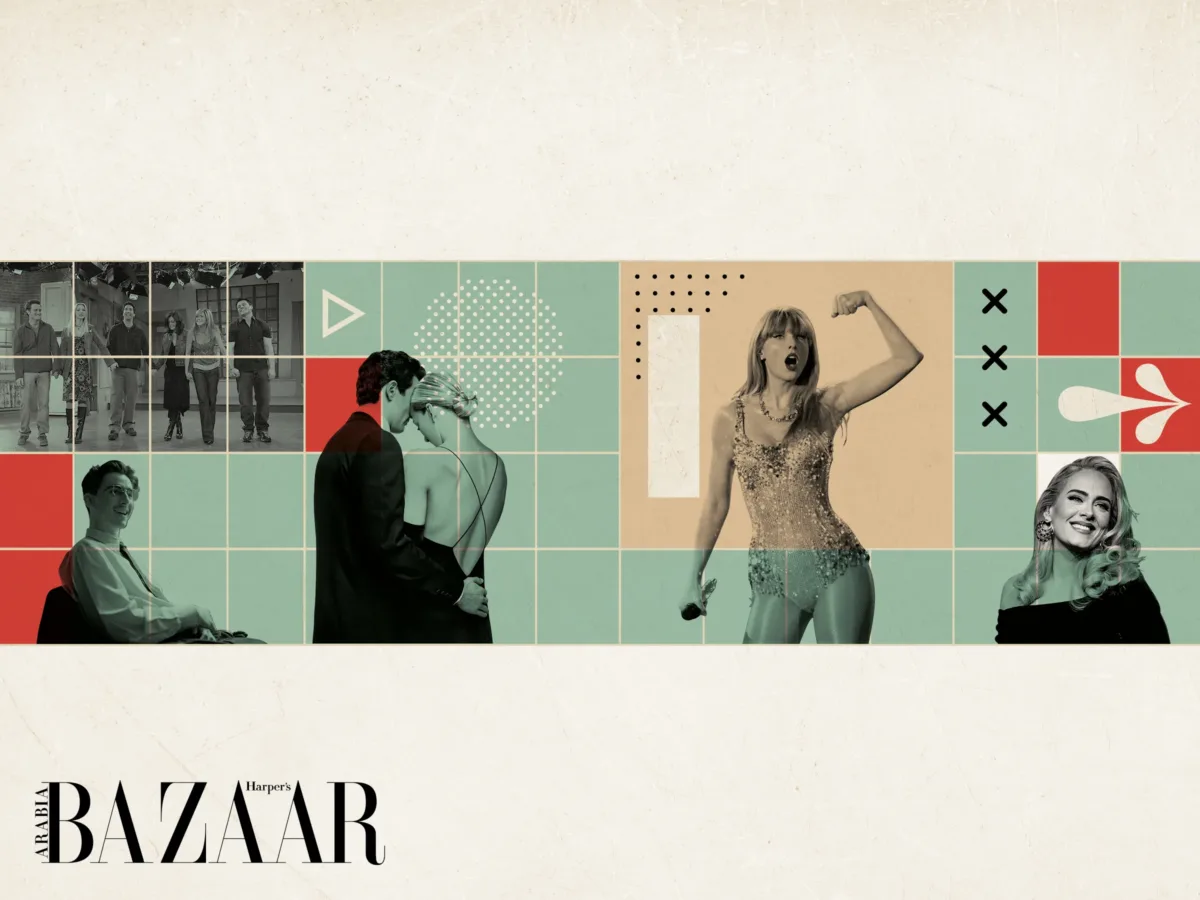
Once upon a time, millions would tune in for the same finale, buy the same album, wait patiently for the same September issue. In 2004, more than 52 million people watched the final episode of Friends. In 2019, over 19 million watched the finale of Game of Thrones live, before streaming figures were even counted.
When Adele released 25, it sold over 3 million copies in its first week in the US alone – a number that now feels almost implausible in an era where success is measured in streams, skips and seconds of attention. Culture moved in unison; a shared script with minor variations. Now, it moves like a swarm. As Eugene Healey, a brand strategy consultant and author of the Substack, Considered Chaos notes, we’ve shifted from mass culture to what he calls “networked taste” – where relevance is no longer defined by scale, but by proximity: what matters is not what everyone is watching, but what your world is paying attention to. And that shift changes not just what we consume, but how we understand culture itself.
So if everyone is seeing something different, is the idea of a ‘mainstream’ still meaningful at all, or just a comforting illusion we haven’t quite let go of? And if everything is trending, does that mean nothing is?
Well, at least nothing in the way we once understood it. The word ‘trend’ used to imply direction – a movement large enough to be observed, named and followed. Now, it feels closer to simultaneity: thousands of blink-and-you’ll-miss-them aesthetics rising, peaking and dissolving at once, often before they’ve even been fully recognised. Pinterest’s own data reflects this contradiction; minimalism alongside maximalism, Clean Girl alongside Mob Wife, modest dressing evolving in parallel with hyper-embellishment.
You only need look at its 2026 trend predictions to see this whiplash in motion. In December, its annual Pinterest Predicts report identified 21 trends the company says will be hot this year. These included: cabbage (no, really – you can thank fibermaxxing for that), ‘glitchy glam’ (translation: imperfect beauty such as mismatched manicures and colour blocking make-up. Clean girl beauty resulted in this rebellious 180), scent stacking (the Middle East invented this), and Poetcore (think satchels, ties and fountain pens). It reads less like a unified direction and more like a map of competing impulses.
This isn’t chaos. It’s curation – just no longer centralised. The algorithm is acting as editor, distributor and tastemaker all at once, shaping what we see, and therefore what we think we like. Which is perhaps why, for all its apparent freedom, this new landscape can feel oddly isolating. Without a shared reference point, culture risks becoming less of a conversation and more of a series of parallel monologues, each of us fluent in our own aesthetic language but increasingly out of sync with each other.
And yet, there is something undeniably exhilarating about it too. Because if the old mainstream was about conformity, the new landscape is about multiplicity. In the Gulf especially, that multiplicity feels less like fragmentation and more like agency. Not one story, but many. The ultimate individuality.
Perhaps the question isn’t whether the mainstream still exists. It’s whether we still need it to. Because culture hasn’t disappeared, it’s expanded. And if it no longer moves in a straight line, or arrives fully formed and universally agreed upon, that may be less a loss than a redistribution of power: from the few who defined taste, to the many who now construct it.
The mainstream didn’t die. It evolved – from something we were handed, to something we build. More democratic, more inclusive. Perhaps we need a new word for it entirely.
Lead Image Credits. Far Left: Watched by over 52 million people, The Friends cast taking their final bow on the series finale. Some things still cut across the noise: show of the moment – American Love Story, Taylor Swift, Chalamet ballet memes… but overall, mass culture has been cut into millions of micro-realities. Far right: The launch of Adele’s 25 album sold three million copies in the US in the first week – practically folklore in today’s land of half-listens and endless skip
From Harper’s Bazaar Arabia April 2026 Issue