

The Stories That Shape Us: We Speak To Six Female Authors On The Power Of Storytelling
Literature is not merely something we consume, it helps us navigate love and loss, health and home, identity and belonging – one page at a time
While the fundamental role of a writer is to communicate, what they communicate – and how they do so – varies greatly. Writers share ideas, stories, news, and ultimately their soul.
Like many other forms of therapy, writing can become most powerful in moments of adversity. It serves as an outlet, a means of reaching others – whether to inform, comfort, or simply connect – and a way of finding reassurance. During times of uncertainty – when we face challenges, difficulties, and the lingering question, will everything be alright? – our sense of what is normal begins to shift.
Here, Bazaar Arabia speaks to six female voices across the region and beyond – authors, journalists, poets, and performers – whose stories encourage reflection, and who all attended the Emirates Literature Festival to bring their tales to the Middle Eastern woman. For we often forget what unfolds beyond our immediate focus; even in times of conflict, no single narrative defines the moment, and many realities continue in parallel. Through their narratives, personal histories intersect with public conversation and writing moves beyond entertainment – to ask difficult questions, hold discomfort, and echo the lives we live.
Plestia Alaqad, Journalist & Author
At just 24-years-old, the Palestinian author, journalist, and poet reflects on her personal experiences in Gaza, her journey as a writer, and the profound impact of reaching a global audience. In writing The Eyes of Gaza: A Diary of Resilience, Plestia expains, “this is my diary, so I left it as raw and honest as possible.” Although Arabic is her first language, she chose to write the book in English to connect with readers worldwide. “I’m grateful that the book is now being translated into many languages. My goal is for people to know what happened, and for the book to be accessible to readers of all ages and backgrounds,” she adds.
Enduring fear, loss, and hope, Plestia wore a blue helmet, identifying herself as “press” while remaining steadfast in her duty to represent her home. Reporting with an unfiltered voice on the realities of life under siege meant there was no longer any safeguarding her identity. Plestia remains resolute, determined to do whatever she can to help restore Gaza as the home it has always been.
“When I first read the book, I relived everything, and it was only then that I began processing what had happened,” she says. “When you’re living through extreme violence and reporting on it at the same time, you’re merely surviving – you’re not really processing or comprehending it.”

“I feel a huge responsibility given that my platform is online. When I first started posting about what was happening in Gaza, I gained millions of followers in no time. It made me realise that I was suddenly shaping what people around the world would know about Gaza.”
“For decades, Gaza has always been misrepresented in parts of the media, often portrayed as a place in decline. When I had that platform to show the world what was really happening – to tell people about our names, our stories, and who we are – I tried to amplify other Palestinian voices and create a space where their stories could be told without censorship.”
So, what did it mean for Plestia to write a book? “I’ve always believed in the power of literature. When I look back at my childhood, the way I learned about the world was through books. Through literature, we can better understand what’s happening around us. For many readers, our words may be their only direct communication to Gaza.”
Shamma Al Bastaki, Poet & Artist
Emirati poet Shamma Al Bastaki explores Dubai’s early transformation in her poetry collection, House to House, drawing on stories passed down through generations. “The early rise of Dubai has long fascinated me – from both a research and curiosity perspective – and I chose to explore that intrigue through poetry. I began by speaking with cherished members of the older generation, whose memories span from the 1940s to the 1980s. Refracted through a poetic lens, their recollections took shape as House to House,” explains Shamma Al Bastaqi.
“An important idea the book confronts is that Dubai has always been elastic, dynamic and bustling – not only in the cosmopolitan sense we associate with it today. That energy has perhaps always been inherent to this place, seeding the roots of the city we now know. Often, the region’s story casts a binary between a past defined by hardship and slowness, and a future marked by rapid development. I’m interested in the space in between. And that’s what House to House seeks to explore” she explains.
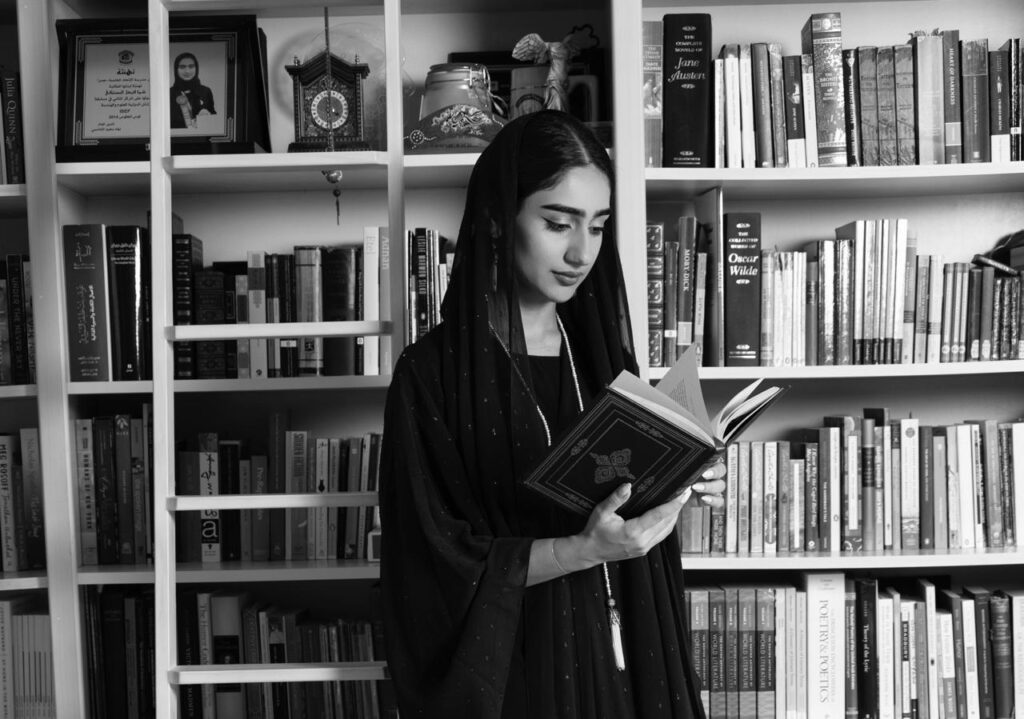
“Within the various individuals and communities I spoke to, I also had conversations with my grandparents, highlighting their memories. I dedicated this book to my mother and grandmother. It was with them that I went from house to house, and through this movement between places and stories, I learnt that language itself can be a home if you let it.”
“I want narratives to be grounded in dialogue – between those who tell the stories themselves. I envisioned the book as a space for community, a place to experiment with form and structure, and to explore the many subtleties of how stories can be told. I hope the future of storytelling is as bold and experimental as this city,” she shares.
Rachel Clarke, Author & Palliative Care Doctor
“When you are trying to describe a conflict as a journalist, you’re always thinking: how can I help my audience – whether viewers or readers – connect and empathise with events unfolding, perhaps hundreds or thousands of miles away? The most powerful way to inspire empathy is through storytelling. If you can tell the story of one individual, that’s how you reach people emotionally. So, covering conflict proved to be very important for my later book writing – I just didn’t know it at the time,” says Rachel Clarke.
Rachel – former broadcast journalist turned palliative care doctor – brings her instinct for storytelling to the world of organ donation. Her latest book, The Story of a Heart, centres on Keira and Max, their families, and the medical team involved, exploring not only the complexity of organ donation, but also the resilience and strength that emerge in its wake.

“If you’re a doctor who is also a writer, you carry two responsibilities: one to your readers and another to your patients and their families,” Rachel explains.
“The pain Keira’s family felt was equal to the love they had for her. Max’s parents’ pain matched how desperately they loved him and wanted him to live. And there is something so fundamental about grief being the flip side of love – the more you love someone, the more deeply you grieve if you lose them. And the only way to avoid that is not to love anyone at all – to keep your heart closed and safe behind walls. But who would choose a life like that?”
“Writing this book made me think hard about the importance of remaining as open-hearted to the world as we possibly can, even while knowing the price.” It has shown me how much strength, courage, and tenacity there is in every single one of us. Human beings are remarkable creatures – full of resilience and kindness. It’s an inspiring reminder of what people can endure, and what they can give,” she reflects.
Naga Munchetty, Television Presenter, Newsreader & Journalist
In her first book, It’s Probably Nothing: Critical Conversations on the Women’s Health Crisis (and How to Thrive Despite It), Naga Munchetty explores the many healthcare challenges women face. “As a journalist, your job is to tell other people’s stories. The moment the story becomes about you, you risk detracting from the person you’re interviewing,” says Naga.
That instinct was tested when she first spoke publicly on her BBC Radio 5 Live programme in May 2023 about being diagnosed with adenomyosis – a chronic and often misunderstood reproductive condition. “My editor at the time said, ‘no one will understand unless you say it happened to you. Imagine how many women were going unheard.’ And she was right,” says Naga. “Women wrote to say they’d booked GP appointments and insisted on being seen, and on a second opinion.”
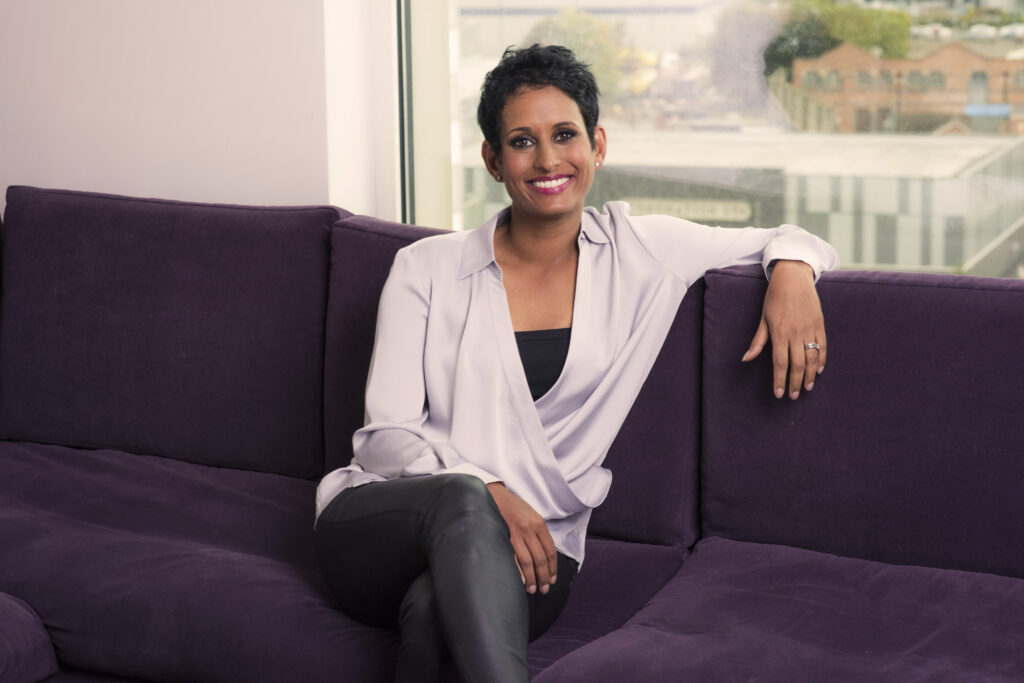
In the book Naga mentions that 2.5% of publicly funded research goes to women’s reproductive health – yet women are 51% of the population. “Conditions like adenomyosis, endometriosis, and PCOS are under-recognised, under-researched, under-taught. And the impact on women’s lives is enormous – not just the technicalities of the disease, but the impact it has.”
For Naga, storytelling became a tool – not to centre herself, but to widen the conversation to reach as many people. “This book is a collection of experiences, of which I will be forever grateful to the women who trusted me to tell their stories,” she shares.
Freya North, Author
The Unfinished Business of Eadie Browne is Freya North’s 16th novel. “It feels very much like a personal love letter – to youth, to a particular time, and place. When we’re young, we all behave in ways we later regret. Only with hindsight do we begin to assemble ourselves into fully formed adults. I had to allow the character of Eadie Browne to be insensitive at times – immature, even churlish. Readers might recoil from her occasionally, but I think they’ll still feel empathy, because we all remember moments when we didn’t behave our best. Those moments shape who we become,” says Freya.
Her books centre on poignant female characters and draw on elements of the chick lit genre, and she describes this one as “a coming-of-age novel. The spark came from taking my son to university. It made reconnect with the profound memories of my days there and the emotional impact of leaving home,” she explains.
“For me, that was the late 1980s, and early 90s. But leaving home is universal, whenever you do it. It brings heady mix of freedom and fear, that sudden awareness of how big the world is. And there’s also that strange feeling that people back home no longer know where where you are, who you’re with, what you’re doing, and whether you’re joyful or lonely.”
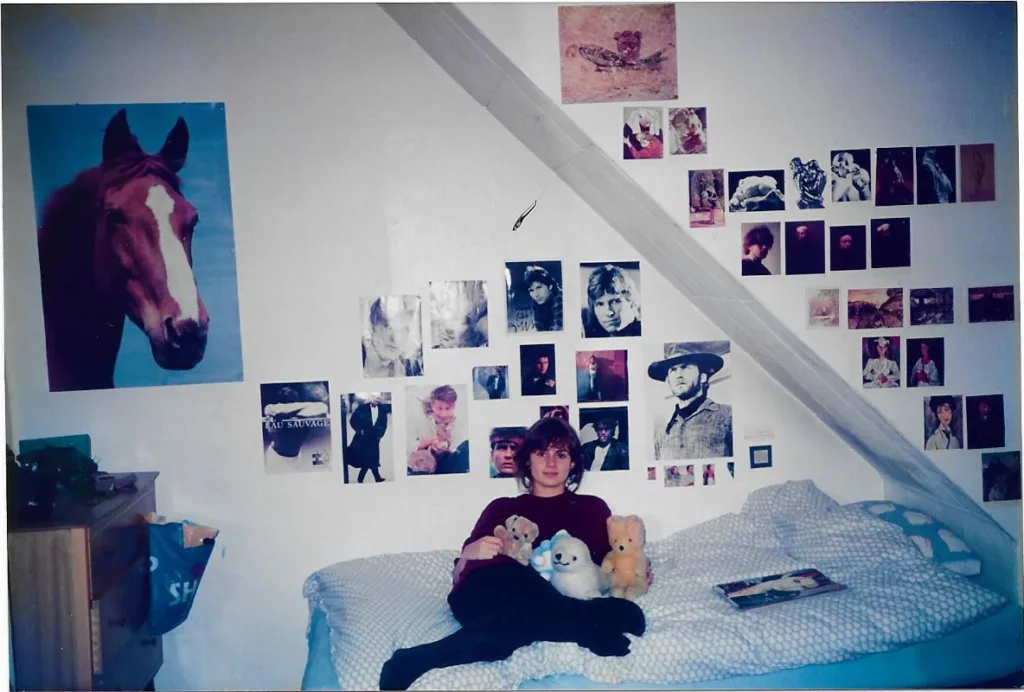
The experience of departure, and stepping into the unknown, is what sustained Freya as a novelist.
“I think that if, as a writer, you maintain curiosity about the world, you can sustain a long career. Some people might call me nosy – I prefer to say I’m curious. Whoever I meet, I want to know their story: what’s happened to them, what makes them tick, and what makes them feel. That preserves the sense of newness in what I write.”
Mira Sethi, Actress & Writer
Mira is both a writer and an actress, and for her storytelling is what connects the two. “As an actress, I’m a vehicle for someone else’s story. As a writer, I’m the one shaping it. I love both sides of that. Writing allows me to retreat, to be an introvert for a while, to process my thoughts. Acting, by contrast, brings me outward into the world.”
“I think the engine of the creative arts is the unconscious – the shared human unconscious. I never quite know what I’m going to write until I begin,” she continues, “Acting has been similar: the opportunities that have come my way have often surprised me, some wonderfully, some not.” She says.
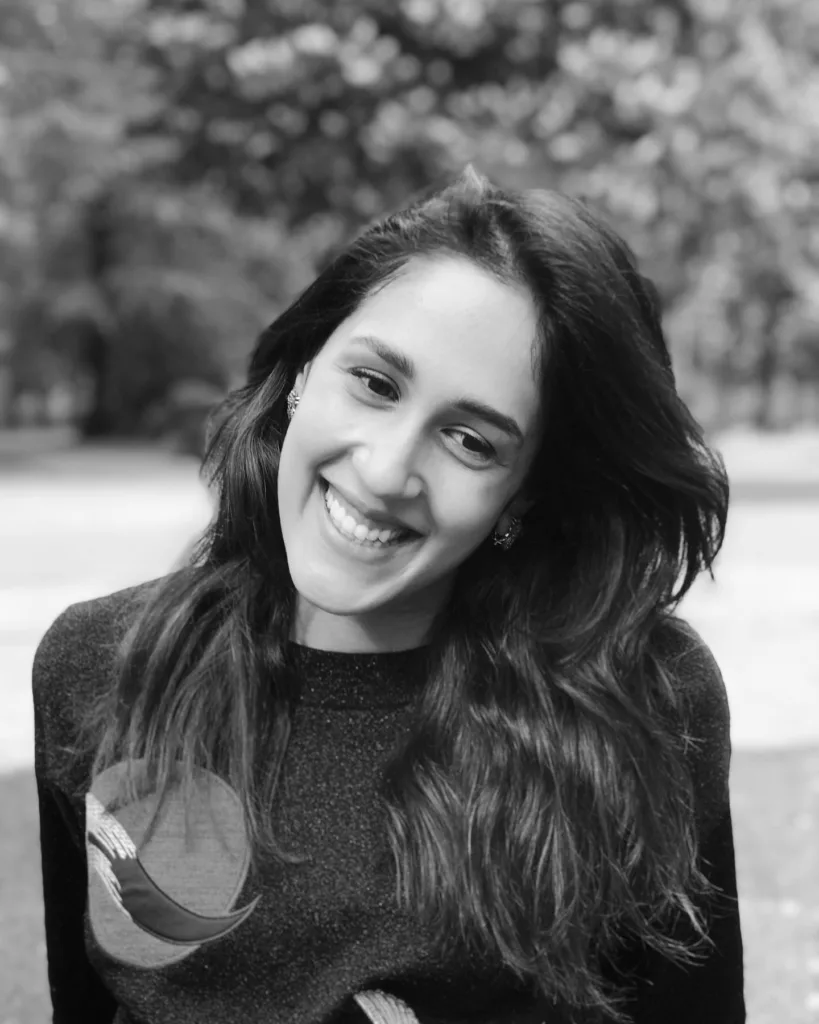
“Living in Pakistan has given me a rich, varied life on set – full of different flavours, scents, and accents. That texture of Pakistani life inspired her new book, Are You Enjoying. The strongest story in the collection takes place on set, with an actress on her first major show.” That world is one she knows intimately.
“Creative opportunity must always be weighed against personal conviction. When a role pushes against your personal value system, you have to examine what’s at stake. I reject or choose roles based on creative conviction,” she says. The same applies to her writing. She doesn’t write manifestos, “I write from the heart. Fiction introduces you to flawed, complicated people. That’s its job. And once a book is published, it no longer belongs to you. It belongs to the world. I do protect my voice – as an artist, my voice is everything. I can’t dilute it.”
Imagery Supplied