
Out Of The Blue: Why Tiffany&Co’s Fine Timepieces Are Enjoying A Major Moment
Tiffany&Co’s timepieces are enjoying a renaissance that draws upon legacy, says Vice President of Horlogerie, Nicolas Beau
When you hear the word ‘Tiffany’, you probably immediately think ‘Blue Box®’, swiftly followed by ‘Solitaire’.
Or, if you’re a little more up to speed on celebrity affiliations, Lady Gaga wearing the maison’s canary-hued legacy stone – The Tiffany Diamond – might come to mind, followed by the latest A-listers sporting Bird On A Rock brooches each awards season.
What you almost certainly won’t think – true watchmaking connoisseurs aside – is that the maison has been making fine timepieces for almost 180 years. In fact, after founding the brand in 1837, it was just 10 short years before Charles Lewis Tiffany began crafting watches, and in 1874 he established the largest manufacture in Switzerland of the era: a state-ofthe- art facility in the heart of Geneva that was eventually purchased by Patek Philippe in 1878. By which time, Charles had well and truly brought an American vision and avantgarde technology to the heart of Swiss savoir faire.
It is this legacy that Vice President of Tiffany Horlogerie Nicolas Beau is delving into with gusto, as he leads the charge on a major re-focus of the brand’s watchmaking heritage, arguably somewhat eclipsed by the success of its jewellery retail arm in recent years. “Not only are we rediscovering pieces in our own archives, but we are also discovering things
on the wider market, and we’re realising the full extent of the maison’s creativity in the 19th and 20th centuries,” he explained on a recent visit to the region, representing the maison at Dubai Watch Week.
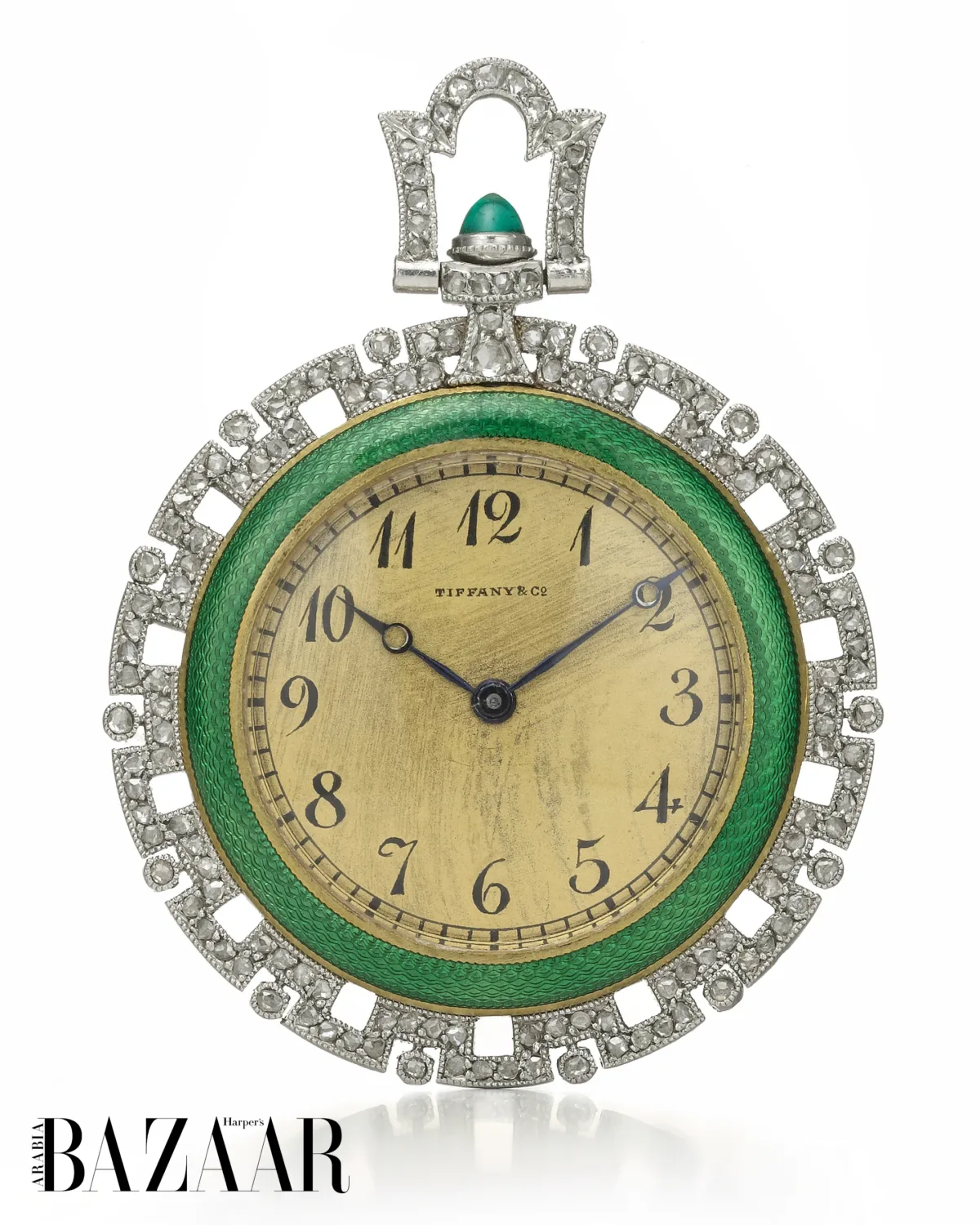
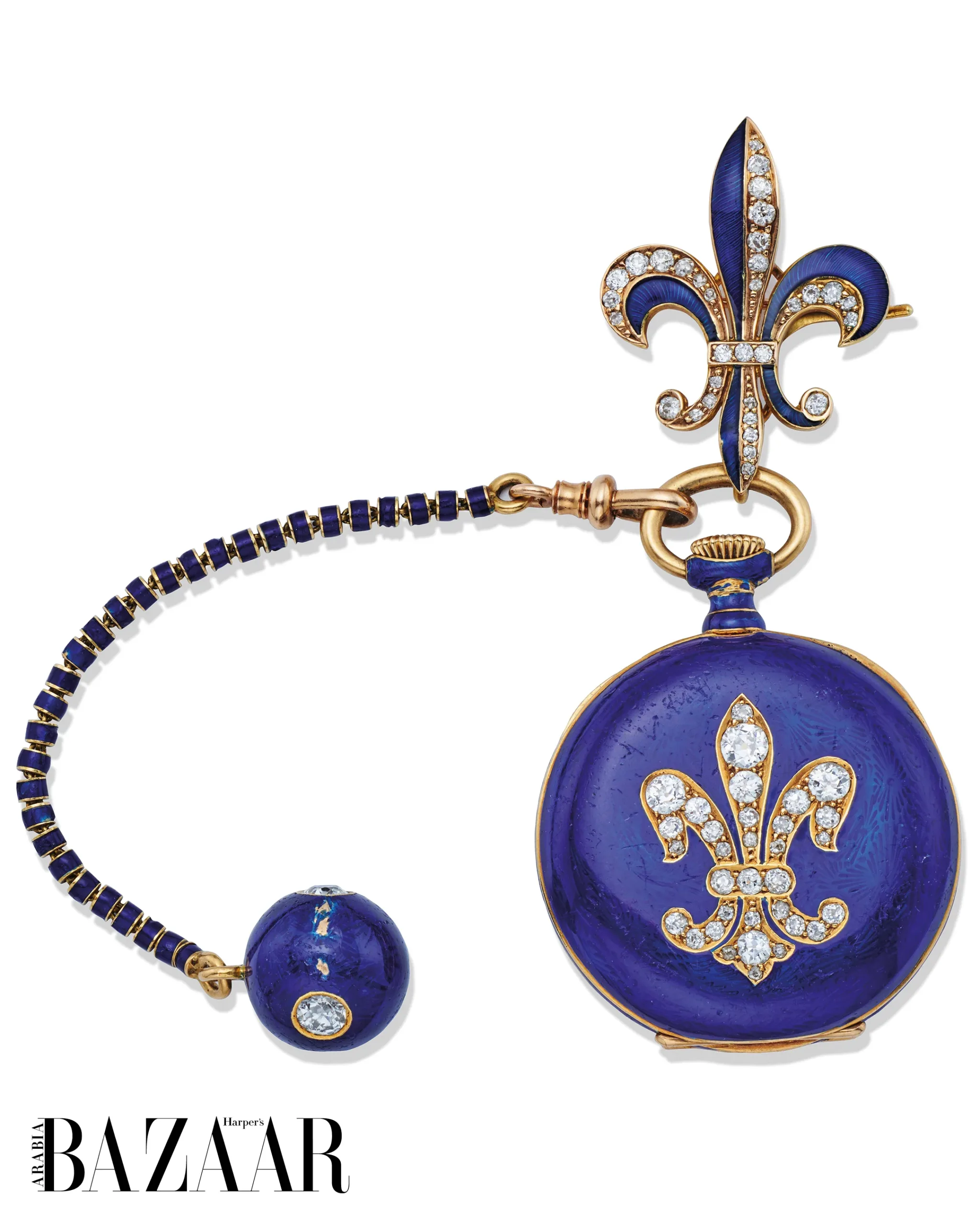
He didn’t come empty handed. Presented at Jumeirah Marsa Al Arab, the brand showcased an extraordinary array of archival timepieces and high jewels themed around rare colour, bold craft, and watchmaking excellence. The show opened with a selection of gemstone-set pendant pin watches that illustrated not just artisanal skill, but the brand’s wider historic significance and cultural relevance. At the time of their making – the turn of the 20th century – it was deemed uncouth for women to be caught checking the time; watches were instruments of enlightenment and power, and, thus, largely the preserve of men. By concealing tiny dials among delicate jewels to empower their female clientele, Tiffany&Co. was already displaying a little rebellion.
Elsewhere in the exhibition, a gold chain cascades to a gleaming crystal orb, one side bearing a grand monogram surrounded by speckled inclusions, with an elegant watch face on the reverse. These specks were, from the first shovel dug in the construction of the New York Subway, on March 24th, 1900. Quick to quip that dirt is generally considered the arch-nemesis of watchmakers, Nicolas explained how the maison had instead provocatively used dirt as a decorative poet, with a coup that proved its prominence in American history. “Sometimes, the most interesting and creative ideas are achieved by doing something that seems either a bit crazy, or simply impossible,” he mused.
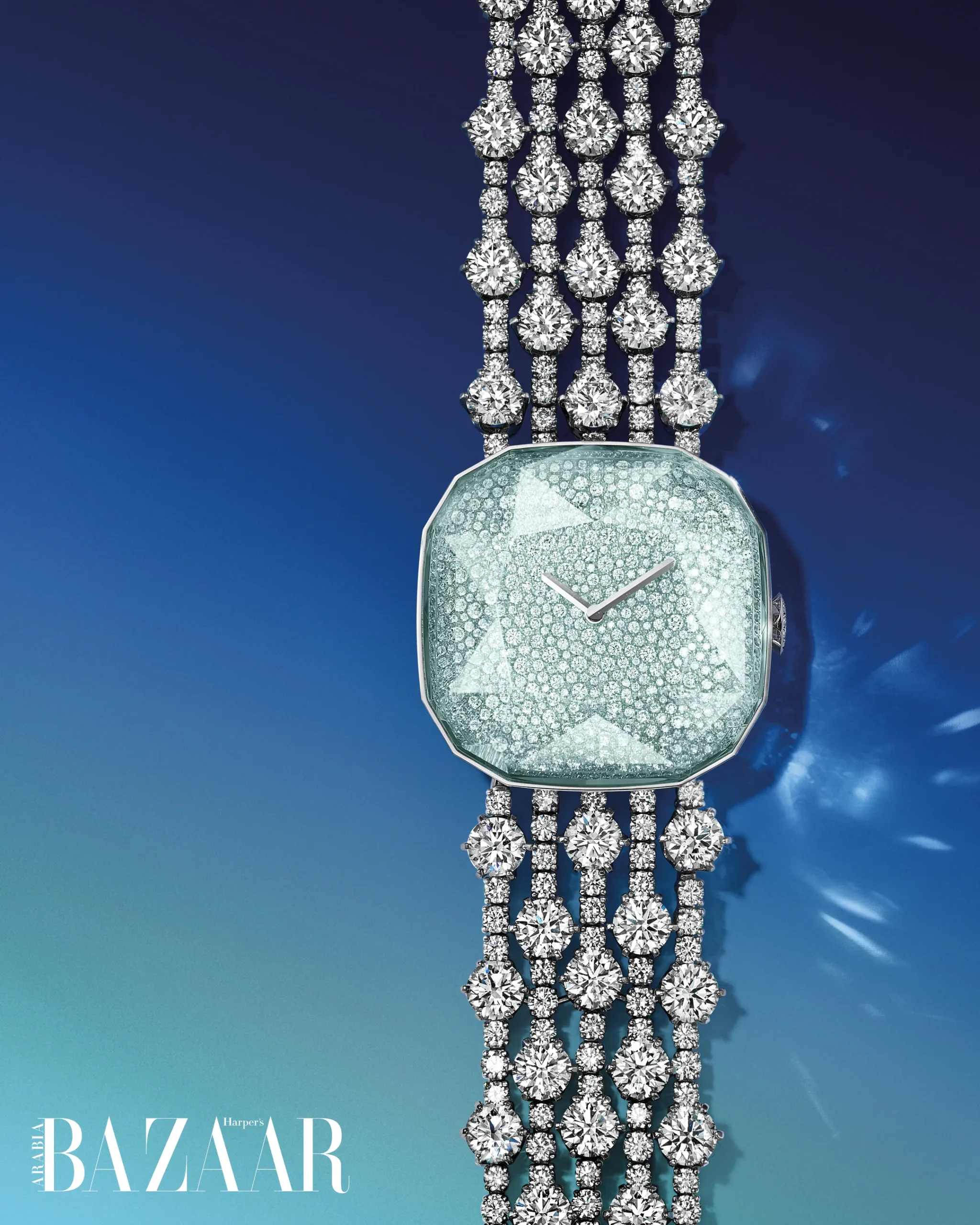
This daring agenda is synonymous with the house. Another timepiece – presented at the New York World’s Fair in 1939 – bears a crystal that appears delicately blue in hue. This is, in
fact, a portrait cut blue sapphire, through which the wearer can read the time; a decadent and challenging task today, but a feat of the era that feels stupefying. “In jewellery making, if you take a blue sapphire of that size and you slice it, you will be told you’re mad and called all sorts of names, because it’s absurd,” says Nicolas. “But we recently did it again on another watch, with a 34-carat aquamarine. We are inspired by the past; we’re not reproducing watches that already exist, but we’re bringing these ideas into the present collection.”
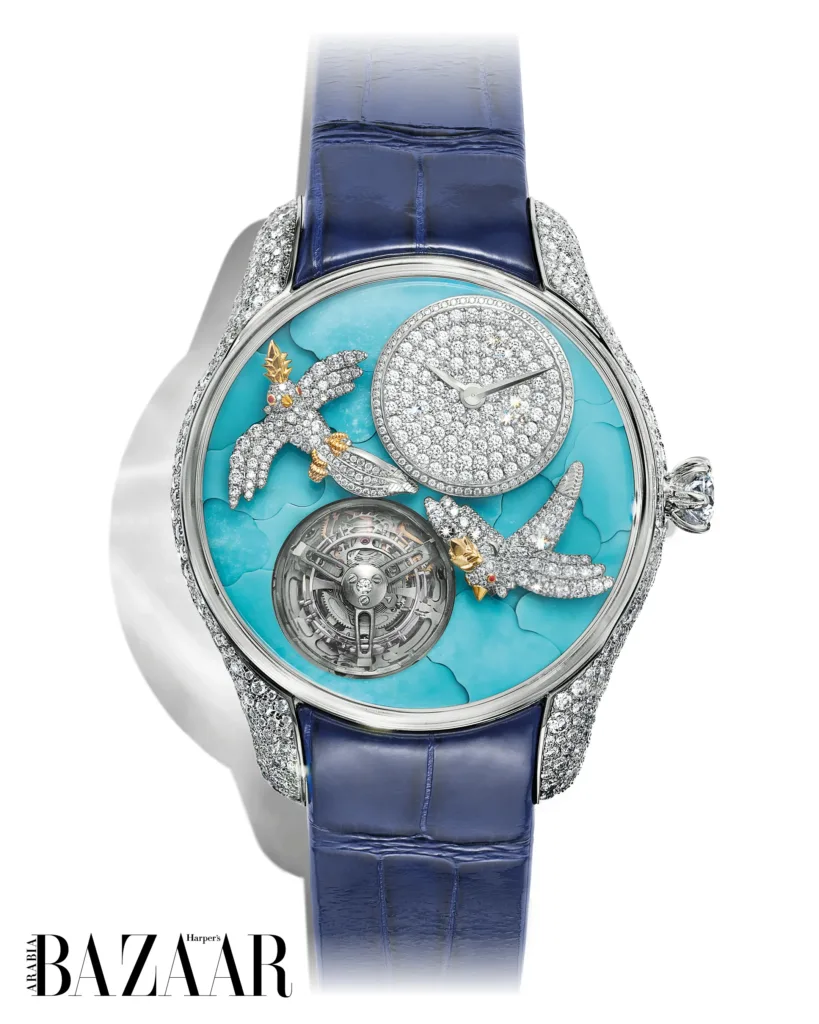
The crazy and ambitious theme continued throughout the exhibition, most notably with its Bird On A Rock timepieces. Nicolas tells us that the very spirit of the Bird On A Rock motif is grounded in playfulness, ever since it was first conceived by designer Jean Schlumberger in the mid-1960s. “Translating this motif into a watch could have just meant placing a bird on the dial, but it wouldn’t have been playful enough. So we created an entirely new system so that the bird feels alive, so that the watch comes alive,” explained Nicolas. One timepiece featuring a hefty tanzanite was nominated for a 2025 GPHG award, another nod (to those in the know) to the brand’s legacy for exceptional gems, as it was the first house ever to set the stone in jewellery, a year after it was first discovered in the foothills of Mount Kilimanjaro in 1967. Another first-to-market flex.
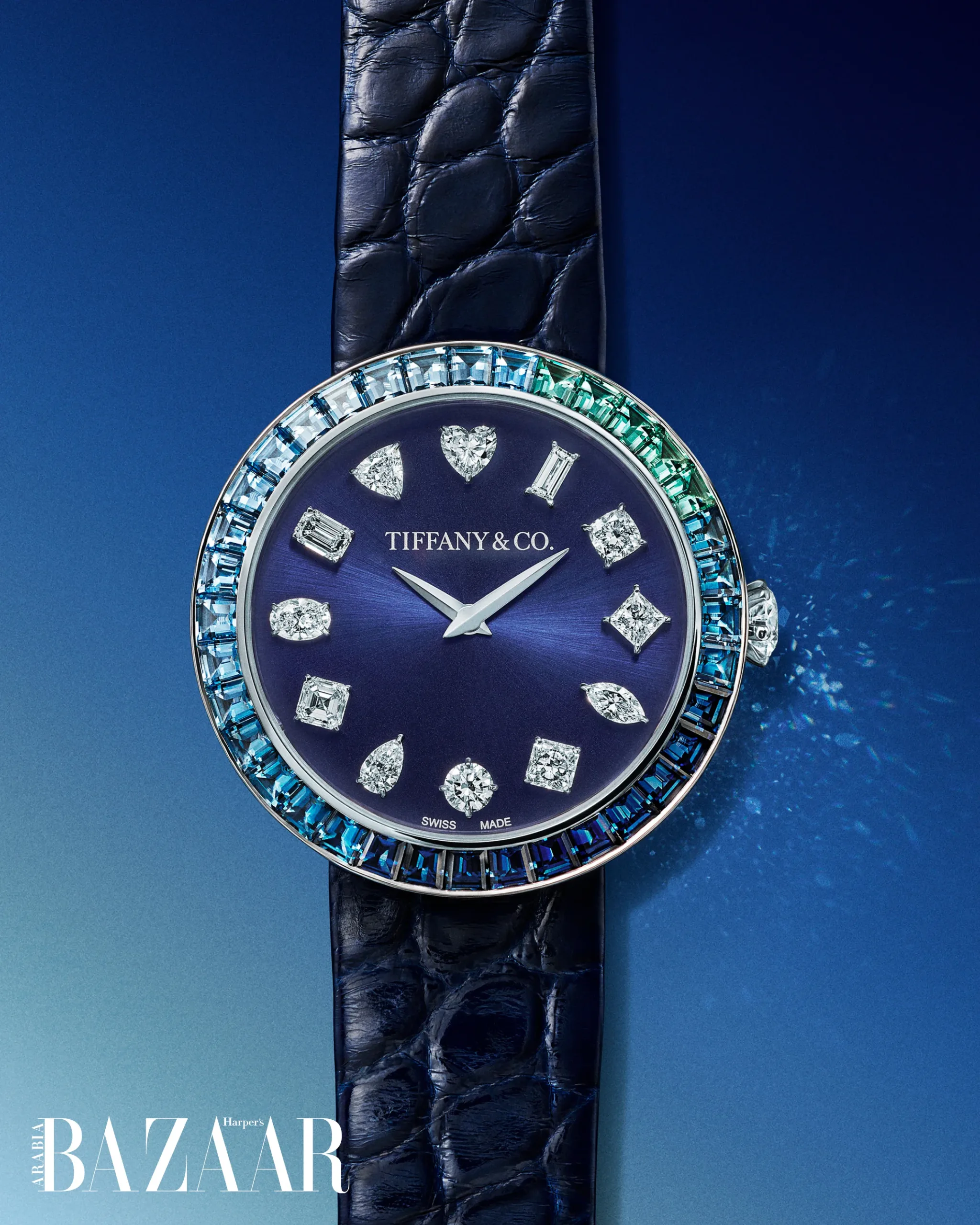
Nicolas is quick to point out that these timepieces have all been conceived in just the last few years, but the brand has already announced another batch of newness for 2026, unveiled for LVMH Watch Week, which took place in January. The brand’s jewellery-making heritage was honoured once more, with the Eternity collection boasting baguettecut stones for the first time, and 12 different diamond cuts to mark the hours. The gradient of the baguette cut blue stones on the bezel – which Nicolas coined the ‘Tiffany Rainbow’ – represents the various hues of the Tiffany Blue Book, the first direct-mail catalogue in the U.S, launched in 1845 and reproduced each year in a different shade of blue. “If anyone’s indecisive, this is the perfect watch – you don’t have to choose a particular diamond cut, they’re all here,” Nicholas says with a smile. The Sixteen Stone collection, meanwhile, announced a new 36mm timepiece with a rotating ring that bears the brand’s signature cross-stitch motif – an emblem inspired by Jean Schlumberger’s textile manufacturing heritage, and his skill for transforming precious metals into glittering threads.
It is, however, the Tiffany Timer that is catching the eye of connoisseurs. To celebrate the 160-year anniversary of the Tiffany Timing Watch – one of America’s first ever stopwatches – the maison has conceived a limited-edition timepiece crafted in platinum with subtle jewellery touches. Featuring diamond baguette hour indexes, a faceted crown that speaks to the brand’s engagement ring solitaire settings, and a dial in Tiffany Blue® lacquer that requires 60 hours of artisanry, this is a highly-precious watch that only 60 lucky individuals will own – mark our words, another little piece of history to pocket.
Images Supplied.
Lead Image Credits: 1915 Pendant Watch with Diamonds and Emerald Enamel, POA, Tiffany&Co. Archives.
From Harper’s Bazaar Arabia February 2026 Issue.