
Shrouded In Mystery: Van Cleef & Arpels Latest High Jewellery Collection Celebrates Ancient Egypt In All Its Glory
Van Cleef & Arpels has been crafting jewels in homage to egyptomania since the early 1900s, but its latest high jewellery Collection is an extravagant ode to Ancient egypt and the ultimate canvas for some of its most ambitious mystery Settings yet
“What I really want to know is how do you hook readers into the storytelling of a collection like this?” Alessandro Maffi, President of Van Cleef & Arpels Middle East, India, Africa and Türkiye, asks me as we board the plane back to Dubai after spending four days in Paris discovering the maison’s new High Jewellery collection; Fascinating Egypt. Well, I think it always helps to begin with a good ghost story.
On our trip, Jean-Guillaume Olette-Pelletier, one of only six specialists in the world who can decode Ancient Egyptian hieroglyphic cryptography – was on hand to deliver the requisite spooky tale. Talking us through a collection of ancient Egyptian artefacts – our first introduction into the theme of the collection and the extraordinary civilisation that has inspired the maison’s latest oeuvre – Jean-Guillaume merrily handed us pieces of aquahued faience tiles that lined burial tombs, delicate miniature idols, and fragments of stone tools dating back some 4,000-5,000 years as casually as if we were handling weekly groceries. When it came to one glass box, however, he refused to open it. Containing a miniature figurine from the first pyramid of Imhotep, apparently a protective amulet against snakes and scorpions, Jean-Guillaume mysteriously gave this box a wide berth, explaining that whenever he handles it, he becomes unwell. Coupled with a sobering tale of working solo one evening in an ancient Egyptian tomb, before feeling an ominous, snake-like presence creep up behind him, and glimpsing a flash of silver eyes… he had each jewellery editor sitting before him hooked – more so than Brendan Fraser ever managed in The Mummy.
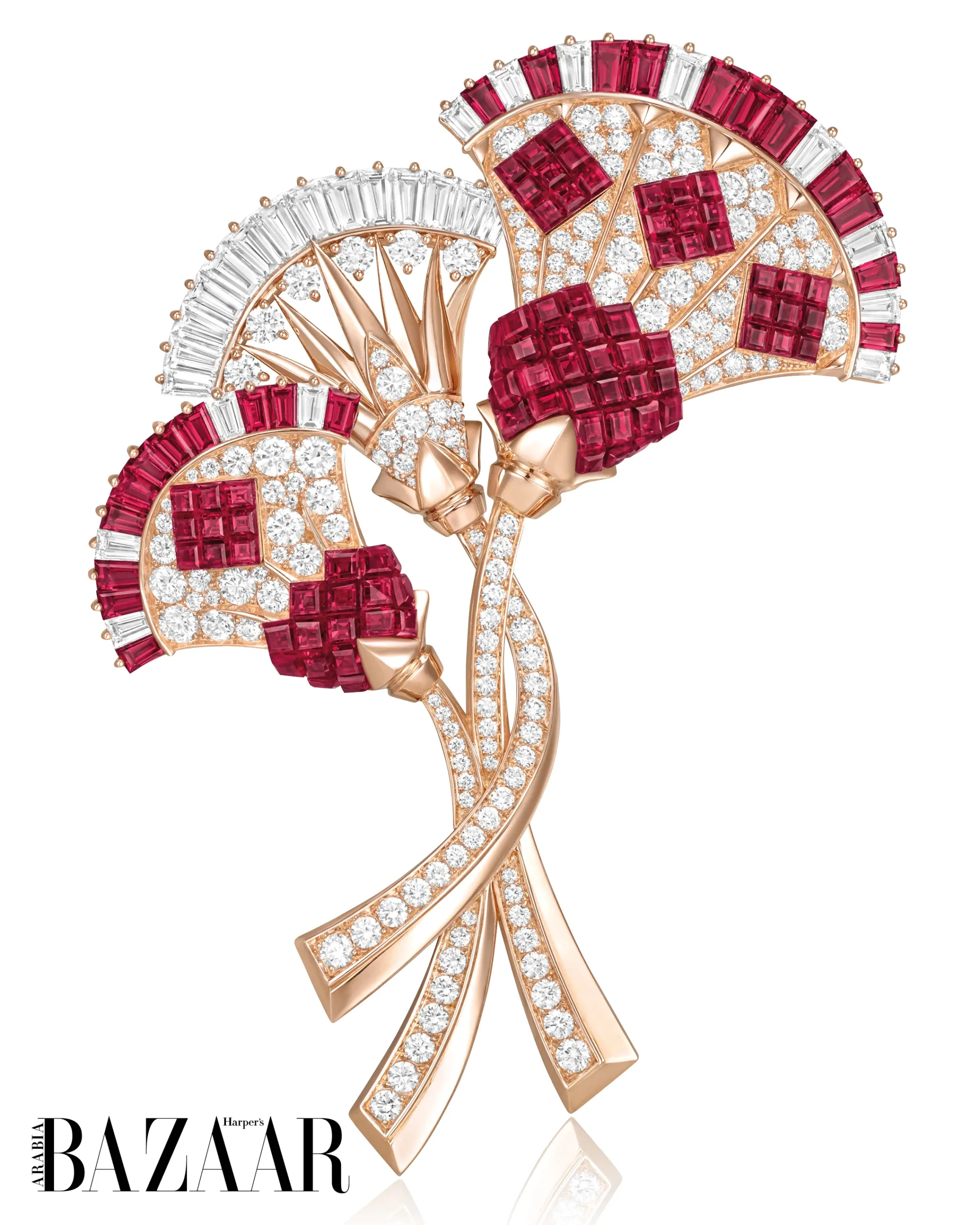
Fleur de Lotus Mystérieuse Clip in Rose and Yellow Gold with Rubies and Diamonds, POA, Van Cleef & Arpels High Jewellery
And that is the power of Ancient Egypt. Curses, myths and mystery are par for the course, and only cement the period’s magnetism. Generally considered to date from circa 3,150 BC, Ancient Egypt is one of the oldest civilisations that we have come to discover in detail, almost entirely thanks to its funerary traditions. By burying the dead and their belongings within its majestic pyramids, where air and moisture were scarce, delicate items such as wood, cloth and papyrus managed to survive for thousands of years alongside the precious offerings of gold and gemstones that were laid to rest with its kings and queens, enabling us to glean a significant understanding of its culture that would have otherwise been lost to the sands of time. The pyramids became three-dimensional, interactive diaries of the Egyptian royalty of the era.
This history is inextricably linked to the legacy of Van Cleef & Arpels. Founded in 1906 in Paris, the maison bloomed during a peak period of Egyptomania; the pop-cult fascination with Ancient Egypt. There was a series of catalysts – Napoleon Bonaparte embarked on a major expedition to Egypt in 1798, then came the deciphering of hieroglyphs on the Rosetta Stone by Jean-François Champollion in 1822, who was shortly after named the first curator of a new department at the Musée du Louvre dedicated to Egyptian antiquities, and in 1836, one of two ancient obelisks from the temple of Luxor was erected on the Place de la Concorde, a gift from the Viceroy of Egypt. By the end of the 19th century, Egyptomania was seeping into opera, art, and jewellery making, with scarabs, sphinxes and lotus flower motifs proliferating across Paris’ creative scene.
In 1922, there was a seismic shift – Howard Carter’s excavations unearthed the perfectly preserved tomb of Tutankhamun, filled with precious jewels and treasures, and the world’s gaze settled on Egypt’s enigmatic allure. There was an immediate influence on the maison, with important creations from 1923 and 1924 inspired by this outpouring of global enthusiasm, 10 of which now reside within the maison’s patrimonial collection. “For many years, the maison Van Cleef & Arpels, so inspired by Egypt in the 1920s, has wished to prolong the story and present its own vision of this ancient heritage,” explains Catherine Rénier, CEO of Van Cleef & Arpels, who meets us in Paris to present the new collection. In the 1930s and 50s, the maison’s connection to the region deepened, with the Egyptian royal family acquiring several important jewels from the house. One of such was a peony clip featuring Mystery Set rubies, and in 1939 the maison received a special order – a diadem, necklace, and pair of earrings for the marriage of Princess Fawzia of Egypt, along with a diamond and platinum suite for Queen Nazli of Egypt. Egypt and Van Cleef & Arpels’ archives remain inextricably linked, and now, 2026 is seemingly the moment to bring that connection to the fore like never before.
Featuring 180 pieces of abstract and figurative pieces that explore ancient Egyptian culture in all its facets, Fascinating Egypt offers an imaginative, dreamlike interpretation of Egypt that will remain timeless through the ages. At the heart of the collection is a rainbow of extraordinary gems that speak not only to the maison’s authority and expertise within the gemsourcing world, but also to Egypt’s rich vibrancy and the symbolism of colour – never purely decorative, and always used to convey further meaning.
In Ancient Egypt, gold represented the sun, the flesh of the gods and the pharaohs, while silver hues represented the moon and the bones of the gods. Lapis lazuli, sourced from Afghanistan, was representative of the hair of the gods and the sky, while turquoise represented regeneration and red carnelian represented rebirth and protection. Green upon the face – often seen on the face of a pharaoh on his sarcophagus – was to help him to be reborn. Key pieces of the collection interpret these colours with deft panache – the Vénus Égyptienne clip partners lapis lazuli, turquoise and gold in a solar disk tribute to the goddess Hathor, while three bracelets depict three Egyptian panoramas in multi-coloured sapphires, black spinels, onyx, diamonds, spessartite garnets, emeralds and rubies, artfully studded like micro-mosaics.
Craftsmanship is, inevitably, the keystone of the collection. Gold gadroons, beaded motifs, and engravings give the jewels three-dimensional appeal, with sculpture, hammering, and unique polishing techniques creating multi-sensory appeal, as tactilely intriguing as they are bold in hue. Each piece is also hallmarked with a cartouche and hieroglyphics indicating the Van Cleef & Arpels monogram – an oval symbol used only to contain the names of the kings, and a key motif that came to tell us so much about this ancient era.
The real standout artisanal element of the collection, however, is its ability to showcase the maison’s unique Mystery Set technique, employed across 16 pieces. Patented by Van Cleef & Arpels in 1933, the Mystery Set savoir faire is synonymous with the house – a magical technique that secures gemstones within a whisker fine gold grid, utterly invisible once the stones are in place, allowing its master craftsmen to create an uninterrupted carpet of total colour and scintillation. Sneaking into the maison’s High Jewellery workshop, we witnessed this technique in action – the atelier’s most experienced Mystery Set artisan showing us the honeycomb frame and calibré cut gems with almost imperceptible grooves that slide onto each metal rail – each stone hand-selected from a glittering pile of perfectly colourmatched stones.
One of the most impressive Mystery Set pieces is the Fleur de Lotus Mystérieuse, a lyrical piece in rose gold, yellow gold, rubies and diamonds. The lotus flower was a symbol that was ubiquitous in Egyptian iconography, and has appeared regularly in Van Cleef & Arpels’ creations since the 1910s, but this modern piece is an ode to the Mystery Set technique rarely seen before – a combination of round and baguette cut diamonds, paired with Mystery Set rubies that bring the lotus to life in startling vivacity. This piece balances velvety petals with unexpected goldsmithing techniques – including mirror polished corollas and stems – to create lifelike texture, while its interlacing silhouette is intended to evoke the vitality of nature.
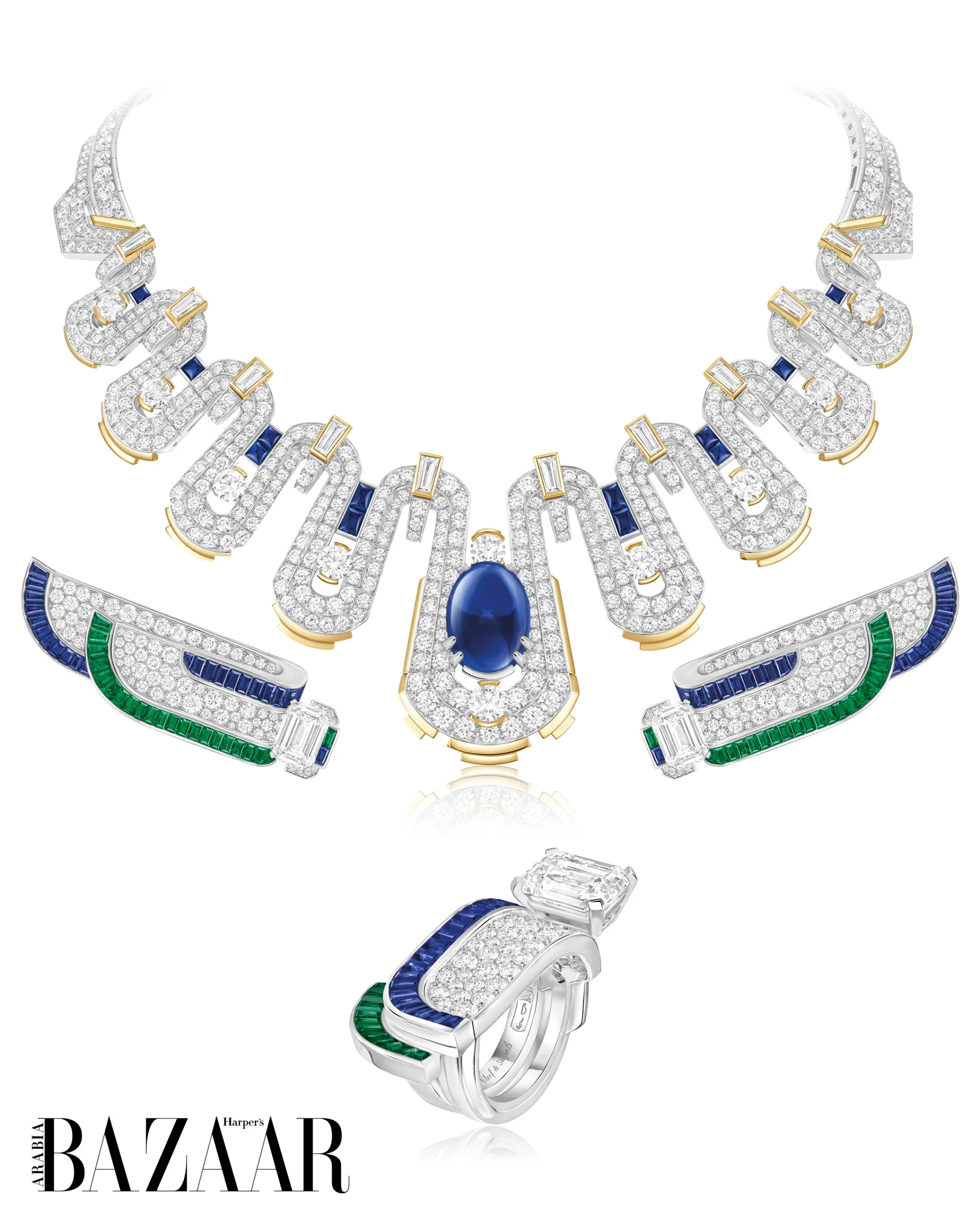
Catherine explains that the transformable Déesse Ailée Mystérieuse necklace and ring set was similarly complex to create – its Mystery Set rubies had to be re-cut individually, and the stones were given a buffed bombé top and curved bottom to allow total articulation – an aesthetic and technical feat. Meanwhile the collection’s three mythology clips – the Bénou Mystérieux, the Griffon Mystérieux and the Bastet Mystérieuse – another three notable Mystery Set pieces. “They have a play of colours that I don’t think we have ever done before; this collection dared us to go to a new level of the association of colours with the Mystery setting,” explains Catherine, referring to the interplay of rubies, sapphires and emeralds set alongside hardstones such as turquoise, onyx, and delicate mother of pearl.
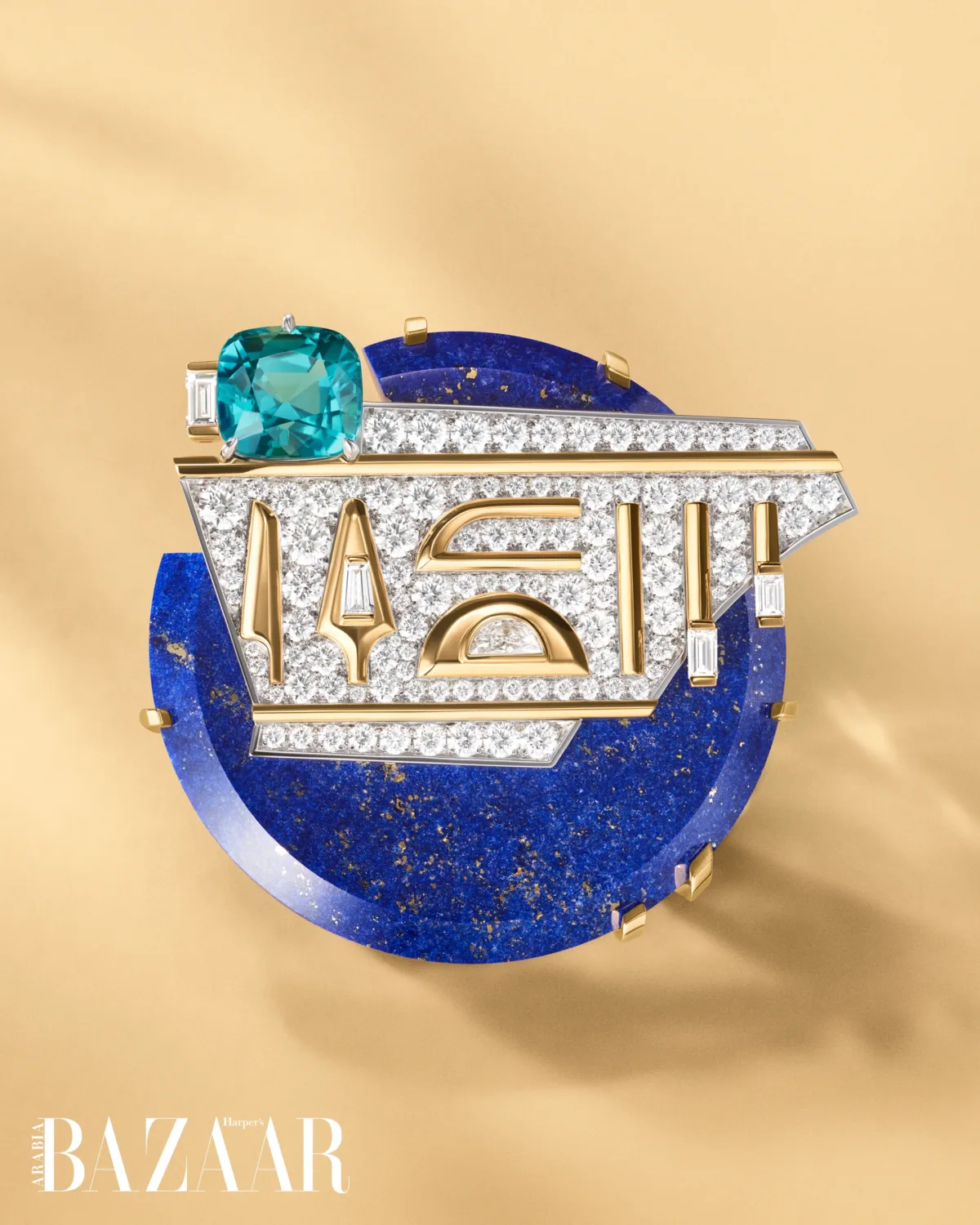
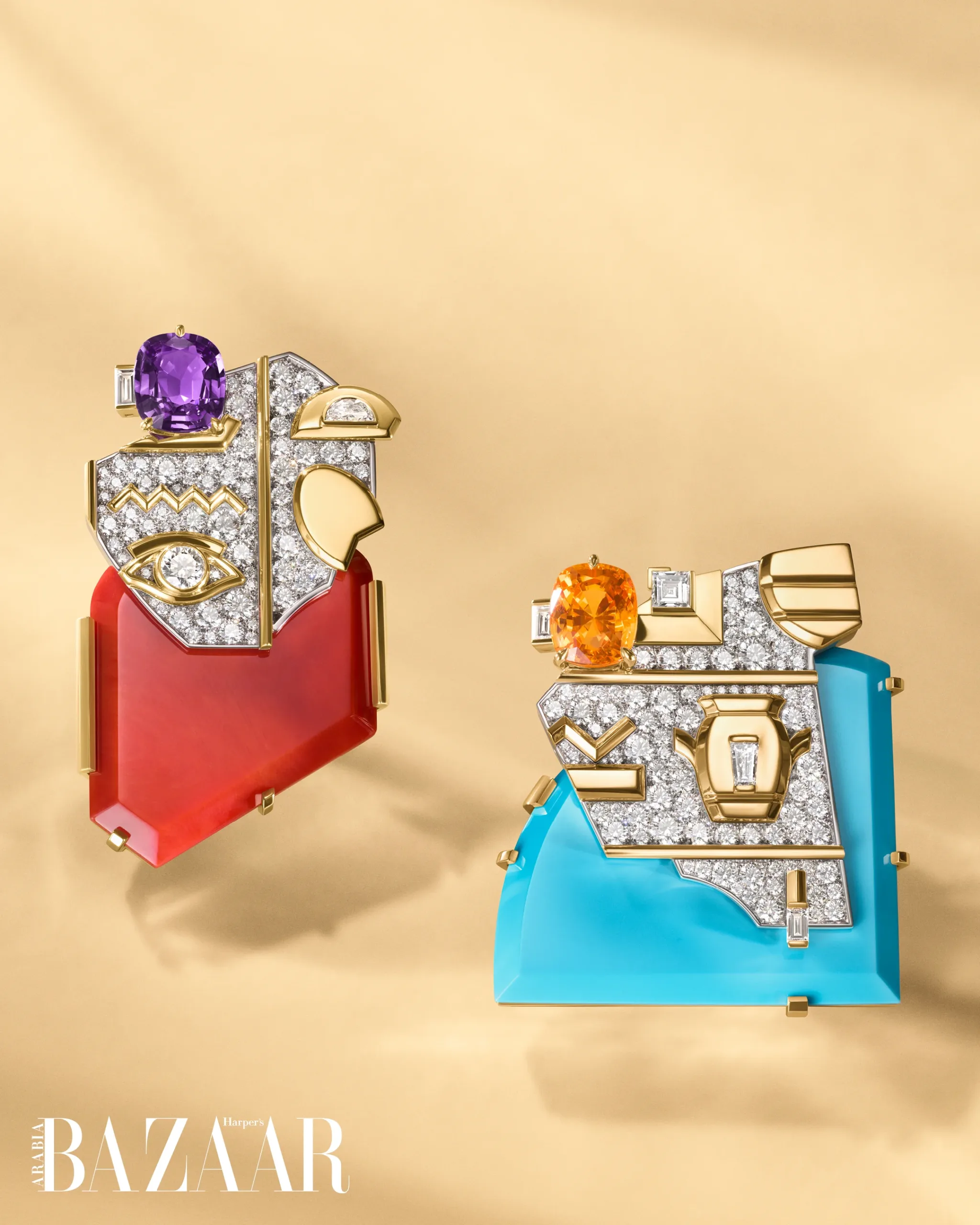
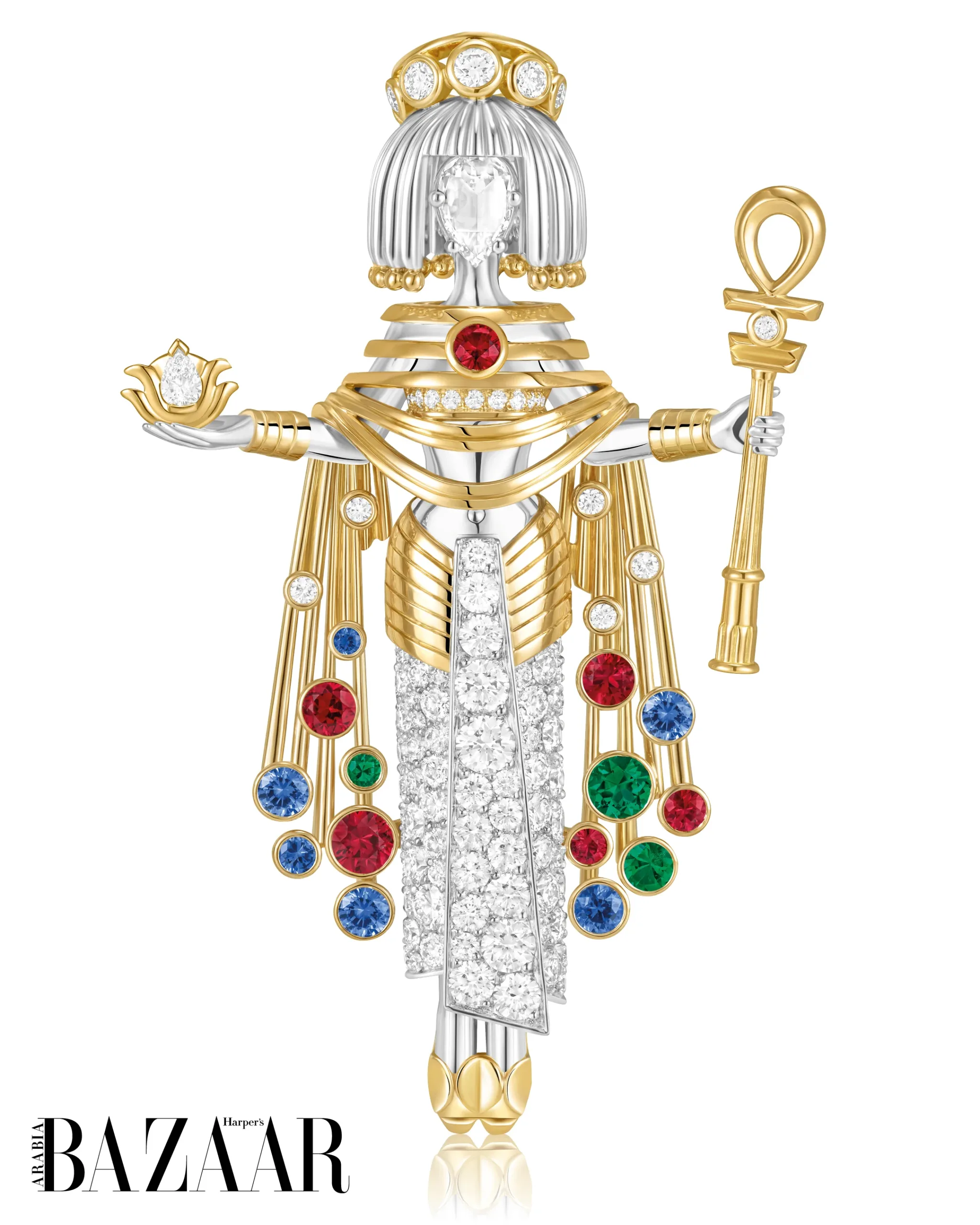
These weren’t the only firsts – the collection became an exploration ground for new creative expression, including figurines that have never appeared before in the maison’s repertoire – pharaohs and dancers carrying emblems of the period; a tambourine, a lotus, and a flabellum fan of leaves. The Fragment de Bonheur, Fragment Magnifique and Fragment de Beauté clips feel perhaps more contemporary than any of the maison’s designs thus far – audacious pairings of coloured gems that pay homage to archaeological discoveries, adorned with golden hieroglyphics. In the flesh, their magnetism is inescapable. But that is the magic of Ancient Egypt. In 1963, it was impossible to look away from Elizabeth Taylor’s Cleopatra. Across five films, The Mummy blockbuster movie franchise grossed Dhs6.7 billion [US$1.8 billion]. Assassin’s Creed, set in Ptolemaic Egypt, is one of the most successful video games of all time. And who doesn’t remember Cher, styled by Bob Mackie in the 1970s as an Egyptian disco queen, or Beyoncé and Jay Z, pictured in front of the Great Sphinx of Tanis, in the belly of Paris’ Louvre museum? Egypt, in all its forms, is utterly addictive. Add diamonds, and lashings of coloured gems, and the drama is simply irresistible.
Lead Image Credit: Top: Soleil Aile Earrings in White and Yellow Gold with Diamonds; Above: Fragment de Beauté Clip in White and Yellow Gold with Indicolite Tourmaline, Lapis Lazuli and Diamonds, POA, both Van Cleef & Arpels High Jewellery
From the Harper’s Bazaar Arabia July/August 2026 Issue