
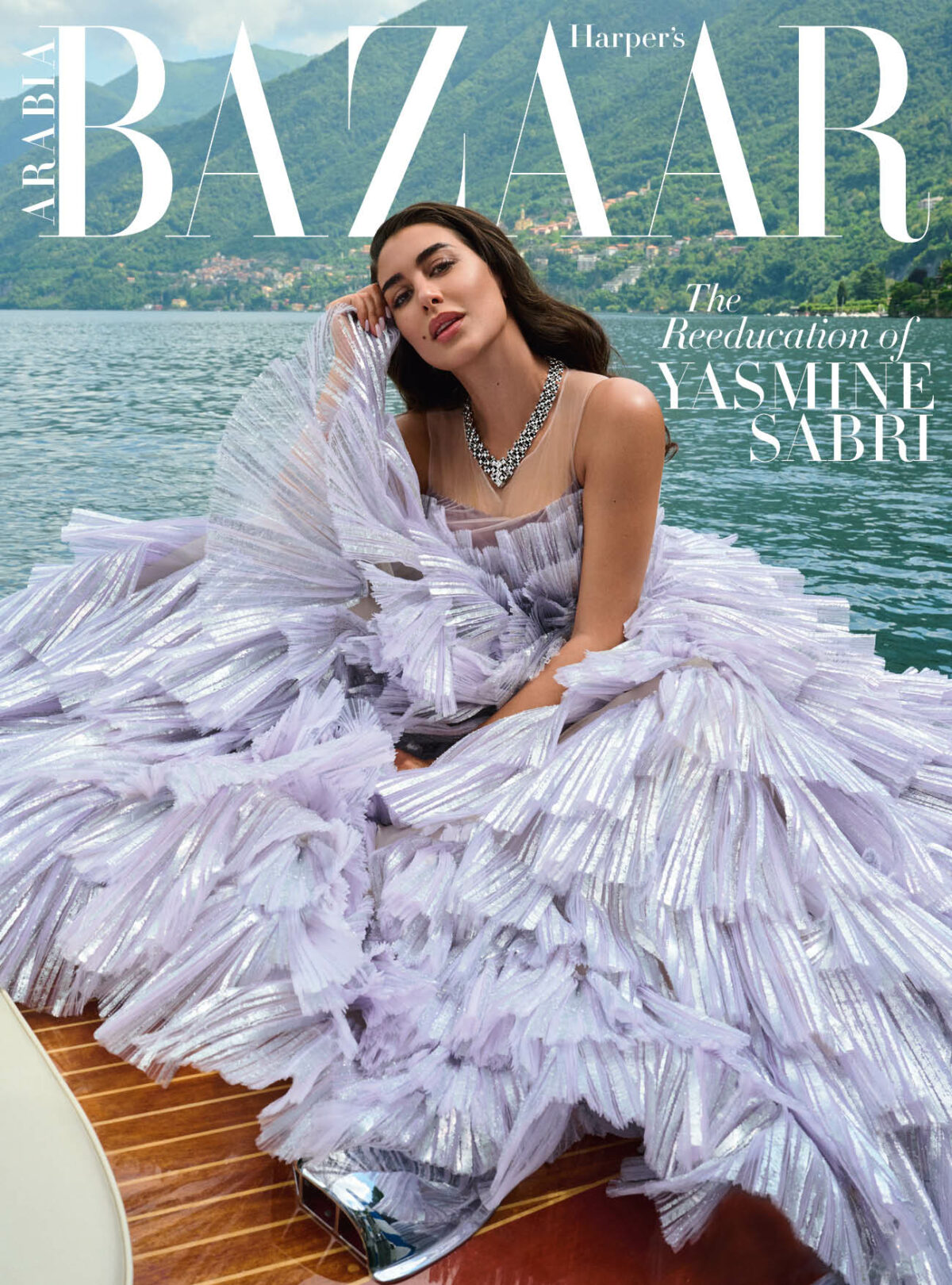
Yasmine Sabri On Self-Discovery, Achieving Balance and Inside-Out Beauty
Smart, seasoned and wildly successful, the Egyptian actress shares with Bazaar how she’s now looking inward before writing the next chapter…
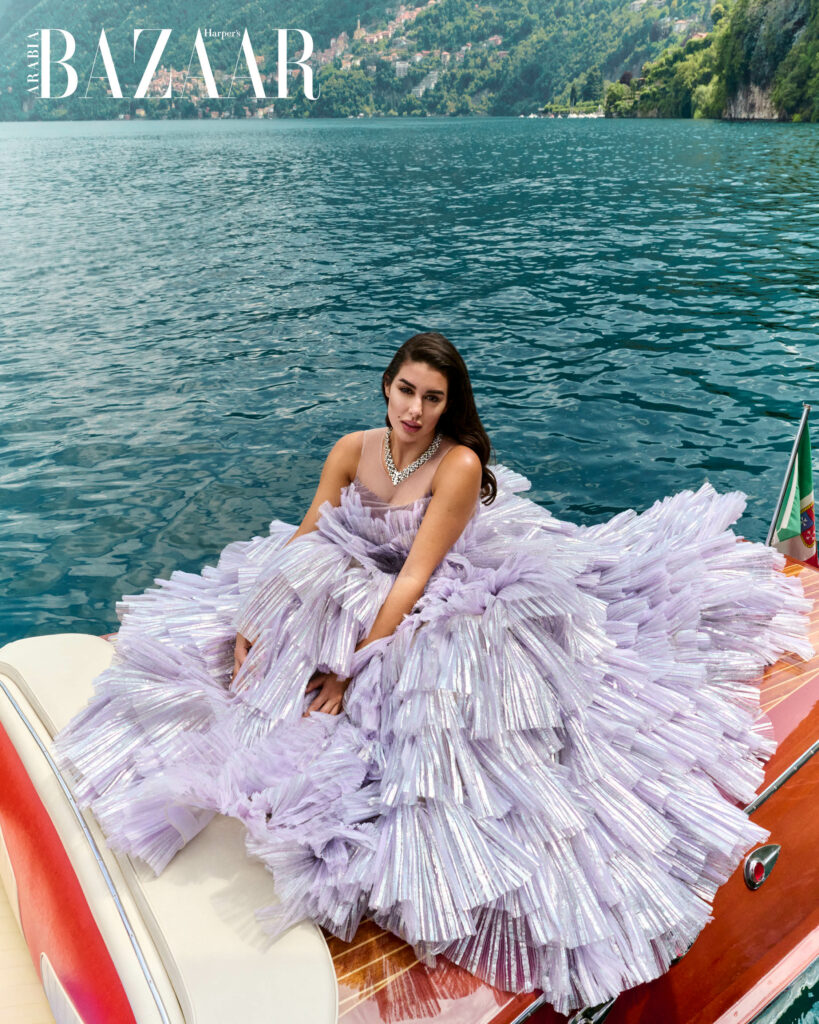
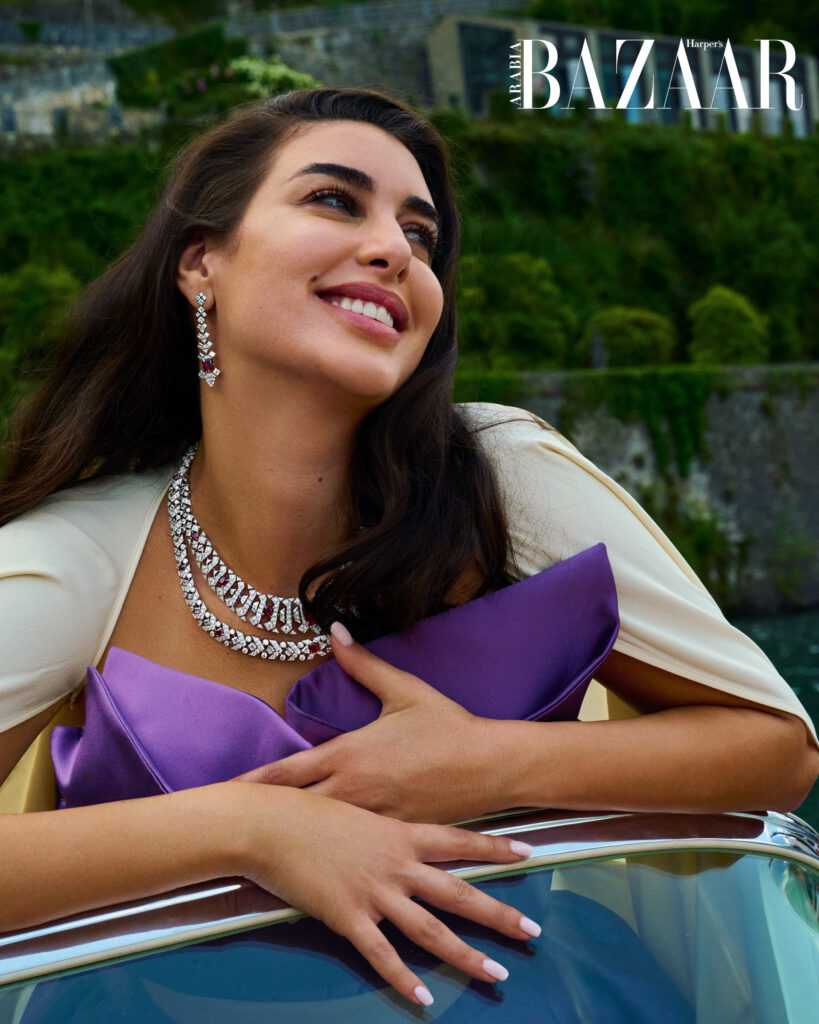
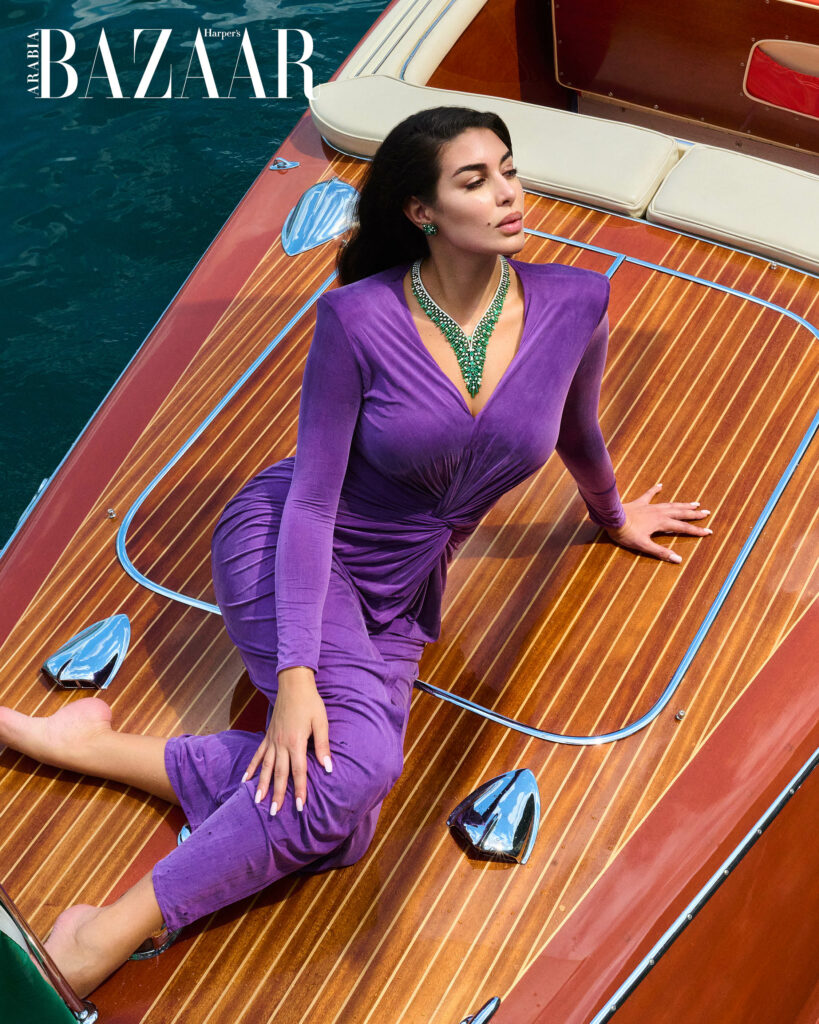
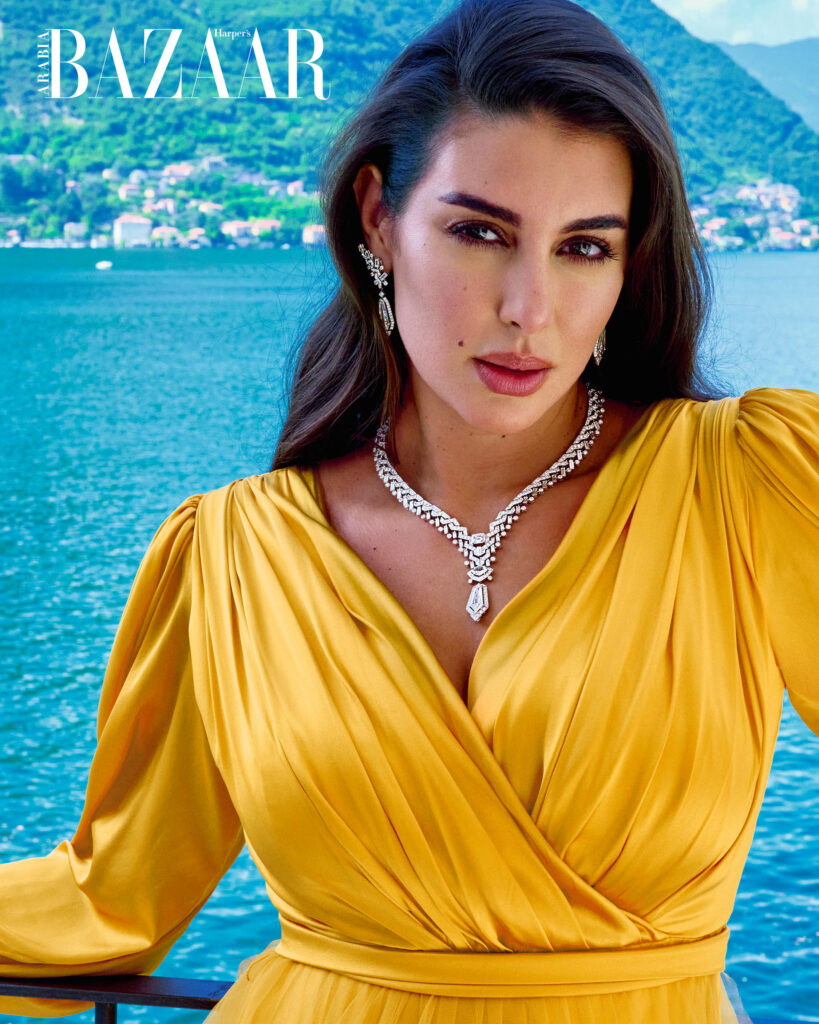
Yasmine Sabri is very much at home. At least, it certainly looks that way. Dripping in colossal Cartier jewels, she reclines on the front of a wooden Riva Aquarama as it rocks gently on Lake Como, head tilted up to meet the Italian summer sun. In the distance, balustrade-fronted stone villas stud the famed rolling green hills surrounding the water, each one more picturesque than the last.
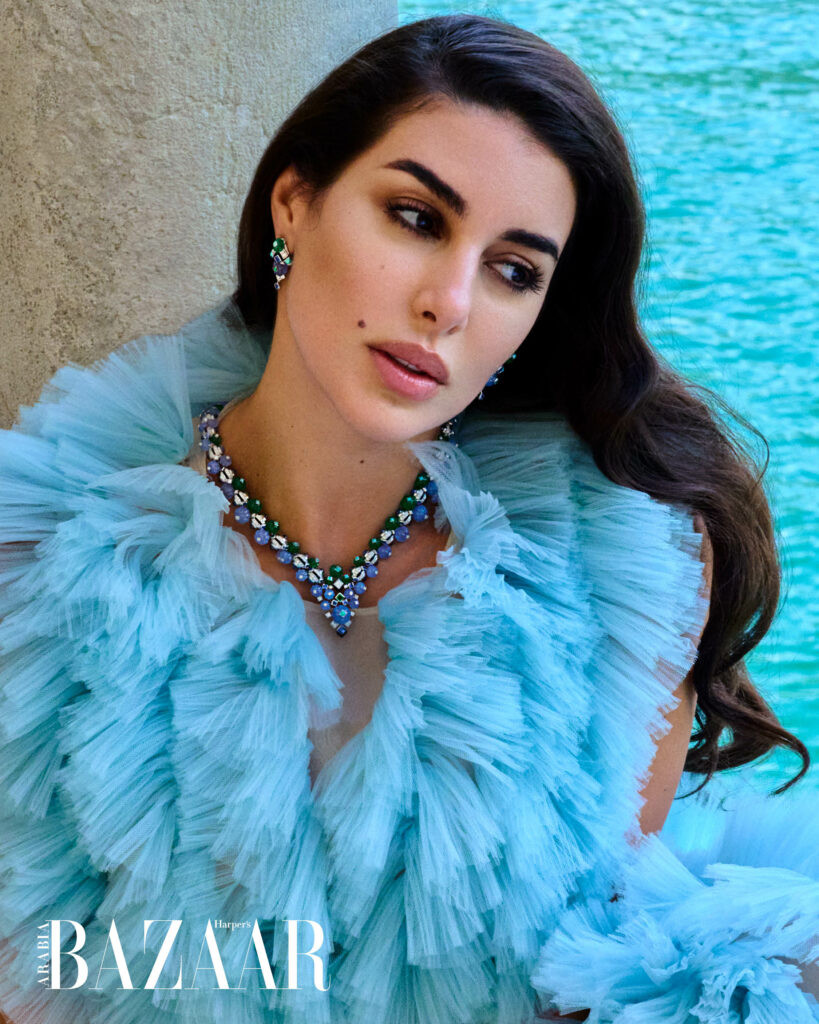
Como – particularly on a day like today – is Italy on its best behaviour. Absurdly beautiful, (“It’s like washing your eyes,” Yasmine exclaims), impossibly chic… and suiting her down to the ground. After all, much has been made of her Old Hollywood beauty, playing out perfectly right now against one of the most cinematic backdrops in the world. One could say they were made for each other. The Lorenesque levels of va-va-voom are undeniable, but make no mistake – this 21st century bombshell (and bombshell she is), is proudly Arabic through and through. Today, though, we’re exploring a lesser-seen side to Yasmine’s beauty – shooting her in mille feuille ruffles, pretty, girlish shades and dramatic, floor-sweeping silhouettes; a softer, altogether more romantic feel.
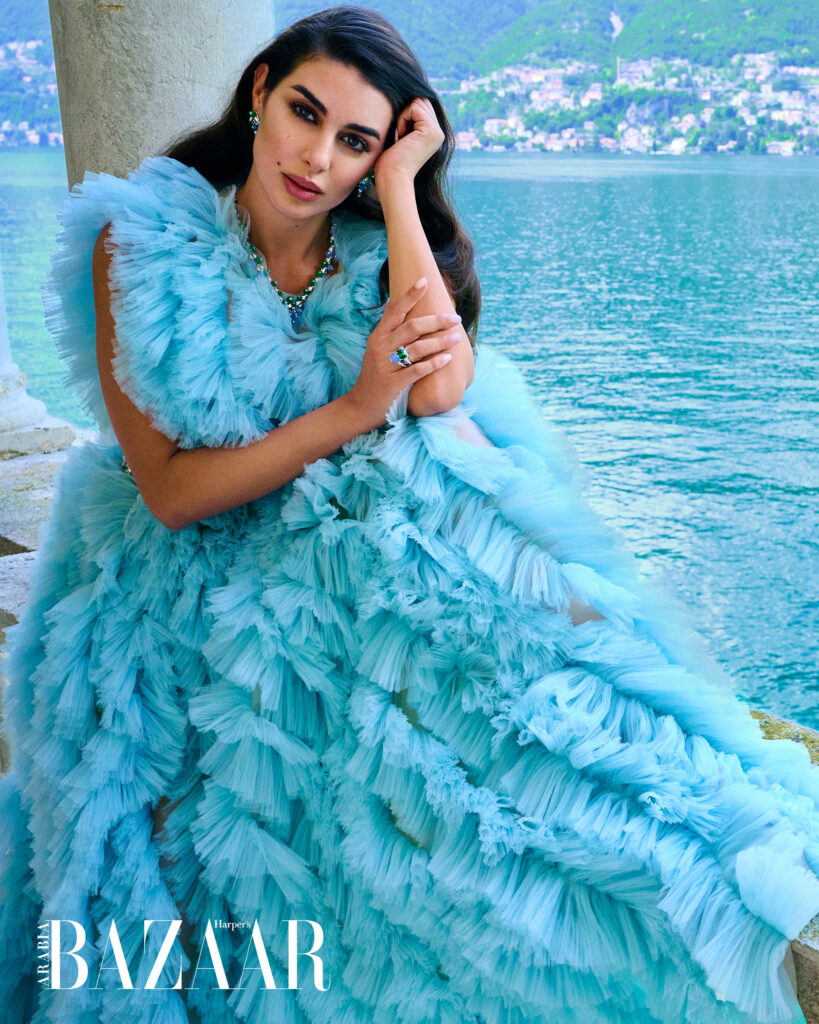
It seems apt, then, that Yasmine’s current mindset is more introspective and philosophical than ever, and speaking to her reveals layer after layer of mindful awareness of herself and the world around her – a fitting analogy for the layers that are making up the dresses she’s currently changing in and out of. It could be, like for many of us, that COVID sparked this newfound desire for a deeper understanding of the self, but it seems more that, post catching the virus in January last year, it’s recent work-related run-ins that have set Yasmine on this transformative path.
“I had a not very good experience with work,” she explains matter-of-factly, in a tone that immediately says she’s not looking for sympathy in telling us this. “I started to believe the words that people were writing about me; that I was just a pretty face, that I was just lucky and that I didn’t have any art in me. Subconsciously, I told myself [it was true]. So when I did my TV series two years ago, I wasn’t concentrating, I wasn’t paying attention to anything… I was like, ‘it doesn’t matter, they’re going to watch me anyway.’ So I didn’t really put any art into what I was doing. I didn’t really focus.”
It’s an incredibly self-aware and rather confronting thing to realise, and an even braver one to admit. But rather than let it carry on and define her, she did what so many of us wish we could: she turned it into a positive, using it as a springboard for growth.
“What I learned is experience… that I need to find a good story because I’m worthy of one. Because I am an artist, because I feel the acting. But then in [looking for a good story], I didn’t find any. So I didn’t do a series last year,” she continues, revealing that alongside this journey of self and professional discovery, she stood firm in her new beliefs. For a working actress, it’s quite the statement, and one of impressive integrity.
Happily, it seems that her hunt is now over, and next year she’ll be back on the small screen, much to her fans’ delight. “Ramadan TV is a very high season in the Middle East… it’s like the Champions League, you know?” she laughs. Indeed, her new Ramadan series is already generating serious hype online, but instead of taking on the script wholesale, she tells us she’s now heavily involved in the writing of it, too.
“We have a problem with finding beautiful stories. So I said to myself, ‘why am I waiting for someone’s imagination to evolve into something I want? Why don’t I just get a true story from someone in real life? That’s where all the richness and true events and people and flesh and blood is. The story is one of the main reasons for the success of a film or a series. So I didn’t want to repeat the same mistake and just be there when I have nothing, just this hollow story. So I’ve been working on the script and writing it with the writers since May. I’m the one who got the story,” she smiles. There’s a pride, but no trace of arrogance – just an explanation of the facts. It’s the evolution that’s important to her – and the respect for the art that is storytelling.
“It’s my first time writing and I’ve learned that I have so much art in me and I didn’t even realise it. You know, sometimes you have so many things in you, and if you haven’t discovered them, you just think you don’t have them at all.” Discovery is a leitmotif in our conversation; one that Yasmine comes back to again and again, consciously or not. It’s understandable, since a life lived quite so much in the spotlight comes with the ever-present lens of public scrutiny and opinion. It must be almost impossible not to turn that lens on yourself, as she previously lamented. But if utilising negativity as fuel is one such realisation she’s had, what others have illuminated Yasmine’s path over the years, we wonder?
“I love reading and I’ve been studying a course from Harvard called Social Intelligence and Social Psychology. It’s normal to get affected by the people around you. It’s normal to get affected by the environment you live in. It’s normal to try to fit in, to try to belong to a group, to find approval. But in certain cases, such as with celebrities and people in the spotlight, they have haters or are bullied more than others. It is how it is,” she shrugs, before adding, “Not in real life, but on social media.” And with 16.8 million followers on Instagram alone, we can only begin to imagine to what degree that might play out. “Then you grow and you realise that, actually, [what the bullies say] is not true. It’s just the frustration of them not being able to achieve what they want to. They look at you as an end result, they don’t see the journey. They just see you as a product and they judge.”
We ask if she thinks it’s a feminist issue; if women have it harder in this space as well as in so many others. “Of course!” she says passionately, going up in volume to emphasise her point. “You know, there’s a book called Lean In by Sheryl Sandberg, who was the COO of Facebook. She wrote that she’d been bullied, and that many said her achievements were just because she was lucky and met the right people. If she was a man, people would have said she was a hard worker, that she’s smart, that she deserves it. When I did a study in psychology, they said that we stereotype people – we label them. And if it’s a woman, we say all these things: she’s just lucky [to get there] because of her face, because of her body… It’s never about hard work or if she’s good enough. And it’s true in the Middle East as well as the rest of the world.”
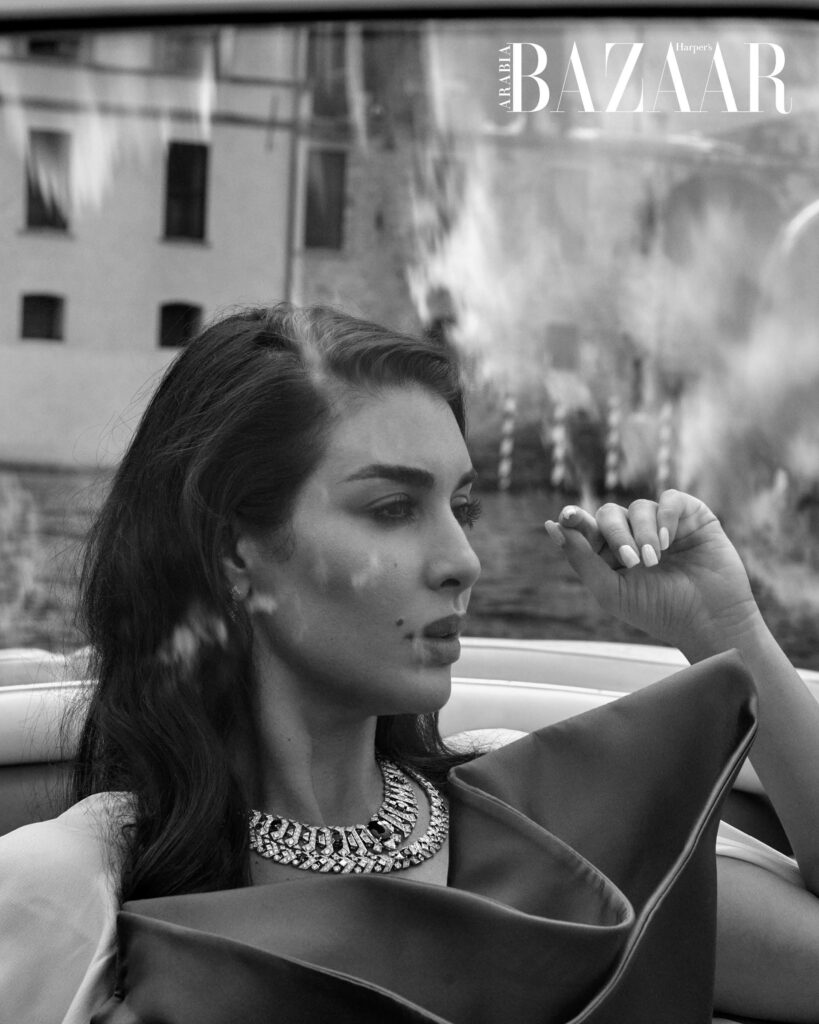
She speaks so emphatically that one can only assume she’s faced these exact toxic accusations her entire career. Her beauty, after all, is such that it’s impossible to ignore, to disregard. Indeed, it wouldn’t be honest – or helpful – to pretend it isn’t there, or that it mustn’t have impacted her life, and to do that would be a disservice to a conversation about priviledge, conditioning, value, patriarchy… there’s a reason the world is obsessed with talking about it. But it’s both insulting and reductive to assume that the existence of a woman’s beauty equates to an absence of anything else. Something that, effectively, is what her detractors are saying.
“I’m very grateful for what God has given me; for my beauty, but it’s not all that I am,” she says, a little emotional. “It’s part of who I am, and it’s the first thing people see. But inner beauty is as equal and even more important. It’s energy. Look, I’m an honest person and I will always be honest in this conversation. The spotlight made me understand how much people value you just based on the outside. And realising that made me want to grow more on the inside. I knew I needed to create a balance.”
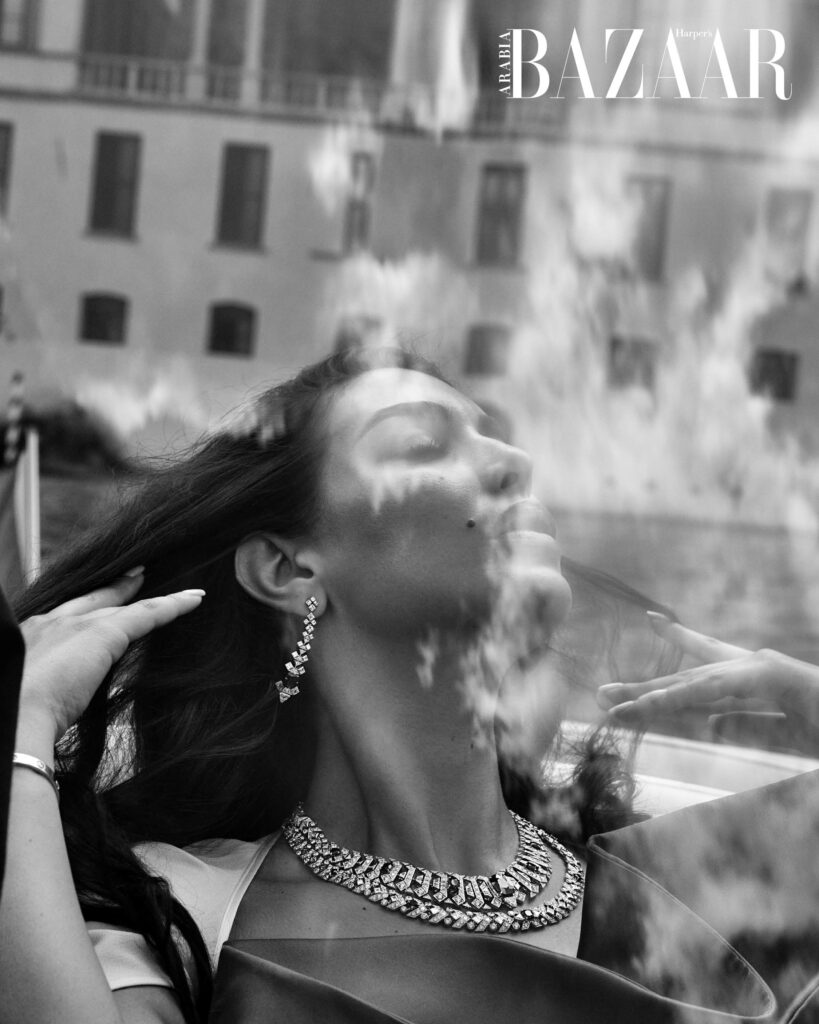
Balance. That most elusive of achievements. What’s the knack, we ask? Share the tools – please! “Cancelling programming that has been put into your mind either through TV, the environment you’re moving in or the things you’ve been told your whole life, is key. And you can do this through yoga, through meditation,” she explains. “It’s something called Access Consciousness. You unplug. I’m a person who likes to evolve and understand myself and the universe; what’s beyond my eyes. So I learned how to reboot. I restart, refresh, and activate the new software,” she adds with a smirk.
After all this soul-searching, would we be right in assuming she’s got it all figured out? And if so, where do we sign up for the Yasmine Sabri School of Life? “I hope that someday I’ll have something like a centre for rehabilitation. Like a wellness centre that will have yoga and teachers who come in from all over the world to do seminars,” she shares. “There was a study that took place over 75 years where they asked people what makes a person truly happy? Most said money. Some said fame, some said love. But what they eventually discovered was that it was giving. Feeling the impact, knowing your influence on a person. If you feel like you’re participating in life and making a difference, you feel like you matter. So it was this – giving love, giving help, giving advice.” A fitting note to end on for a woman whose words of wisdom, and desire to share them, are the most beautiful things about her.
Editor in Chief: Olivia Phillips. Art Director: Oscar Yáñez. Market Editor: Nour Bou Ezz. Hair: Kilian Marin at Green Apple Italia. Make-Up: Giovanni Iovine at Green Apple Italia. Producer: Jesse Vora. Studio Manager: Johana Dana. Stylist’s Assistants: Emma Iannotta, Vanshika Batra, Jasmina Rossi and Shahira Hossameldin. Producer’s Assistant: Silvia Sem. Photographer’s Assistants: Mattheu Miziolek, Nicola Rucci and Stefano Moiraghi. Tailors: Maria Brigida Chiarelli and Andrea Rizzo
Photography by Philippe Vogelenzang
Styling by Anna Castan
From Harper’s Bazaar Arabia’s October 2021 issue
