
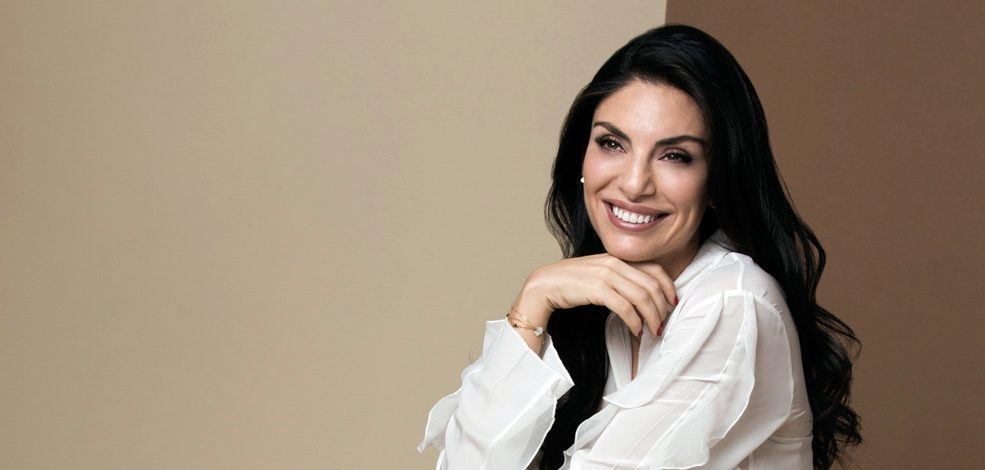
Clinical Psychologist Dr. Saliha Afridi On The Perils Of Perfection
She candidly shares her personal battle with perfectionism and tells us how we can all overcome it to live a more meaningful, authentic life
I am a perfectionist. This is a label that many of us wear like badge of honour.
When we say it, we’re basically saying, “I don’t accept anything less than the very best,” or “I will give it everything I have to make sure the outcome is complete.” Unconsciously, though, what we are really saying is, “I am afraid you will reject me if you see my faults,” or perhaps “My best is not good enough; I have to be more.” Perfectionism never comes alone. It usually brings with it its friends: depression, anxiety, low self-esteem, low self-confidence, procrastination and shame. So yes, as a perfectionist, you might write typo-free emails, and always host the most thought-through dinner parties, but the cost is high.
Research shows that perfectionism is linked to higher rates of mental illness, and low quality of life. It shouldn’t come as a surprise to us that in recent years the rates of demanding perfectionism have risen, and so, too, have the rates of mental-health problems in young and old alike. Research on perfectionism states that there are three types of it: self-oriented, other-oriented, and socially prescribed.
View this post on Instagram
Self-oriented perfectionism is when people hold themselves to a very high standard, and feel like they are letting themselves down when they make a mistake. Other oriented perfectionism is when people hold others to a very high standard and are judgmental and fault-finding in what those people are doing. Finally, socially prescribed perfectionism is where people feel a pressure to be perfect that is driven by wider societal standards. Equally as unsurprising, the one which showed the highest increase was socially prescribed perfectionism – in no small part aided by the allen compassing rise of social media usage.
Don’t get me wrong, social media certainly has its benefits, but only if we use it consciously and balance it with real life connections. Worryingly, however, its in-built algorithms that are there to increase engagement (in other words, addiction), mean that most of us spend hours upon hours on it all day long. And with that negative, social comparison. When someone is spending most of their conscious hours looking at other people’s filtered and curated version of life, they are undoubtedly going to feel like they are flawed and full of faults, that their life is incomplete, and their experiences too ordinary. Everything indeed looks ‘perfect’ when it’s presented on an Instagram feed or a 30-second video on TikTok.
View this post on Instagram
That’s the point. But as I’ve got older (and somewhat wiser), I’ve realised that as we strive to be perfect, we do it at the expense of being whole. To be whole is to embrace all that is good in us, all that is flawed in us, to embrace our light and our shade. To be authentic means to be vulnerable and let people see us in our wholeness, to see us in our entirety. “I see you and I accept you just as you are,” are words we long to hear. As socially prescribed perfectionism has increased, so has loneliness. More people today report feeling lonelier than ever before, and that’s because as we wear the armour of perfectionism and protect ourselves from rejection, we also defend against authentic connection that can only happen when we take the risk of allowing people to see us in our imperfect
human state.
How can you attune to another, when you are so busy comparing yourself to them or wondering if they’re judging the way you look or are dressed? How can you deeply engage with the moment, surrendering to all the emotions that it brings forth in your body, when you’re living in your head, measuring your worth based how many likes you might get? How can you really show what’s in your heart when it’s partially concealed by the paralysing fear of appearing imperfect?
View this post on Instagram
Taking the armour off sounds scary in a world full of judgement, expectations and constant comparison, but it’s not as scary as life half-lived, and dying with love and life still left inside you. When we are in our final moments here on earth, we will not think, “I can go in peace because I had no errors on my presentations,” or “I lived a full life because my photos were flawless.” In fact, the number-one regret of people who are dying is, “I did not live a life that was true to who I am, and instead lived one that others expected of me.”
It took me days before I could start writing this article. I felt blocked. I spoke to my analyst about my frustration with it, and about my fears of getting it wrong. Thoughts like, “I don’t know how to write articles,” or “I don’t know what to say that would be meaningful enough,” stayed with me for days. I am very familiar with this part of me as it’s been a life-long companion. And yes, the irony of once again battling it out with my perfectionism as I wrote about embracing our imperfections was obvious and annoying. But then I surrendered. I got out of my head full of judgement and dropped into my heart where courage exists. I took a chance, and I took off the armour which protects me but weighs me down at the same time, in the hope that you will do the same.
View this post on Instagram
I hope that, like me, you will be inspired to take a risk, shrug off a ‘failure’, or show self-compassion when you make a mistake. And in doing that, you might feel the freedom and the lightness of life that comes when you reject the expectations of being more than who you are, and just be exactly who you are.
Lead image courtesy of Instagram/drsalihaafridi
From Harper’s Bazaar Arabia’s October 2020 issue.