
Notes to Self: Dior Creative Director of Fragrance Francis Kurkdjian On Nurturing The Legacy of Nostalgia
18 years after creating the maison’s most iconic La Collection Privée fragrances, the perfumer has reimagined them for a new era
What Dior perfume is best? While there may not be a straightforward answer Francis Kurkdjian explains why, when reinventing old classics, it’s important to keep the character of the fragance true to its original.
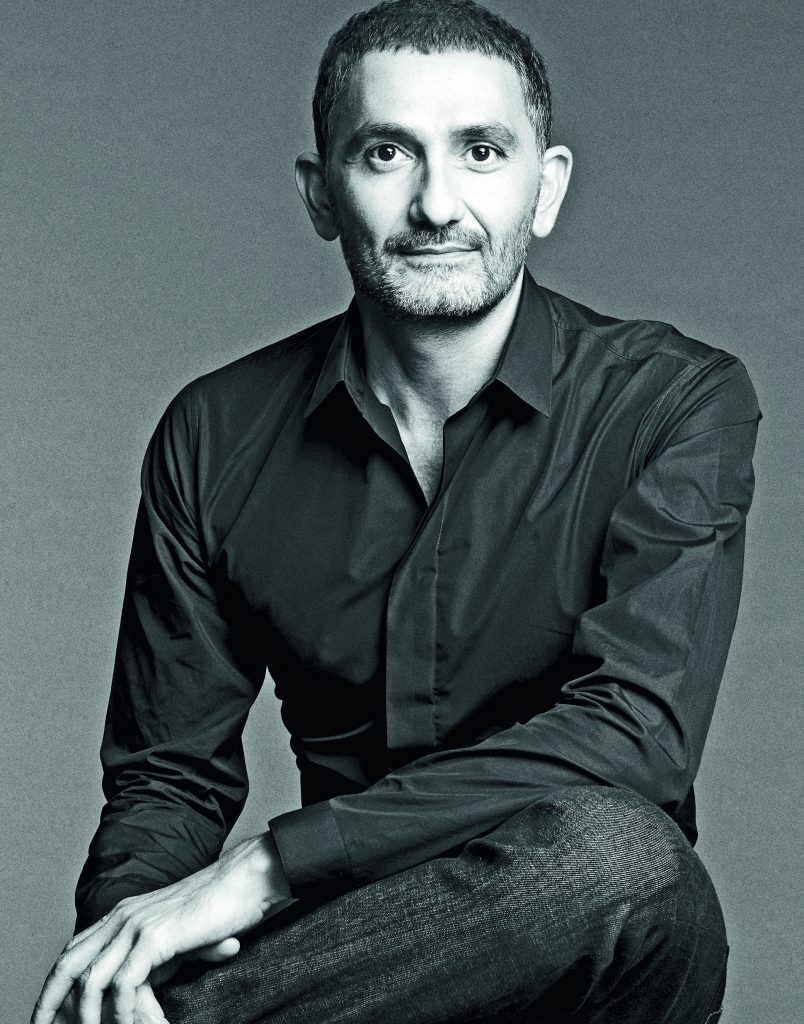
“Classic is not a dirty word,” Francis Kurkdjian emphatically declares. As Dior’s new creative director of fragrance, he should know. Every perfumer who passes through the Maison’s hallowed halls is charged with becoming a guardian of its past perfumes, not just a creative tour de force for the future. It’s a privileged position to be in, one Francis describes as “nurturing the legacy of nostalgia” while simultaneously “having the audacity to think outside the box”.

To illustrate the point, Francis – who joined Dior as its Perfume Creation Director at the end of last year – has reimagined the first trio of La Collection Privée fragrances he created for the fashion house in 2004: Eau Noire, Bois D’Argent and Cologne Blanche. In doing so, he has also revived the founding notes of the collection and given the traditional cornerstones of perfumery – lavender, iris and orange blossom – a fresh flourish. “Mr. Dior once said, ‘Respect tradition and dare to be insolent. One can’t go without the other’ – and that’s exactly what I’ve tried to achieve,” Francis notes
Signing up Francis to take the helm after legendary in-house perfumer François Demachy retired, is a canny move. His flair for creating perfume knockouts is no secret. When Francis burst onto the fragrance scene in 1995, he created Le Male for Jean Paul Gaultier, which became one of the world’s best-selling perfumes. He also famously recreated Marie Antoinette’s fragrance in 2006, using rare and complex 18th century formulations, in aid of the Château de Versailles. Not to mention that, to date, the Armenian perfumer has authored fragrances for upwards of 40 brands, including Burberry, Elie Saab, Giorgio Armani, Versace and Yves Saint Laurent, as well as co-founding his own luxury fragrance house Maison Francis Kurkdjian in 2009.
Choosing to rework three existing fragrances for his debut at Dior may raise a few eye brows among perfume purists, but Francis’s reasons for doing so are both practical and emotional. “To me, relaunching Eau Noire, Bois D’Argent and Cologne Blanche is a signal of what will happen next and the direction I want to take,” he says. “Collectively, they are fundamentally what the Privée collection stands for nowadays. So it’s a tribute to the lovers of these three scents because when I joined Dior, a lot of people were celebrating their creativity.” Francis has been in the fragrance game for long enough to concede that it’s also an “in-between” launch. “Creating a new scent from scratch takes time,” he adds. “Dior is a very iconic fragrance house so you have to take a deep breath and not rush to create things.”
What Dior perfume is best of the bunch… if there is one?
It comes as little surprise then that the iconic formulas for Eau Noire, Bois D’Argent and Cologne Blanche haven’t changed; only the ingredients have had a refresh. You also get the sense that Francis is seeing their story through a new lens 18 years later. Drawing a parallel to music, he describes keeping the original score but upgrading the sound with contemporary instruments. “I felt their formulas were still relevant but there was room to improve them,” he says. “The goal wasn’t to change them; the goal was to find a contemporary quality that felt right for 2022.”
In fact, Francis admits that over the years he’s unofficially been revising Eau Noire on the side, with close friends asking for vials of his new concoctions. “The quality of ingredients wasn’t there but I never walked away from this scent,” Francis says quietly, an unmistakable fondness in his voice as if speaking of his favourite child. “It’s very cool to rebirth a perfume because usually it stays the way it is,” he adds. “All of a sudden you go back to something you have created. It very much belongs to you, of course, but at the same time, it’s very important that when you update it, you keep the character of the fragrance that people like.”
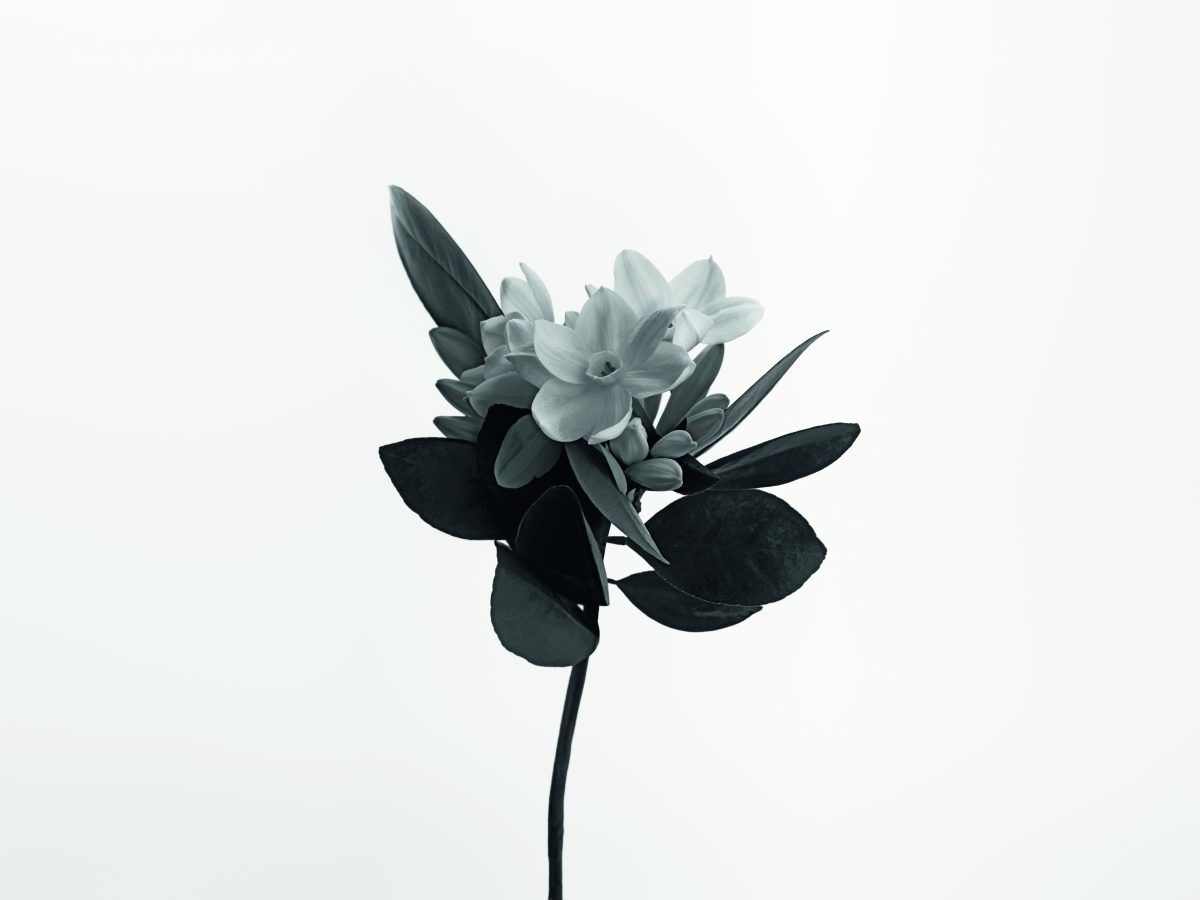
In the case of Eau Noire, the lavender is pure Christian Dior, who planted fields brimming with this aromatic shrub at La Colle Noire, the family home in Grasse. Yet the twist to this note – the darker facet – is pure Francis. “I wanted the lavender to smell sunburnt so that it has an almost liquorice-like quality,” he says, admitting that he also toned down the original spicy notes in the gourmand base.
This time around Cologne Blanche boasts more transparent citrus notes than its previous iteration. Francis notes that at first spritz it smells like a cologne: “For a sunny effect, we took the blossoms from bitter oranges, the leaves from the orange tree and bergamot to get back that idea of warmth and freshness. But then it leaves a very soft, powdery accord on the skin.” As for Bois D’Argent, it plays with the idea of light and dark using an intriguing blend of iris in a smoky swirl of incense.
Despite each fragrance smelling elegant and considered, they’re not the result of an elaborate, long drawn-out creative process. Francis arrived at Dior on October 18th, 2021 and completed the adjustments to the formulas by the end of December. “It’s easy because I’ve got the formulas, of course,” says Francis.
“But I wanted to go back to what I had in mind 18 years ago and the clarity of the fragrances. When you smell a perfume, you should smell all the layers up to the dry down without the feeling of having a separate top, middle and base.” Or, put another way, it should be a well-blended, continuous puff of scent that, according to Francis, “is like a water colour painting,” with no sharp edges.
This isn’t the only beautiful image Francis conjures up during the course of our interview. His love of architecture and his background as a ballet dancer are also strong influences in his work. “In the same way that Mr Dior saw a dress as a piece of architecture, I see fragrance as a piece of architecture,” he says, acknowledging that his creative mind thinks in 3D. “The base notes are the foundation you can see. You have heart notes, which are the walls, and basically this is the visual structure. Then you have little details that are like the interior decor.”
Speaking to Dior’s Perfume Creation Director, you get the impression that he is a perfectionist. And, rather than discard everything that came before, he is quietly honouring it. “When you look back at history, most Dior perfumes are masterpieces,” he explains. “Miss Dior was an amazing green chypre when it launched in 1947. Then we had the floral Diorissimo in 1956 and Eau Sauvage in 1966, followed by Diorella and, of course, Poison.”
Crucially, though, Francis is also asserting his own signature. “My role will be to define what the next chapter of Dior fragrances will be,” he says, noting that he favours scents that lift up the spirits. “It’s a work in progress right now, but I will try to give my best.” While no doubt also lending his signature air of cool to the proceedings.
From Harper’s Bazaar Arabia’s July/August 2022 Issue.