

Craftsmanship in the 21st Century: What is the Future of Haute Couture?
From the rise of AI to the challenges of preserving the craft of traditional artisans, the future of the fashion industry is set for a shake-up
With its sky-high production costs and price tags that are out of reach for all but a lucky few, plus the industry’s growing appetite for athleisure and a move towards a more sustainable future, critics of haute couture have long been predicting the downfall of ultra-luxury fashion. Yet recent research shows quite the opposite, with the latest Haute Couture Market report forecasting the global market size to expand at an annual growth rate of 4.66 per cent, reaching Dhs55,198 million ($15,030.8 million) by 2028. So if haute couture is set to stay, what does its future hold?
An arm of fashion that is steeped in tradition, haute couture’s strict guidelines are one of the main reasons it could struggle to keep up with the modern world.
To be officially accepted by the Fédération de la Haute Couture et de la Mode, a fashion house must create custom outfits in an atelier in Paris with at least 15 full-time artisans and present full collections of at least 50 designs twice a year in the French capital. Not just anyone can craft the collections either; the highly skilled seamstresses are referred to as les petite mains, a testament to their extraordinary dexterity, with only around 2,200 currently active.
As designers struggle to keep up with such strict rules, Sidney Toledano, the current head of the Chambre Syndicale de la Haute Couture, has hinted that he’s in favour of updating these requirements, starting with allowing a reduced frequency of shows so long as the stringent guidelines around how haute couture is made are maintained. Currently several new couture players including Balenciaga and Thom Browne, plus Maison Margiela, stage only one couture show per year (though of the three, only Margiela is allowed to use the haute couture appellation.)
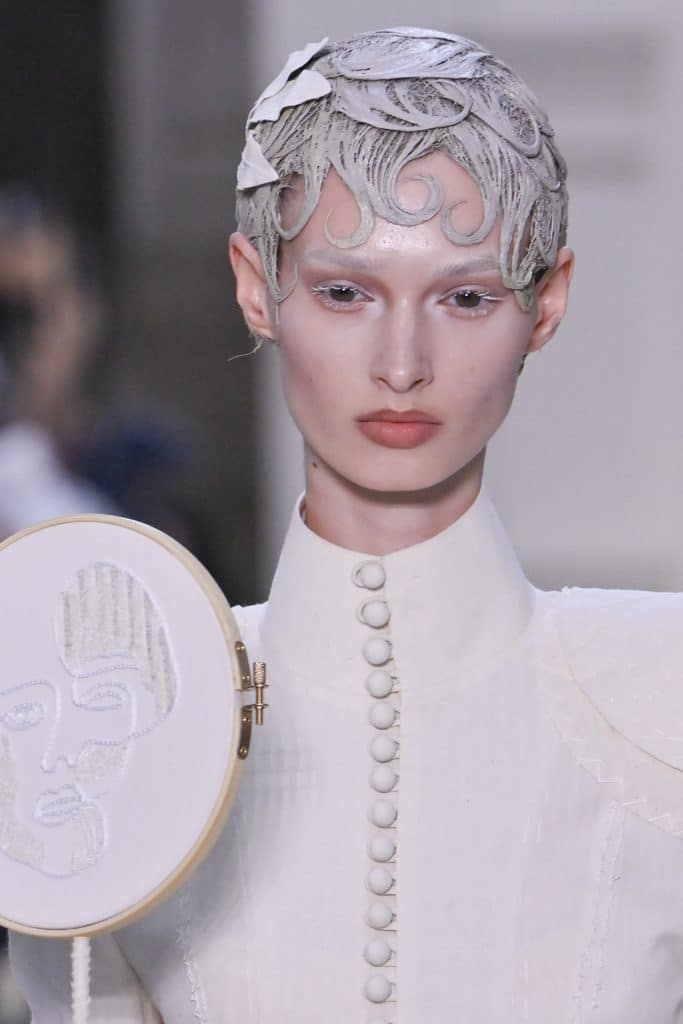
In honour of the brand’s 10th anniversary Dutch designer Ronald van der Kemp, who has been a correspondent couture member since 2018, is also shaking up the rules by showing his next couture lineup in New York in September, the city where his career took off. These relaxed rules could also entice new names to Haute Couture Week, as well as prompt the return of designers who once showed in the past – there are rumours that Givenchy, Lanvin and Saint Laurent – who dipped its toes into couture while under Hedi Slimane – could re-enter the fold, while Charles de Vilmorin and Robert Wun have already made their move.
While often praised as being the antithesis of fast fashion, haute couture’s extensive use of heavy embellishments has seen its sustainability credentials questioned by a new generation.
As consumers become increasingly concerned about the environmental impact of fashion, haute couture houses are likely to adopt more sustainable practices, including using an increased quantity of eco-friendly materials, reducing waste and ensuring fair labour practices.
A handful of designers are already exploring ways to upcycle vintage pieces and incorporate sustainable fabrics into their collections, particularly Iris Van Herpen who fuelled sustainability in her A/W23 show collection through repurposing and upcycling materials like banana leaf, raw silk, upcycled organza and unique fibres, with many designs created via 3D printing.
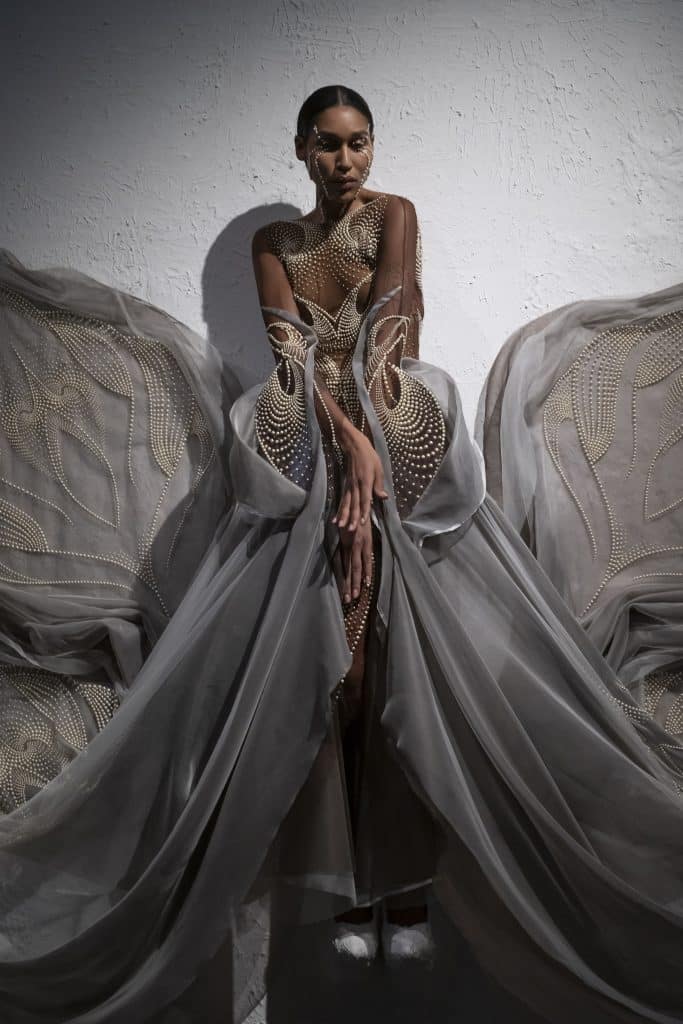
The same season, Sofia Crociani, the designer responsible for the Aelis collection, upcycled ballet tutus donated by the Paris Opera Ballet to highlight the impact of global consumption. Ronald Van Der Kemp’s collection was made entirely of recycled and upcycled materials, and Tony Ward Couture worked with the digital fabricator Batoul Al-Rachdan from Studio B.O.R. to develop a 3D dress made from biodegradable plant-based material.
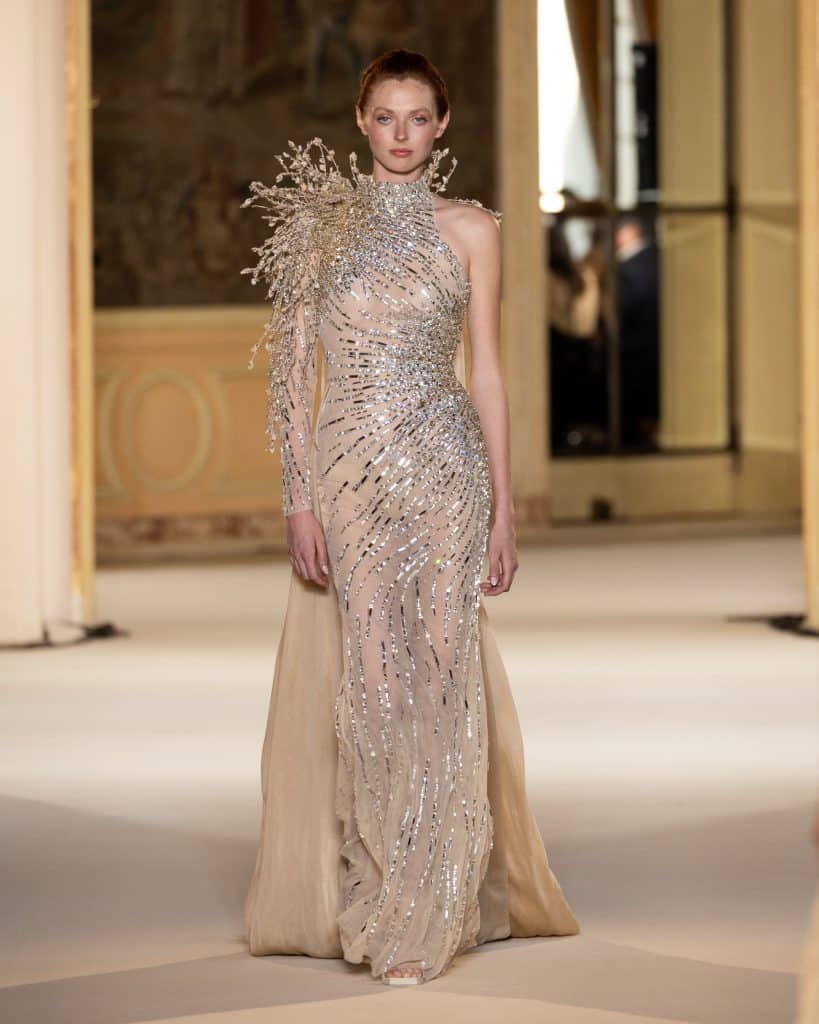
Technology is also expected to play a significant role in the evolution of haute couture, with innovations such as 3D printing, AI-driven design and virtual reality revolutionising how couture garments are designed, produced and presented.
We’re already seeing this picking up pace in the industry, most notably in 2023 when Valentino showcased an exclusive digital avatar collection featuring six full looks carefully curated from its recent collections.
In the couture space, Iris Van Herpen is a pioneer, combining methods both traditional and digital to create her futuristic looks, while advances in technology, such as body scanning and AI, could also enable even more precise customisation for the private client. Advanced sensors, lidar technology and 3D technologies are being trialled to create digital representations of an individual’s body shape and size, reducing the need for such a large number of fittings.
Technological advancements remain controversial, however, with many industry members beginning to reject them as the enemy of creativity. Among the couture crowd there’s also the concern about the survival of traditional craftsmanship, with designers exploring ways to ensure technology enhances, rather than overshadows, the talent of skilled artisans.
Lead image from Thom Browne’s Haute Couture A/W 2024
Images By Jason Lloyd-Evans