Art as Remembrance: The Creators Honouring Beirut’s Blast Through Their Moving Works
Today marks the five-year anniversary of the Beirut blast – a tragedy that rocked not just the capital, but all of Lebanon, reverberating far beyond the country itself. The whole world felt the sadness, but also saw the admirable bouncing back and banding together of Lebanon’s people.
Here, Bazaar Arabia shares a list of five Lebanon-based artists who commemorated the tragedy through their art
Lebanon pauses in remembrance today, as the date marks five years since the tragedy of the August 4th Beirut Blast. Another year passes, and while the Lebanese people continue to forge forwards, powering through with their undeniable zest for life, the tragedy is far from forgotten.
Here, Bazaar Arabia pays tribute to the artworks inspired by the unwavering spirit of Beirutis across the globe, shining a spotlight on the healing journey of its creatives. Celebrating art in all forms, we discover the inspiring stories of remembrance and renewal by heroes with paintbrushes, pens, and cameras firmly in hand.
Dia Mrad, Photographer
Dia Mrad had been capturing Beirut and its architecture for real estate jobs, and his own admiration for many years; but his archives consisted mostly of the year 2020. After the Beirut explosion, out of his fear that the beautiful monumental buildings of his city would soon collapse, the Lebanese architect and photographer began doing what he does best, in an attempt to preserve as much as he could through photography. “The Road to Reframe” by Dia Mrad, is a photo series that captures architecture after the explosion, exhibiting the beauty of Beirut even when scarred.
In a photo taken by Dia, two days after the Beirut explosion, of Quantum House on Sursock Street the image of the wreckage is caption with a quote by Lebanese poet Kahlil Gibran, a fitting reminder to ease the pain and give Beirutis hope.
“Out of suffering have emerged the strongest souls; the most massive characters are seared with scars.” Gebran Khalil Gebran
Brady Black, Journalist
Beirut-based American visual journalist Brady Black was inspired to draw portraits of more than 200 victims of the blast on a memorial wall near the port.
With help from art institute called “Art of Change” and volunteers, Brady spent nearly four months drawing black and white portraits of the 200 victims. Each portrait is around 10 square feet and portrays an image of each victim, an ode to the people gone too soon for they should be remembered, honoured and seen.
Carol Mansour, Film Maker
Lebanese-Palestinian independent documentary film maker, Carol Mansour founded Forward Film Production in 2000 in Beirut, Lebanon. Carol’s work reflects her concern for human rights and social justice, bring causes to the forefront through art, raising awareness and giving a voice to the unheard.
Just two months after the explosion, Mansour produced a short film titled Shattered: Beirut 6.07. Throughout the film she explores her city in the blast’s aftermath, talking to friends and exchanging testimonies on what had happened in candid, unscripted voice note messages, gives a raw remembrance of the tragedy.
Fatima Dia, Artist
After the Beirut explosion, Lebanese artist Fatima Dia felt frustrated, and deeply saddened by the aftermath of this tragedy on her beautiful city and the lives lost because of it.
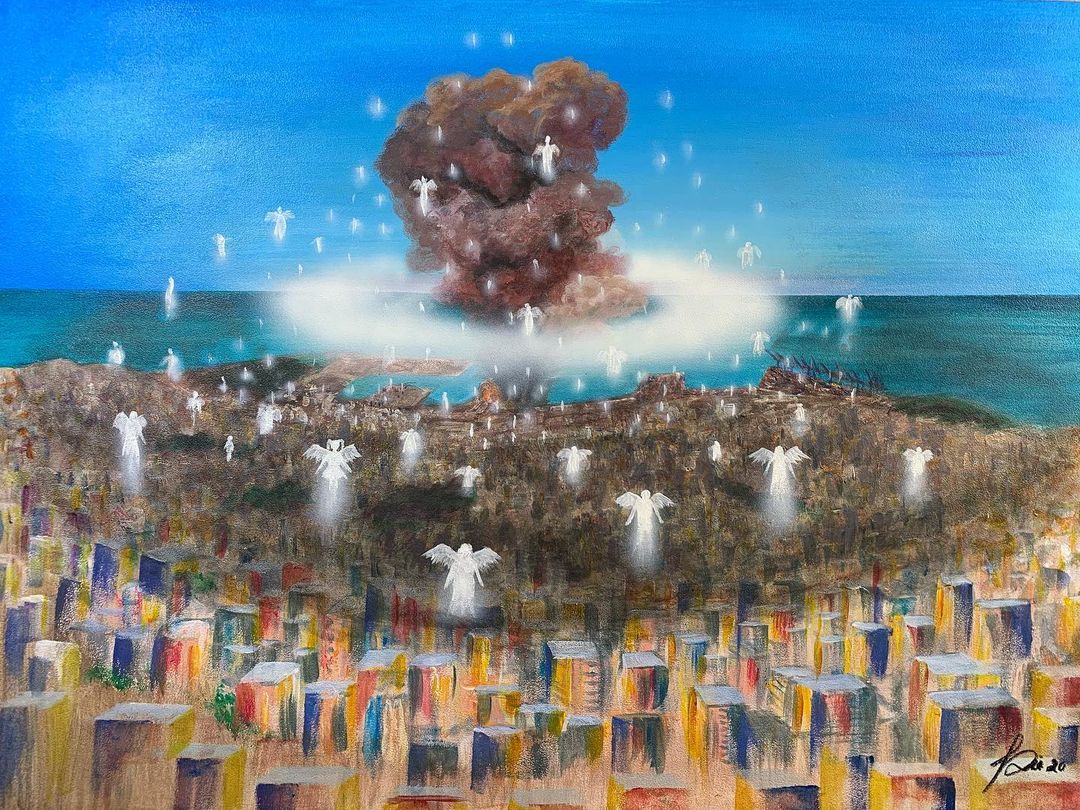
Needing an outlet to express the way she felt, she picked up her paintbrush and began to paint the city of Beirut as vibrantly as it always has been, overshadowed by the horrific scene of the explosion with white angels floating above to represent those who lost their lives.
When the video of the process started gaining attraction, she took her initiative even further, auctioning off her paintings and donate 100 percent of the proceeds to the families affected by the tragedy.
Rising Angels
Hayat Nazer, Artist
Lebanese artist-activist Hayat Nazer is known for her street art piece, The Phoenix. With an impressive CV, having worked with the United Nations, Hayat quit her career to help people through her art.
After the devastation of the August 4 explosion, she created a sculpture made from the debris of the explosion, portraying Beirut as a woman with long flowing hair. The sculpture features a damaged clock stuck at 6:08, the moment of the explosion occurred. The Lady Liberty of Lebanon as its been named also features sentimental objects that people volunteered from their demolished houses.