

Oscar Shortlisted Director Dania Bdeir on Exploring Masculinity and Gender Norms Through The Power of Film
A short film about a Syrian migrant crane operator on a Beirut construction site is a mesmerising and uplifting tale that challenges traditional ideas of masculinity in the Arab world. International acclaim – which included winning the Jury Prize at Sundance and reaching the Oscars shortlist – has propelled its award-winning director on what she calls “an insane ride”
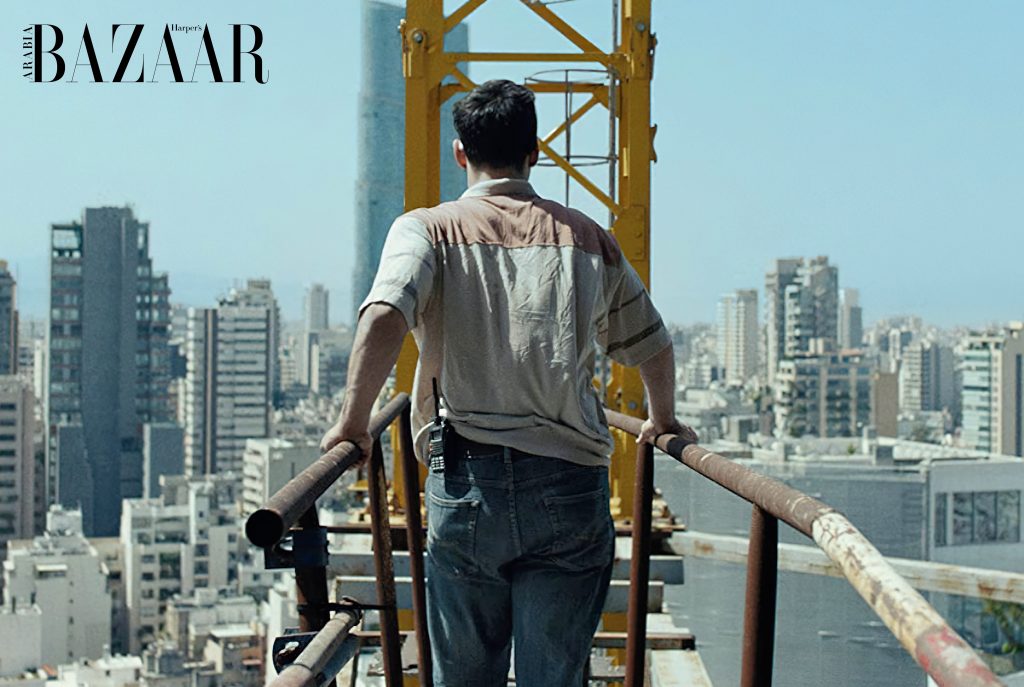
In 2017, during a walk in Beirut, filmmaker Dania Bdeir looked up and saw a man standing on top of a crane cabin.
“I kept watching him,” she recalls. “Is he going to fall? Is he going to jump? Then he knelt down and touched his forehead to the ground and I realised he was praying. That image really stuck in my mind and became an infatuation for me.”
That defining moment resulted in Warsha, a short film Dania released in January 2022. Since then it has enjoyed enormous success around the world including acceptance onto the Oscars shortlist and winning the prestigious Jury Prize for Best International Fiction Short at the Sundance Film Festival.

The powerful, optimistic and moving film about a Syrian migrant working as a crane operator on a Beirut construction site won its 100th award the day before Dania sat down for an exclusive chat with Harper’s Bazaar Arabia. But through all its dizzying success, Warsha remains a film about a man on a crane. “We see cranes all the time but we never think about the person in that little cabin,” says Dania. “He can see the world, but nobody can see him.”
With the image of the praying man embedded in her mind, Dania began doing her research by visiting construction sites in Lebanon where she grew up with her Syrian-born parents. “The noise was one of the first things that struck me,” she says. “It’s aggressively loud and claustrophobic. There’s a hierarchy of Syrian workers and the Lebanese foreman. I was also struck by how masculine it was. The crane operator is the only one who can be shielded from all that. As the man climbs the ladder, he can leave it all behind: his social and political position, the masculinity, the noise. The city disappears and he reaches the silence above. It’s a safe haven.”
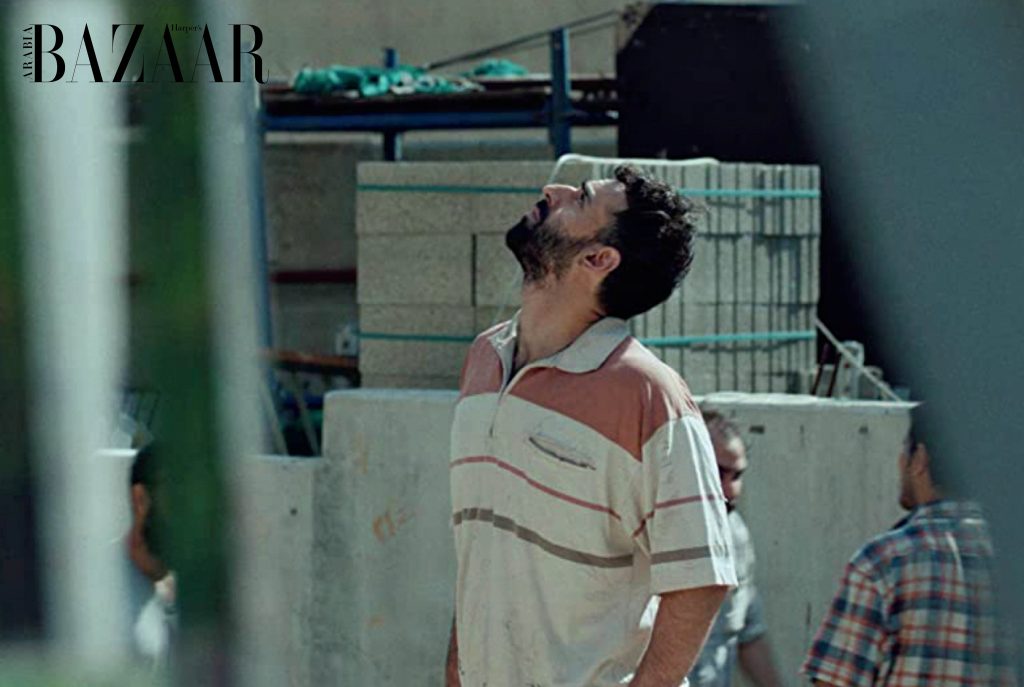
In Warsha, now available to watch on Netflix, the crane operator is a Syrian migrant worker named Mohammad, who willingly takes the dangerous job to pursue his secret passion away from the judgement of society. The man playing Mohammad is Khansa, a music producer, singer, dancer and composer who dropped his first single and music video as Dania was developing the movie.
Dania says, “Khansa’s video shows a home video of a little boy belly dancing and the family clapping. Then it’s an adult version of the boy and he’s belly dancing but nobody’s clapping, they say you have to be a man, enough, don’t do this stuff. The video tackled these ideas of masculinity.”
Soon after, Dania went to a Khansa concert for the first time and was “blown away” by his performance. “I felt he was transcending gender, blending the borders between masculinity and femininity.” They met and talked all night, during which Dania told Khansa she was making a film about a crane operator. “We talked about what this guy could be seeking once he reaches this private space away from everyone’s eyes. That’s when the second part of the film came to life and we decided he would play Mohammad.”
Dania arranged for the Lebanese performer to spend three days on a construction site but didn’t tell anyone he was an actor. “It was invaluable for him and also relatable,” she says. “He grew up in a very patriarchal family and world and put on a facade of traditional masculinity while stealing private moments to experiment and explore artistically with music, song and dance. He poured all that into the role.”
“Lebanon had the revolution, an economic collapse, the Beirut blast, and the pandemic. Many times we were about to give up on the film but we felt it was an important story and we had to keep going”
Dania Bdeir
Khansa’s performance is mesmerising, especially the last third of the 14-minute film, which we won’t spoil here. To use Dania’s words, at the film’s end, “something inside Mohammad has unlocked, he has had his dream, he has taken a breath.”
Before shooting began in the summer of 2021, Dania first had to make a trailer to help raise funds. “Me, Khansa and a camera operator went to a construction site in Beirut,” smiles the director. “We got to the ladder, the camera operator looked up, froze, gave me the camera and said, ‘I have kids, good luck.’ I put the camera in my backpack and climbed the ladder 130 metres up to the cabin. I’m fine with heights, I do skydiving and bungee jumping, but I instantly got vertigo. I had to not look down. When we got up there, I saw the cabin is tiny, and I realised you could easily fall to your death.”

As well as exploring stereotypes of traditional masculinity and gender norms, Warsha – which means construction site – also deals with the tension surrounding Syrian migrants in Lebanon, many of whom work in temporary construction jobs, often without visas. Dania explains, “Lebanon has a crumbling infrastructure and the government isn’t fixing it. People tend to let out their frustration on Syrians.” A moment in Warsha shows angry Lebanese men banging on the minibus taking Mohammad and his Syrian co-workers to work. “Mohammad is away from home seeking better opportunities in a country that doesn’t want him there, adds Dania. “A deep desire of his is to be seen and celebrated.”
The director, now 33, was born in Canada after her Syrian parents fled the civil war in Lebanon. “I grew up with a bit of a Syrian accent and kids at school made fun of me so I got rid of it,” she says. “Lebanese people felt comfortable talking about Syrians in my presence, thinking it was a safe space. For a lot of my life, I’ve felt I belong to these two countries that are like siblings.”
“As the man climbs the ladder, he can leave it all behind: his social and political position, the masculinity, the noise, it’s a safe haven”
Dania Bdeir
Part of the film’s appeal, she believes, is its universality. “It went across borders, you don’t have to be a Syrian crane operator to understand it,” Dania says. “I’m very proud that Warsha has touched people’s hearts on such a large scale.”
It certainly touched hearts at Sundance. “Just being accepted into Sundance was huge,” grins Dania. “Sundance is a dream for filmmakers and it’s extremely competitive – I think in the short films category you have something like 0.7 per cent chance of just getting in. The festival’s programmers emailed me at 7am Dubai time, asking if I could jump on a Zoom call. When they told me Warsha had won I was in disbelief, screaming, and jumping up and down. I was wearing pyjama pants but I quickly put on a blouse with make-up and earrings! It felt like the fruition of five years’ work during an intense time: Lebanon had the revolution, an economic collapse, the Beirut blast, and there was the global pandemic. Many times we were about to give up on the film but we felt it was an important story and we had to keep going.”
As a result of Warsha’s impact, Dania signed with managers in Los Angeles, her email inbox filled up, and she travelled to numerous international film festivals. “I couldn’t stop smiling,” she laughs. “Then we got on the Oscars shortlist. Which. Was. Humungous.”
Dania is now developing her first feature film, Pigeon Wars, with co-writer Bane Fakih about a male-dominated, working-class hobby in Beirut in which men dress pigeons in matching colours and aim to capture another’s man’s bird in the sky. While working on the script, Dania tries to lend a hand to young filmmakers who reach out for advice. “We have a generation of young filmmakers from the region who are supporting each other. I think back in the day – because there were so few seats at the table – it felt more competitive. Me and my generation are striving to make it feel more supportive.”
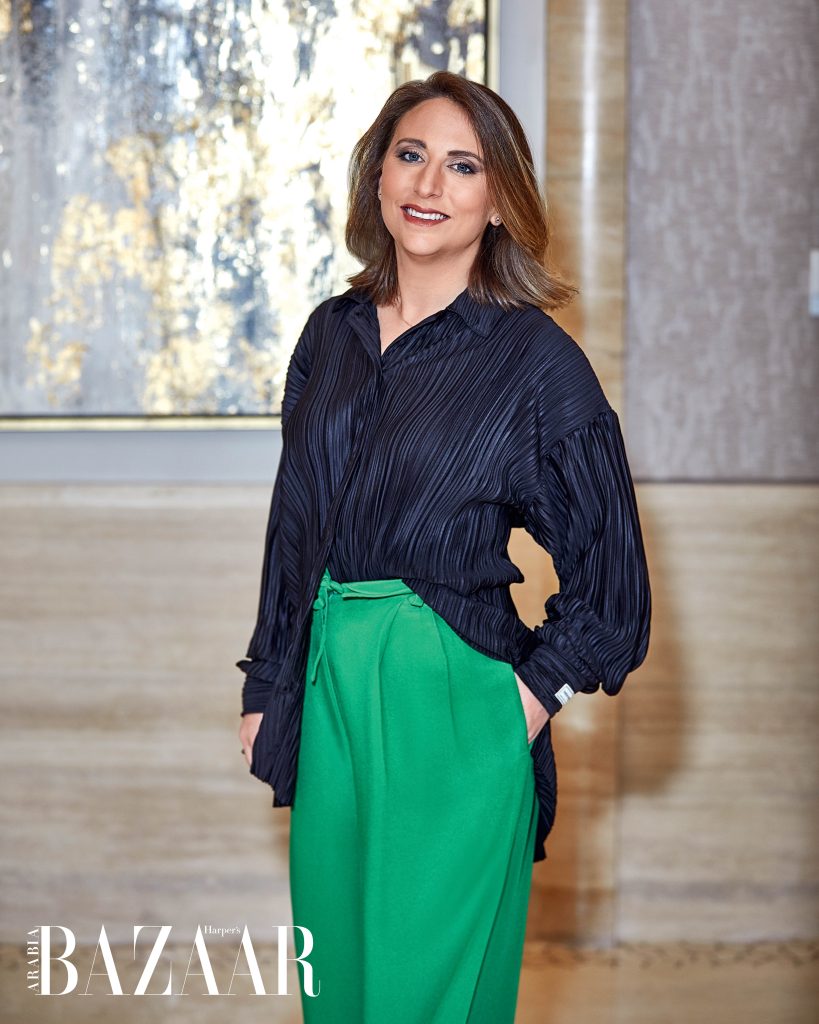
As she leaves the photo shoot for this article, Dania smiles and says it has felt odd to be on the other side of the camera. Tomorrow she must get cracking on the second draft of Pigeon Wars. “Ultimately, film is communication,” she says. “You’re not making a film for yourself, you want to speak to audiences.” With Warsha, she has done just that.
Images Courtesy of Sundance Institute
Photography: Efraim Evidor. Styling: Imogene Legrand
Special thanks to Rüya at The St. Regis Dubai, The Palm
From Harper’s Bazaar Arabia’s March 2023 issue