
UN Women Regional Director for the Arab States Susanne Mikhail Praises The Resilience of Lebanese Women
“In a city that has seen more than its fair share of hardships over the past decades, these men and women refuse to give in to despair…”
This month I want to reflect on the resilience of women in the face of sudden and unexpected disasters. In a city synonymous with glamour, beauty, history, but also conflict and economic turmoil, Beirut showed us how people, and in particular women, rose from the shock and destruction of yet another crisis.
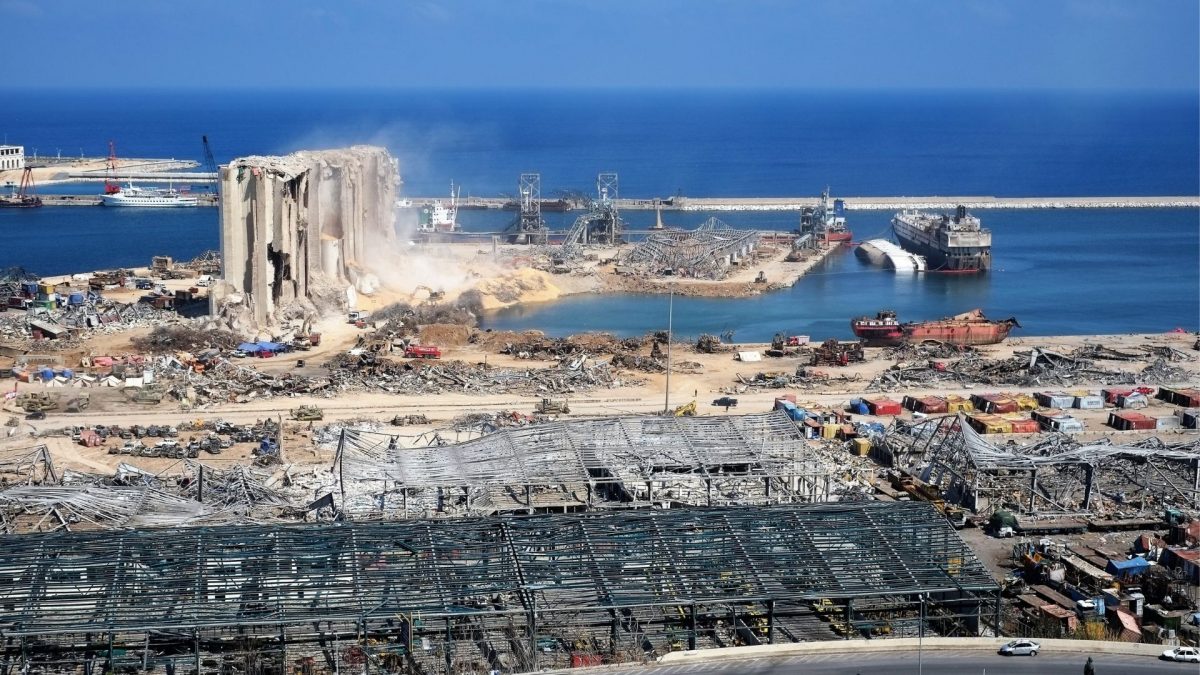
Last summer, in the middle of a global pandemic and already suffering economic hardship, Beirut was rocked by an almost unthinkable disaster: the 4th August explosion at the city’s port. More than 170 men, women and children were killed, and thousands injured. Families lost their homes and businesses were destroyed. The city of Beirut and her people had been struck by yet another monumental catastrophe, striking in the heart of its cultural, historic and economic district. The entire world was transfixed by footage of the blast.
I particularly recall the iconic image of Dr. Israa Seblani, a young bride, smiling with happiness for the future, during her wedding photo shoot in Saifi Square. As the pressure of the explosion billows her pristine white gown, we feel the strength of the force that has rocked the city, and wince as she is buffeted by the blast. The dust cloud rises ominously up the street, seeming to darken the sky. Immediately, and in the days and weeks that followed, women and girls were at the forefront of community efforts to coordinate a massive clean-up and relief operation.
Grassroots organisations such as Live Love Lebanon, Stand for Women, and the Lebanese Democratic Women’s Gathering, among many others and thousands of volunteers, sprang into action to provide urgent relief to the victims and clear away the broken glass and concrete. I was inspired by the strong communal solidarity. Women and men, neighbours living in one of the world’s most iconic cities, yet a city that has seen more than its fair share of hardships over the past decades, refusing to give in to despair.
Nada Khoury was working in her pastry shop in Ashrafieh, 2.5km from the epicentre, when the blast occurred. Nada and her husband spent two months to clean the blood and debris away. The shop, which is her family’s only source of income, is now proudly reopened. Sylvia Guiragossian owns an art gallery that was damaged. She recounted to UN Women how people from the neighbourhood helped with the clear-up, hand-in-hand and step-by-step. Sylvia’s resilience, coupled with the communal support, brought her business back on track.
UN Women is proud to have partnered with Lebanese organisations to secure essential support for women-owned businesses. Small and medium sized enterprises (SMEs) account for 50 per cent of employment in Lebanon, and a 2019 survey indicated that around 10 per cent of all SMEs in Lebanon are owned or led by women.
Investing in women-led SMEs, and particularly those that were affected by the 4th August blast, can be an important means to facilitate women’s participation in the long-term recovery process, and influence lasting change. The people of Beirut impacted by the blast have done an incredible job of getting back up on their feet and carrying on.
We must continue to stand side-by-side with them and support their journey to recovery. As Sylvia Guiragossian says, “We will come back, we will rebuild”. The Lebanese have come back and rebuilt before. Sylvia knows very well what she is talking about.

Lead image from Unsplash/@rashidkhreiss
From Harper’s Bazaar Arabia July-August 2021 Issue.