
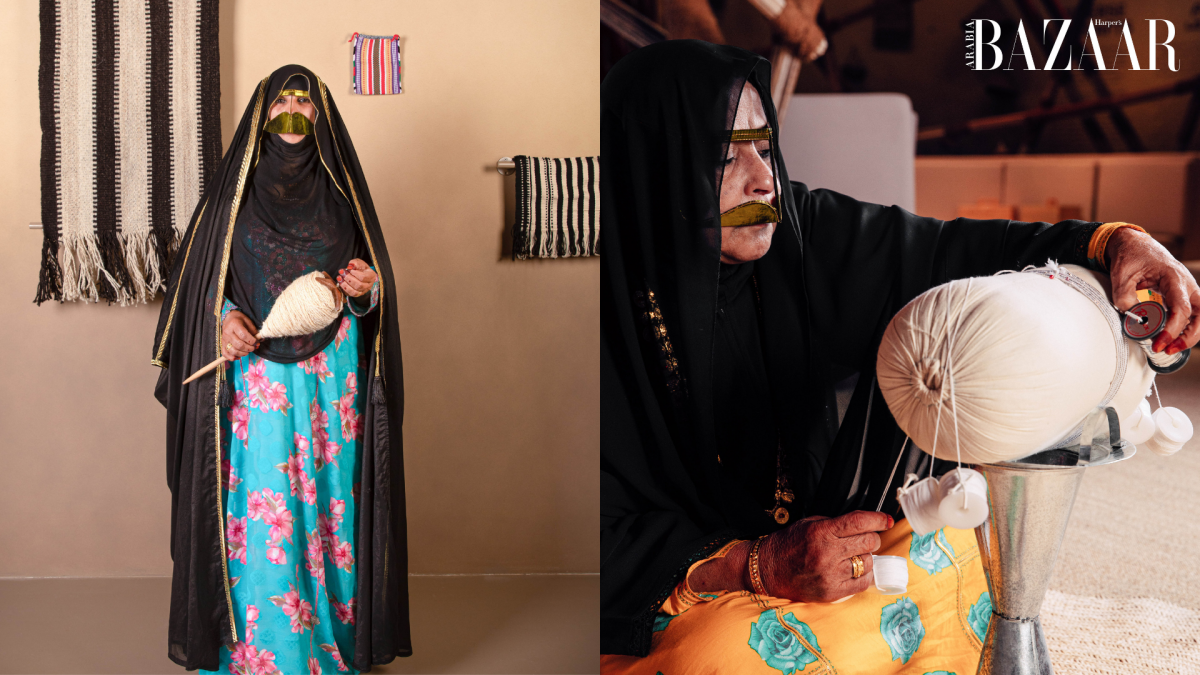
The Hand Of History: Introducing A House Of Artisans, Quite Like No Other…
Qasr Al Hosn’s House of Artisans changes your perspective on age-old Emirati craftsmanship, ushering the past into the present with a view of pushing it to the future
On the surface, American sneaker giant Nike, French fashion maison Chanel, luxury association Comité Colbert, and the ancient arts of Sadu, Talli, Khoos and Emirati embroidery may not appear to have much in common. They hail from different parts of the world, are seemingly aimed at widely disparate clients and encompass varied timelines, but Salama Al Shamsi, Director of Qasr Al Hosn, disagrees with this idea. “You see that at the end of the day, it’s all about human nature and beautifying elements within each authentic culture. You can see the similarities, and the passion and authenticity of each culture.”
She’s talking about House of Artisans – a strategic initiative launched under the umbrella of Qasr Al Hosn, to protect and conserve tangible Emirati cultural heritage – and the various collaborations that have brought the display to life, bridging the past with the present and tapping into the future.
CAPTURING THE ABU DHABI LANDSCAPE
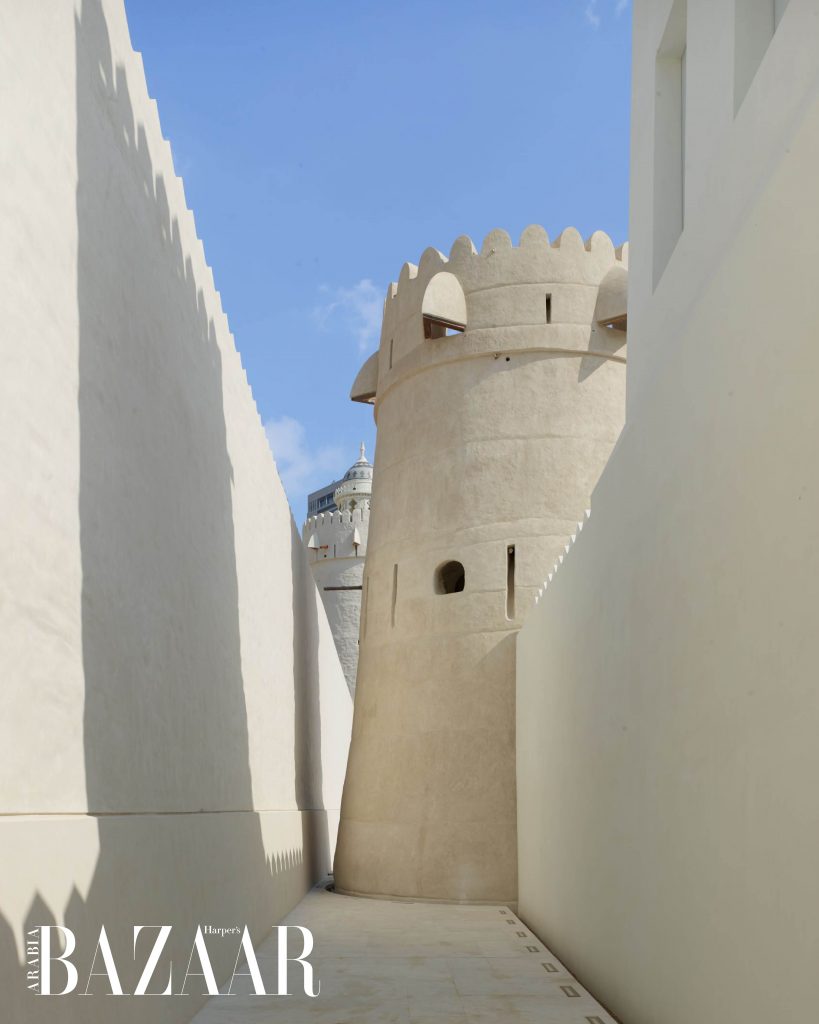
It seems entirely apt that Qasr Al Hosn, where the House of Artisans is based, is perched in the heart of Abu Dhabi. Its geographical location is a metaphor for its role and stature in the very fabric of the capital. Often touted as signifying the birthplace of Abu Dhabi, it seamlessly blends the past with the future, showcasing both the origins and the forward-thinking ethos of the country. And, in keeping with this ethos, Salama Al Shamsi explains, “The crafts that are currently highlighted in the [House of Artisans] exhibition are based on the genetic landscape of Abu Dhabi.”
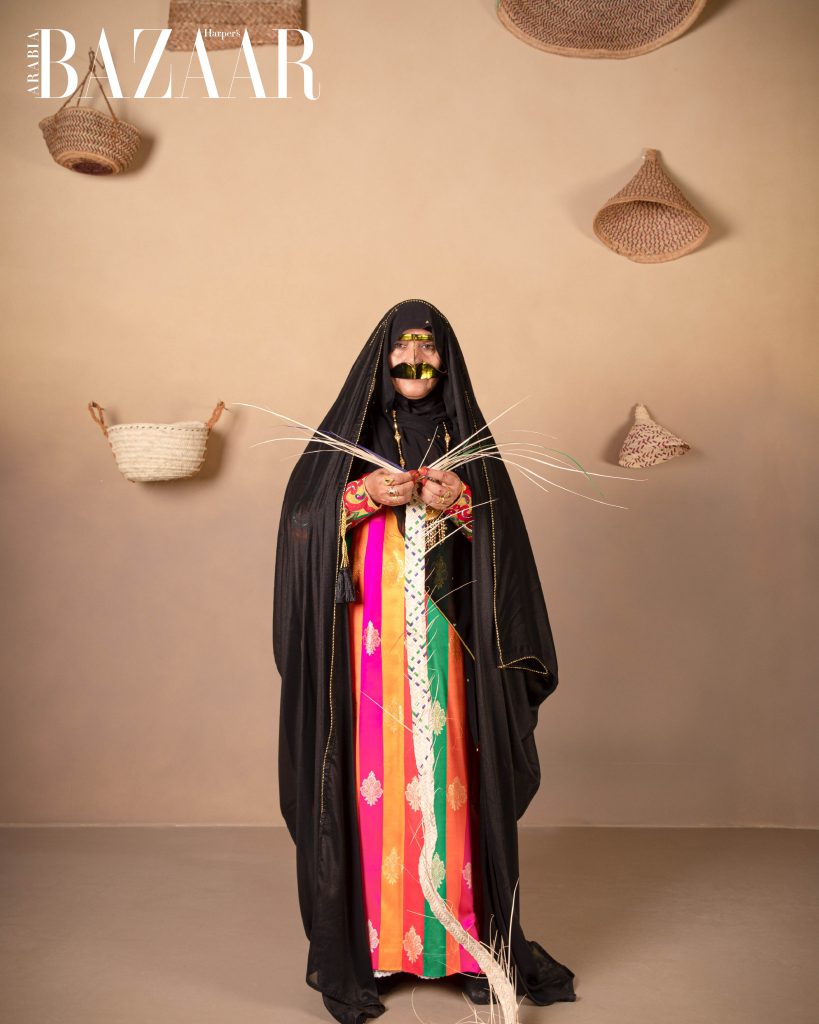
What can visitors who enter through the doors or sign up for a workshop or event expect to learn? You’ll be stepping back in time and immersing yourself in traditions like “Khoos, which is dried pulp-rind weaving. The oasis area of Liwa and Al Ain specialised in this.”
She then continues, “Sadu is covered by the desert landscapes of the Bedouin woman. It is made of animal hair, what they could have found from the natural resources within the area they lived in.”
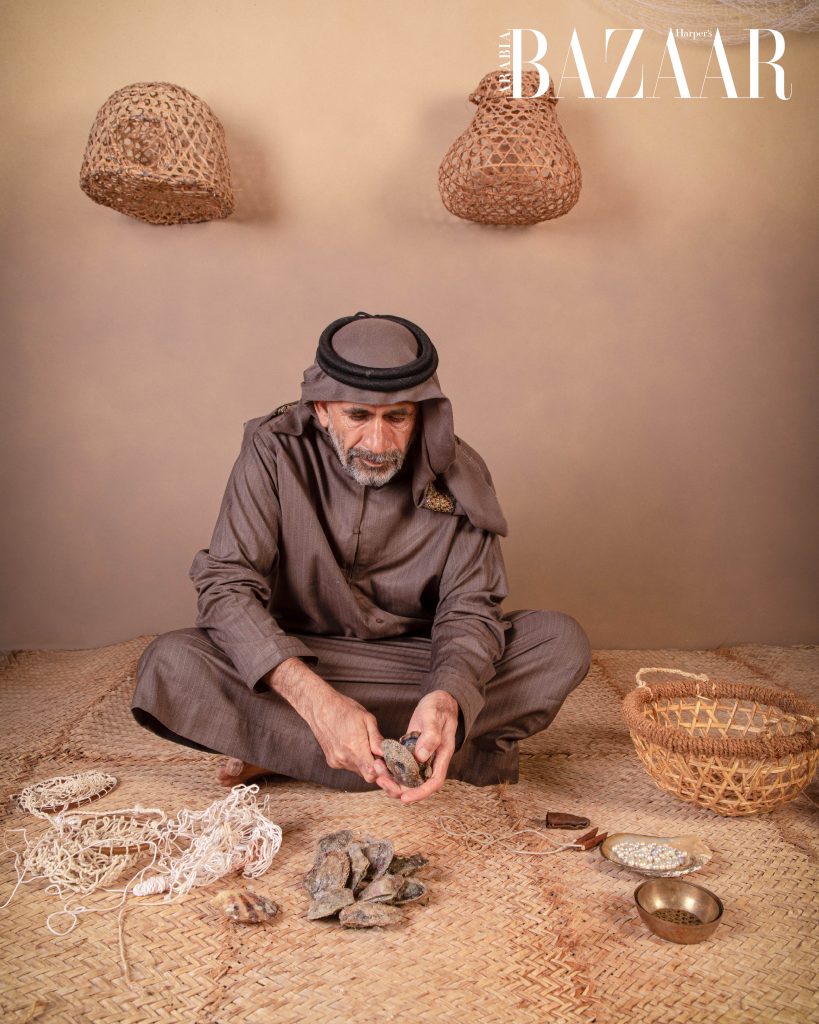
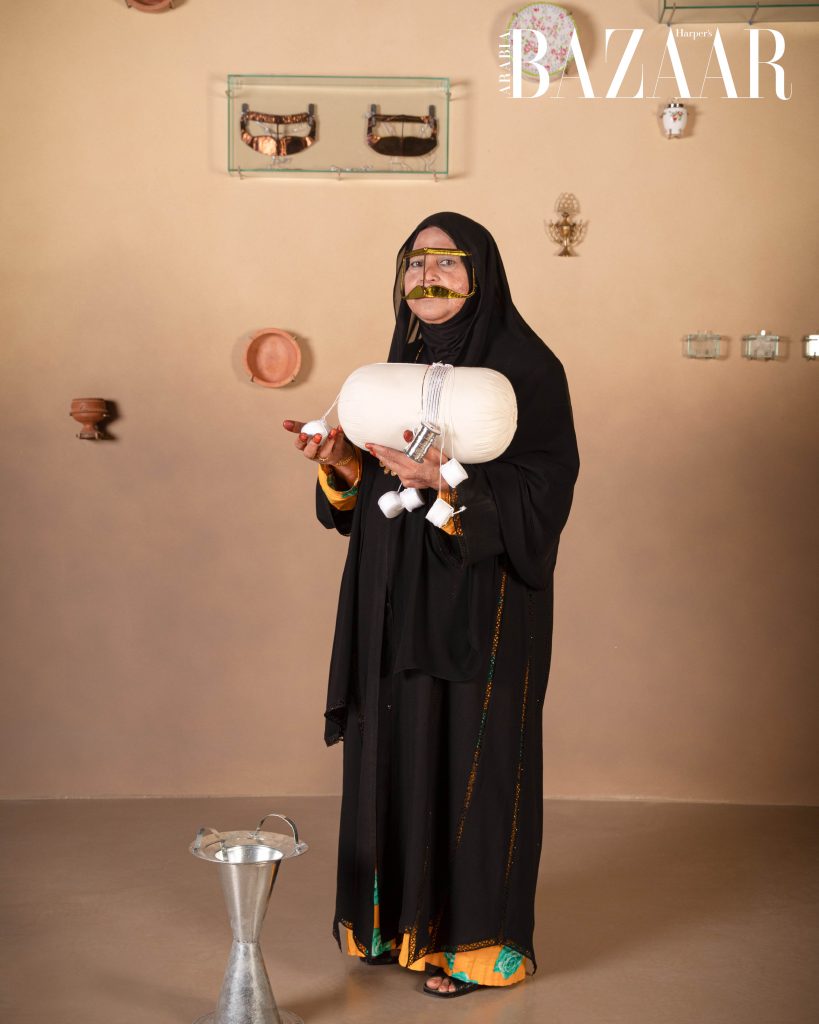
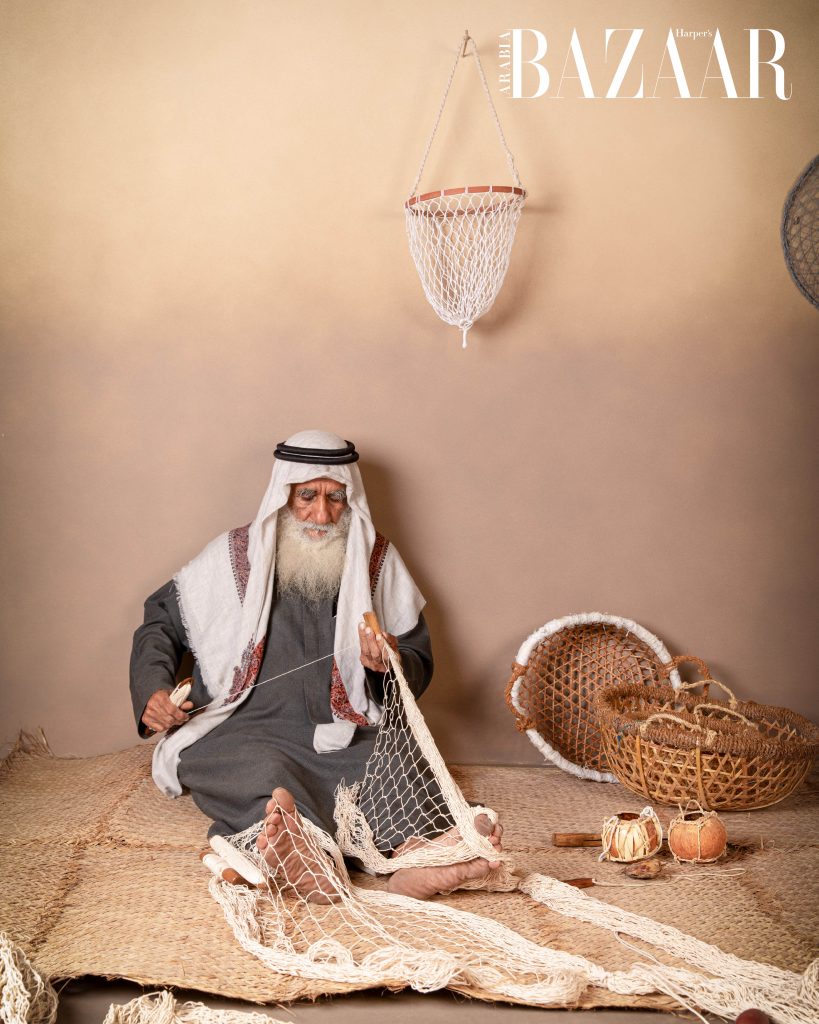
And “Talli, which is known by multiple people from the oasis and also people of the sea, which is the beautiful woven threads used to decorate or embellish a woman’s clothing and other forms as well. Of course, there are a lot of other crafts such as those connected with the maritime trade – making fish traps and nets, boat building – and culinary ones like spice and perfume making and adornments. All of them are mentioned within the exhibition.”
SHOW AND TELL, AND PRESERVE
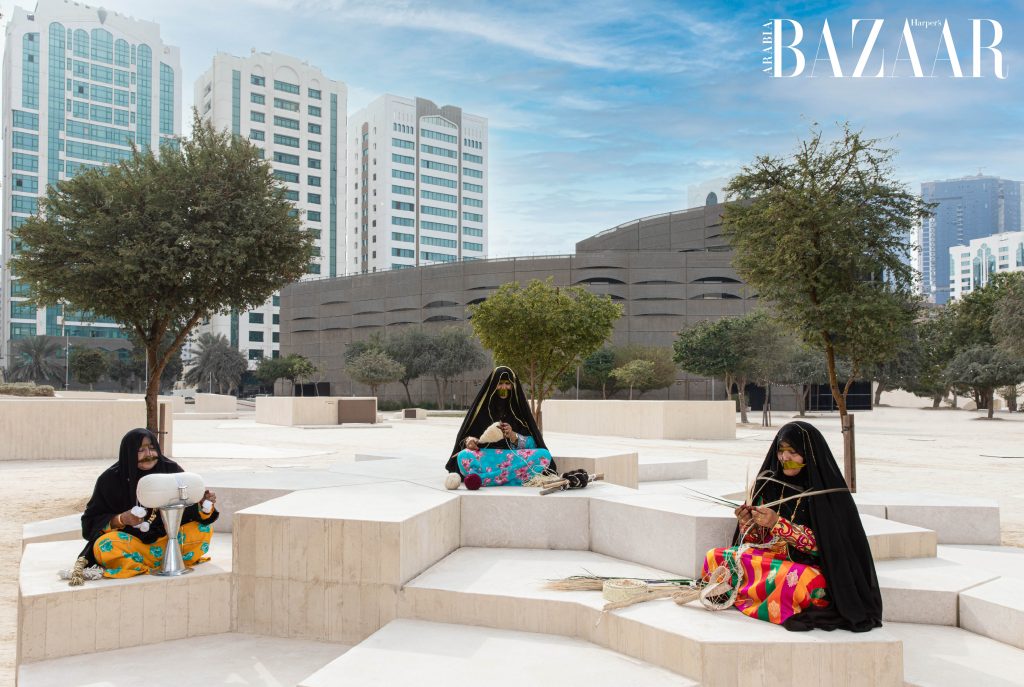
Although an important aspect of the showcase is to enlighten others and stress the importance of these traditions, preserving them is just as integral a focus. And for some, time is of the essence. Sadu is sadly already on the UNESCO List of Intangible Cultural Heritage in Need of Urgent Safeguarding. “Fortunately we still have authentic practitioners for every single craft,” Salama reassures us. “Some are less known than others, and some of them are more endangered than others. What we strive to do as part of our initiatives and programmes is to include younger artisans to practice their skill in the most authentic way.”
The Abu Dhabi Department of Culture and Tourism always has one eye on the future: “We try to move [the skill set] from one generation to the other through workshops and training. I think it is important to make it more available to different segments of the community, not just the artisans, but also people who are interested. I think it helps in disseminating and spreading the crafts in general.
One major initiative and something that we are concentrating on, is working very closely with educational institutions such as schools and universities in particular. We have already done some workshops with design students, and it counted as credits for their bachelor degrees. They were trained by artisans, and inspired by the designs to go and create something on their own. Passing on this cultural heritage to the younger generations and for it to be protected and preserved is key. I believe this is our legacy, but also, of course it needs to be present on a wider basis, locally, regionally, and internationally.”
BRINGING THE PAST TO THE PRESENT
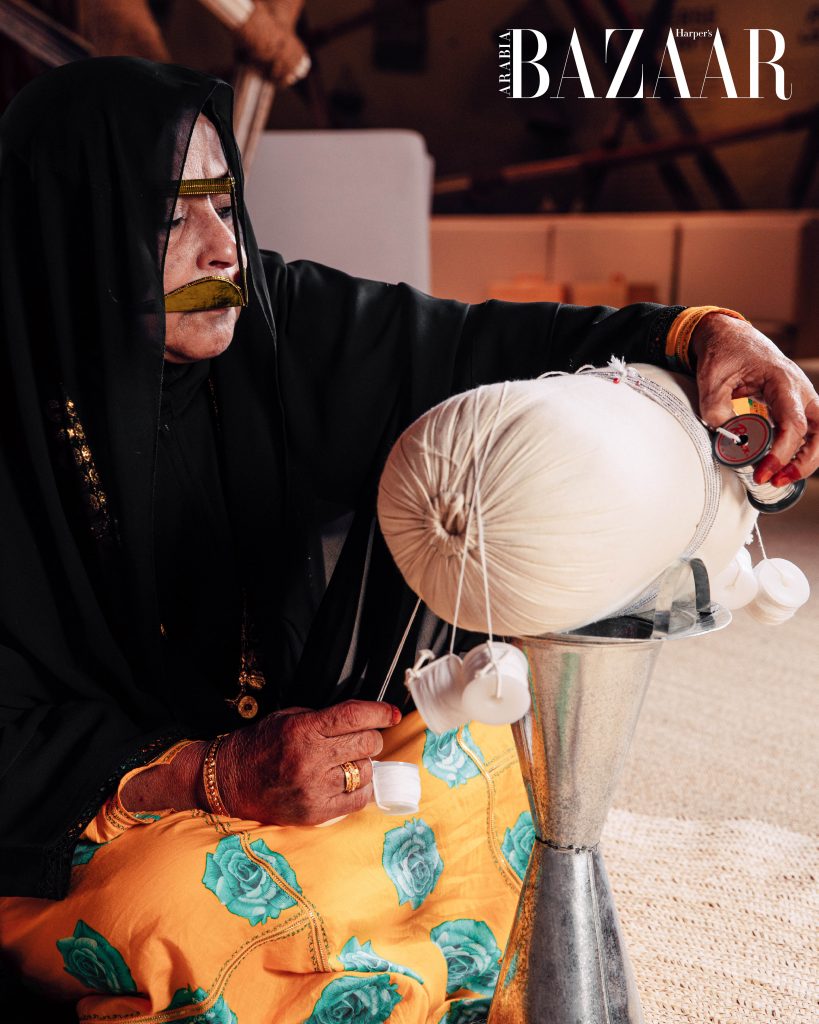
One of the biggest challenges faced by institutions throughout the globe is to make ancient skills relevant to current times. Why should we care about these crafts now? Constructing bridges through decades is essential. And that is where the House of Artisans’ innovative collaborations come into play.
The production team’s mission is to integrate these artistic practices into a line of covetable must-haves that fit today’s lifestyle. Looking for a canvas tote bag? They’ve created one with a Sadu shoulder strap. Even the most discerning dresser will choose one of their modern Sadu belts – perfect to cinch in a waist or draw in a skirt. From lanyards to baskets fashioned using Khoos – that are ideal for the beach – they’re marrying the techniques into objects that everyone from millennials to their parents will splash out on and sport.
They’re also appealing to the bespoke customer, someone who values skill and workmanship. Salama explains that they recently launched the more contemporary “House of Artisans on the beach in Mamsha Al Saadiyat. What we did is that we brought together an artisan who is a Khoos weaver, and a young artist who paints. And so you see the weaver creating the beautiful authentic baskets and then passing them on to the artist. Then the visitor would pick a pattern, perhaps something related to the sea or the beach, or even their initials, and they would ask the artist to paint it on a hat, or a basket or a bag, and then they would purchase it and of course, enjoy using it.”
Thinking out of the box also helps the cause. Who’d have thought of creating Nike sneakers with Sadu patterns, using Sadu materials? Or bringing in Comité Colbert, which heralds high-end French labels? “It was beautiful,” smiles Salama, recalling the event. “You can see the dialogue between French and Emirati artisans. They were all placed physically within one space. You see an Emirati Sadu specialist sitting next to the Hermès horse-saddle leather maker. And it’s very interesting to see them. This Emirati artisan is teaching the French artisan something and vice versa.”
And what about when intrinsic participants from the Chanel embroidery atelier were brought to Abu Dhabi to meet local Talli craftspeople? “So you see two artisans sitting next to each other and interacting – sometimes they won’t even understand each other because the Emirati only speaks Arabic and the guest speaks only French – but you really see that art and culture speak the same language. Even if it was via sign language, they would speak and understand each other. It was very harmonious, very beautiful.”
CAPTURING THE ZEITGEIST
It’s interesting that this initiative comes at a time when the world’s production processes are getting more and more polarised. You have fast, cheap fashion that is disposable on one side while the discerning are seeking out craftsmanship and technique, purchasing keepsakes that will last forever.
In that sense, House of Artisans has captured the moment. Yet it was actually ahead of its time, its finger on the pulse of something that hadn’t quite been realised when the idea came to fruition prior to COVID in 2019.
Salama asserts rightly, “All the brands are going back to this humble, natural material and putting them into the grandeur of fashion houses. Whether they are French or Italian – wherever they are from. So for me, I found it fascinating to see the usage of those materials back in fashion, back to the roots, and back to where it came from.
Crafts, whether it was a basket or a fan, or a piece of clothing, were all historically created by the artisans and by the people of the land for a need. It wasn’t a luxury item. It wasn’t something that would add to their lifestyle. It was a necessity.”
Tapping into another key driver currently in the industry, longevity, she gives us a lesson in history, stressing, “They used the materials they found in their landscape and took advantage of their natural resources. And, they use and reuse. Sustainability was key. So it’s good to see that those big brands are actually going back to these key materials and pillars.”
TRANSFORMATIVE ENCOUNTERS
How to measure success? That’s always a challenge, but when questioned about accomplishments, Salama immediately pinpoints an anecdote that illustrates how the exhibition has captured the audience’s imagination. “When people enter the exhibition, they don’t know what they are going to see. The first experience is that of sitting in a small dark room, as a film plays telling you a little bit of the history of crafts and how it’s evolved in Abu Dhabi. It’s very intimate. Then you immediately enter a completely different setting, a completely different experience, different lighting, and a different scheme as well. That’s when you actually enter into the main hall of the exhibition. There’s this key moment, and I love witnessing it.”
She smiles, “I swear to you that whenever someone enters you hear this, ‘Ahhh!’. They literally gasp. And you see their jaws dropping. Especially kids, they shriek with joy. I love this moment when they enter the exhibition, which they never expected after the small dark room. They will see this beautiful structure of the dried palm fronds that create the main pavilions of the exhibition. So, this moment in itself gives you this amazing feeling that you got it right.”
Not content to rest on their laurels, the team are always searching for ways to improve. Salama muses: “But you always have to be open to comments and to support from external sources which is even more important because we, the team, are embedded in it. We were there from the beginning. So sometimes it’s very good to hear fresh comments from the outside, and to fix it every now and then.”
A PERSONAL WALK DOWN MEMORY LANE
Qasr Al Hosn, the stone ‘palace fortress’ – the literal translation of the term – was first constructed in the 1790s as a watchtower to guard the area’s only freshwater source and trade routes. A masterful engineering project at the time, local indigenous materials such as shell, sand and coral were blended together to bring it to fruition, with its design facilitating winds to cool the interiors as an old-school form of air-conditioning.
Since those early days, the structure has been continuously expanded, changed and celebrated. It’s been a royal palace and home for the ruling Al Nahyan family, a seat of government, a museum, a living archive and today a destination for tourists and locals to relive the island’s roots. Following 30 years of work however, and a grand unveiling in 2017, the ‘white fort’ has now evolved into the space we see today.
The spotlight is firmly on the local way of life, with both visitors and locals relishing the opportunity to saunter in open public spaces, sip a cup of gahwa among the statuesque Ghaf trees and rediscover the heritage of what started out as a simple fishing and pearl-diving village. One day you could unexpectedly catch a traditional dabke dance in the plaza, and on another you could head into the museum and simply immerse yourself in the artefacts and exhibits that show the incredible journey this country has been on.
One thing is for sure, it’s truly a testament to its intrinsic importance that amid the sky-touching towers and gleaming glass facades of the ‘new’ Abu Dhabi, Qasr Al Hosn still stands tall as a living memorial for the city.
When asked about her personal memories of Qasr Al Hosn and its importance to her upbringing, Abu Dhabi native Salama doesn’t hesitate in reminiscing happily. “Right next to the fort in the Cultural Foundation building, I had my first piano lesson, I attended the first ballet show and I went to my first painting class. So, it had lots and lots and lots of memories. I remember getting out of the Cultural Foundation building after a painting class, and just looking on the left side and seeing this huge white building. And I would wonder, ‘What is that?’ When I grew up a little bit more, I understood that, okay, this is the most prominent historic building in Abu Dhabi,” she continues.
“I felt so proud that it was so accessible and so easy to see, just in the middle of the city. Between the hustle and bustle of the city and the buildings, you see this white fortress just sitting there. It was really like the protection of the city. It used to protect the city from the sea and from the land, but it was also the seat of government. It was where the city of Abu Dhabi started. The fort is very dear to every Emirati’s heart – in particular to everyone in Abu Dhabi’s heart – because it witnessed the development of the city. I actually attended and enjoyed the Al Hosn Festival in 2015 and 2016, not knowing that I’ll actually end up being part of the team!”
PRIDE OF A NATION
Is there a moment where she’s taken aback at the impact she’s having on the cultural landscape by preserving the nation’s heritage? “There’s something very touching when we have performances, programmes, outreach or those outdoor programmes.
You see those little kids coming in with their parents. And you see the whole family dressed up in the traditional Emirati clothing. You’d see the mother, the daughter, the sons – everyone would show off the most beautiful jalabiya or their most beautiful thobe. They would be adorned in authentic Emirati jewellery and the little boys with their sticks and their head pieces.
The Emiratis are coming in and feeling proud that they are within this space that is all about their culture and heritage and the history of their country. So for me, there are a lot of things of course that I feel very proud of, but seeing those families feeling proud of the place that they are in, being part of the experience and part of the development of this place – makes me most proud.”
Lead image caption credits: Left: Afra AlMansoori practising Al Sadu. Right: Haleema AlShehhi practising Talli
All images courtesy of House of Artisans
From Harper’s Bazaar Arabia’s December 2021 issue