
Maya Alison Believes Abu Dhabi Can Become A Cultural Capital On Its Own Terms
The Executive Director of The NYUAD Art Gallery and Chief Curator at NYU Abu Dhabi explains how it became possible
Centring The Middle East
When Maya arrived in Abu Dhabi from New York ten years ago, Saadiyat was a largely undeveloped island, and the UAE’s vision for it was just beginning to be realised. How times have changed. “Since then, 70 per cent of that idea has become a reality, so my journey has been one of understanding what makes a meaningful contribution to that vision – not only physically but also creatively, intellectually, socially and artistically,” she admits.
“We think of The NYUAD Art Gallery as an anchor institution for Saadiyat Island and Abu Dhabi. Why it’s important to do that here and why it’s meaningful, is asking ourselves; if we could do it anywhere then why are we doing it here?” She reveals, “Abu Dhabi is a unique place that makes looking at art its own experience. Where you look at art changes how you look at it. Recognising this shapes our mission.”
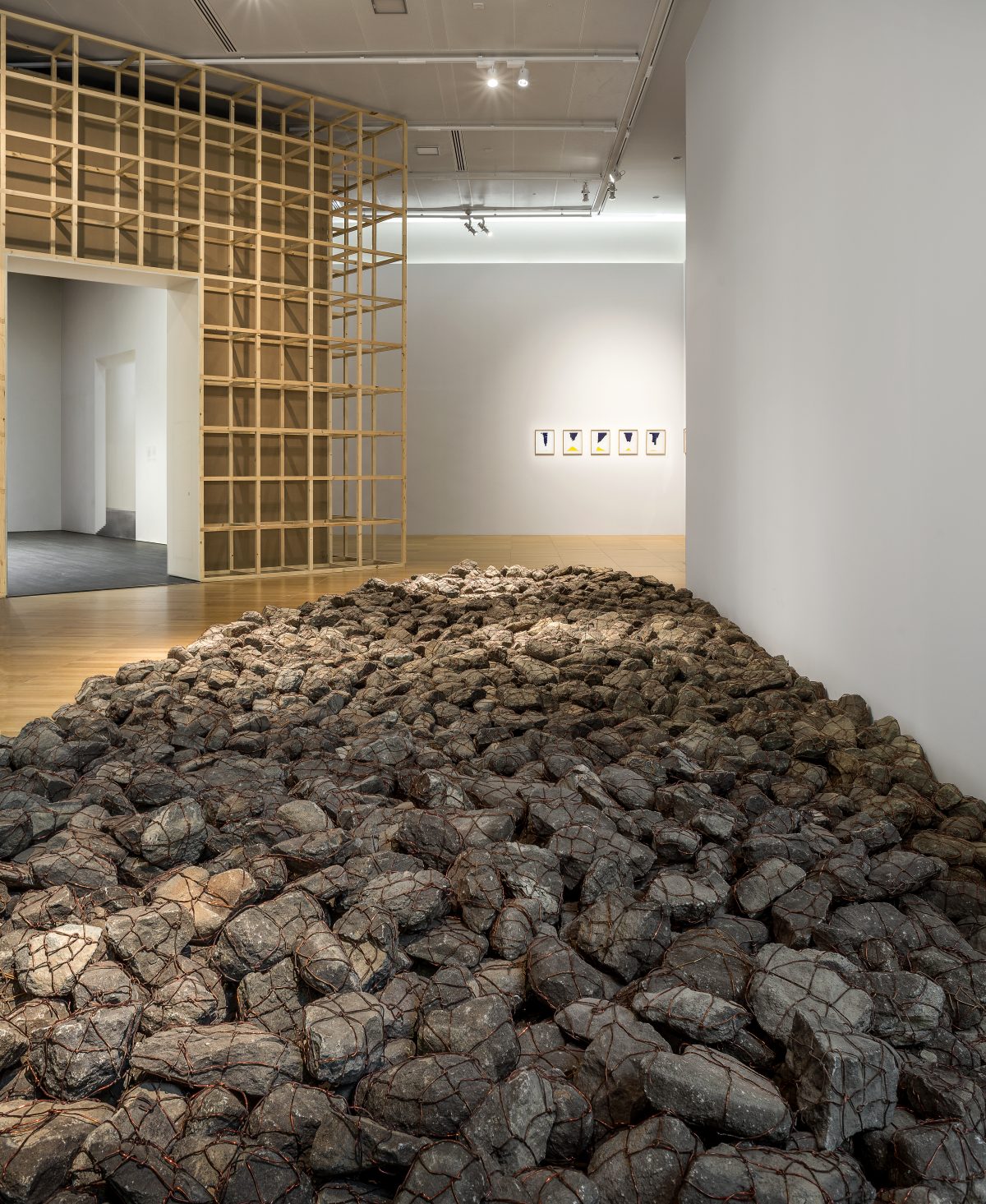
On Site: The Inaugural Exhibition in 2014 featured a work by Rashid Rana – an important artist from Pakistan – called A Room at Tate Modern. “When you walk in that scaffolding-type room, you see what looks like an empty gallery space. In fact, it’s a one-to-one photograph of a room at the Tate made into wallpaper, so it feels like you are in a simulated environment,” she recalls. “It is super-pixelated when you’re actually in the space, so it’s all blocky and from the distance, it looks like you’re in a gallery but when you get close, it dissolves.”
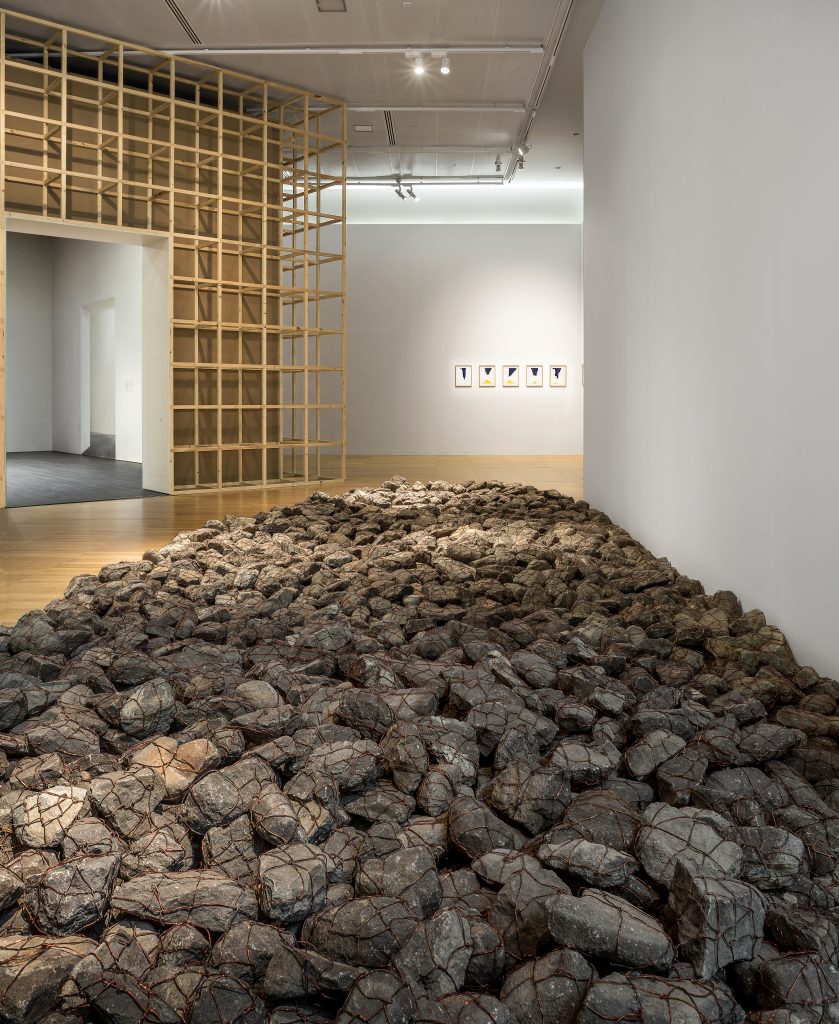
The Executive Director and Chief Curator first saw this installation in Dhaka, Bangladesh. “It has a lot of challenges economically and is about as far as you can get from the Tate,” she points out. “The place of the exhibition was at their art centre. It was ramshackle and beautiful, and built out in the style of a contemporary art gallery.”
Painting an evocative picture, she continues, “Inside this art centre was the giant Rashid Rana installation of the room at the Tate Modern which was jarring in the context of Dhaka. The exhibition doesn’t have a London or New York feel of an art gallery. And why should it? It shouldn’t. So it feels like a transplant already. It feels like a longing or an aspiration.”
The timing was serendipitous. “When I saw this piece, it was early 2014. We were just about to move to Saadiyat Island, and the Louvre was still under construction. The building was incomplete and they presented a vision of a future university and a future museum on a desert island. So if you take this piece and put it on Saadiyat, suddenly it becomes about the future museums and about building museums, whereas in Bangladesh, it was much more about the clash between European, North American art culture and arts in South Asia.”

Maya observes, “The framing of the pieces changes how you read the piece.” This was a discovery for her. “I saw this and I thought if we put it on Saadiyat Island, it becomes totally different. That is why I decided to open my first exhibition with this installation about the manifestation of a vision of a museum that’s not yet here. And for our first exhibition, what better way to talk about imagining something that is not here yet?”
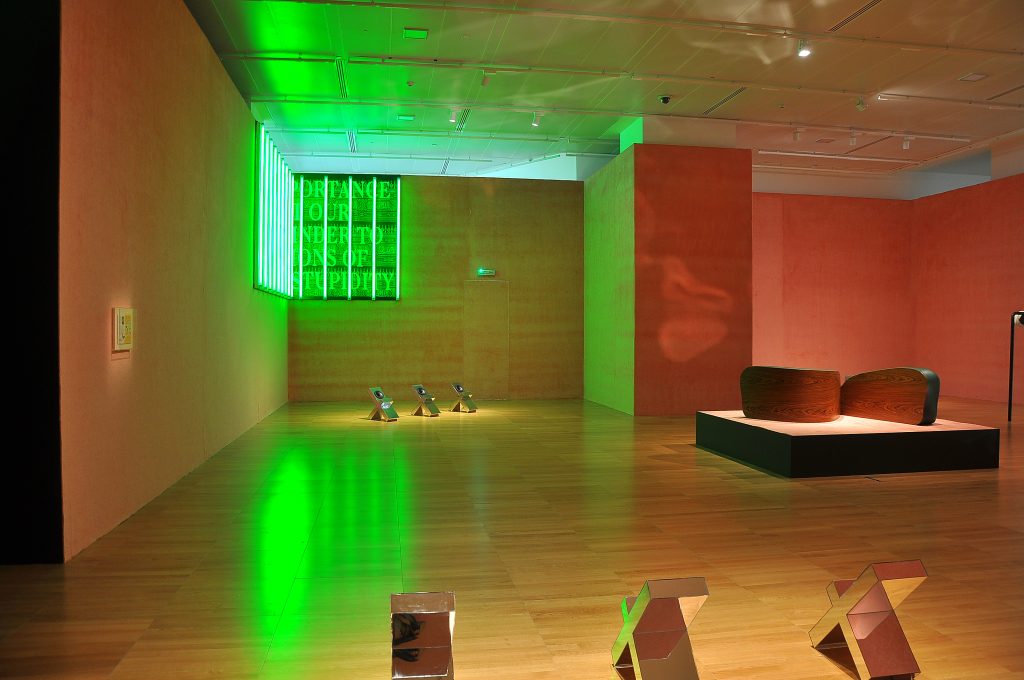
The NYUAD Art Gallery’s second show was Slavs and Tatars. “They’re a Polish-Iranian duo who bring a lot from their own heritage into the conversation and focus on Central Asia as their area of study,” she explains. “I realised that their work is usually seen by Europeans and North Americans. Even though they are working on Central Asia and the Middle East, mostly Islamic countries and their histories, they are viewed by an audience that doesn’t actually know that much about these countries or even about Islam.”
What struck Maya was this: “When you install it in Abu Dhabi, suddenly people have very strong opinions, whereas in the United States, a lot of it is lost on most of your audiences. Suddenly their work, which is very playful and light but also very academic, becomes a forum for all these other cultural tensions playing out. It became extremely exciting, not knowing what’s going to happen next. One of them gave a talk and people in the audience were getting into arguments about interpretations and events that happened 100 years ago.”
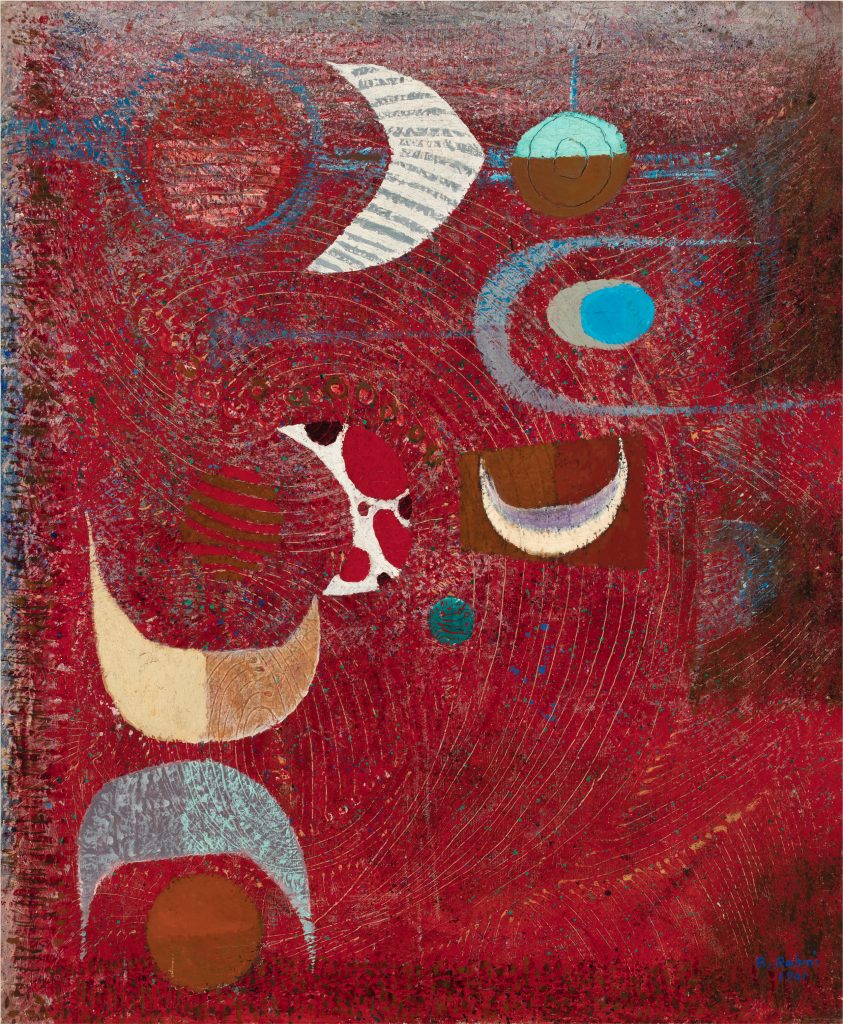
She notes, “That’s not something that would happen when they presented the same show at Kunsthalle Zürich. Instead people thought, ‘Look at this delightful, unexpected irreverent engagement with the Middle East, which we think of as having dark and dangerous connotations’. Instead, it is light and playful. That is the reading you get in what we call the West. Every time I bring something here, there’s a chance for the work to come alive on a different sort of register than you might see elsewhere. So for me, it changed the way I think about what I do for a living. The stakes are high in a way that make it really rewarding.”
How Do We Learn From Each Other By Looking At Art?
Maya’s work at the The NYUAD Art Gallery has shifted her perspective. “In the United States, you were surrounded by people who are more or less conversing in the same set of references. Even if they were from different cultures, they were still watching the same TV, or getting educated in the same language, or had a relatively shared political reality. Whereas here, we are experiencing many different realities happening at the same time. Here I feel a meaningful exchange, whether it’s cultural or not. It’s across many layers of interpretative differences. One of the unusual things about the Art Gallery at NYU Abu Dhabi – and I specifically designed it this way – is each exhibition is dramatically different than the last. We do this intentionally because the diversity of our exhibition programme makes many more conversations possible. If we only show one type of work, we only get one type of audience. So in this way, we activate as many types of audiences as we can. Our educational mission is not to educate others but to be educated together.”
Maya’s attitude to the way we look at art is refreshingly and generously open. Liberating the audience, she states, “Every visitor is allowed to have an opinion, more than allowed to, that’s the whole point. Your perspective is valid. Full stop. Whatever you bring to it. That moment when suddenly I watch people just open when they realise that it’s actually up to them. That permission to have a viewpoint is something that I think people don’t feel when they are in museums, as much as they could or should.”
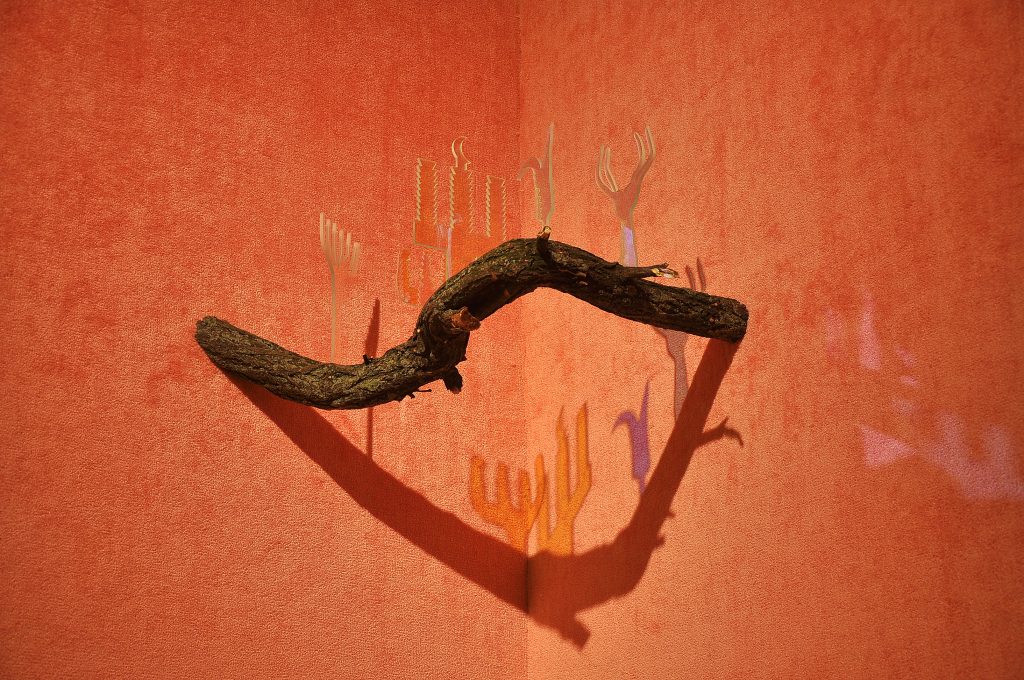
Maya explains, “I understand the person in the room with me from how we look at the art together. It opens up a dialogue and exchange that is unbelievably rewarding and exhilarating in a way that prompts me to wonder: when we talk about cultural exchange, what do we really mean? To me, one of the more exciting things is inviting audiences to be part of that conversation and making it clear that they are a crucial part of it. When I ask college students, ‘What do you see?’, they become more confident and start to see more connections. They start to take ownership. They have a stake in the exhibition narrative.”
She adds, “It also allows our audiences to feel like it’s theirs more than it is ours. It’s not my gallery, it’s your gallery, and it’s our gallery. I remember at Slavs and Tatars, an Arab student told me, ‘When I saw this, I realised that contemporary art is not just for foreigners, it’s also for me. There is a place for me here’. That was just unbelievingly moving for me.”
So how is this interpretative freedom shaping the next generation of Arab art enthusiasts? Maya reveals, “You hear this a lot. I’ve lived here ten years now and there’s always this sense of young Arabs not being represented in young popular culture in the same way as generic European or American, if you look at Hollywood for example. So having a voice and feeling that you belong in the narrative as part of the dialogue is a huge part of what the arts can do to make space for somebody’s voice.”
Towards The Decolonisation Of Culture
The author of many notable publications as a curator and editor, Maya expresses, “I was often asked before the Louvre opened how its arrival would transform the art scene. Yet the idea that the Louvre would change Abu Dhabi immediately sets up a binary between whether there is culture or there is not, and that the museum would somehow be a cultural mission. We want to avoid this framing, but we have to be conscious that there is a history of colonising and imperialism, where culture is imported and imposed. It’s not like the Louvre or NYU is the first Western institution to come and set up shop somewhere else, and that history comes with a host of associated challenges.”
This is a point on which Maya stands firm: “Abu Dhabi is not going to be like London or New York, nor do we want it to be. It is a push to invest and to build arts, culture and education and all that education brings with it, but it is not an aspiration to be like these other places. It is an aspiration to be its own city with its own value.”
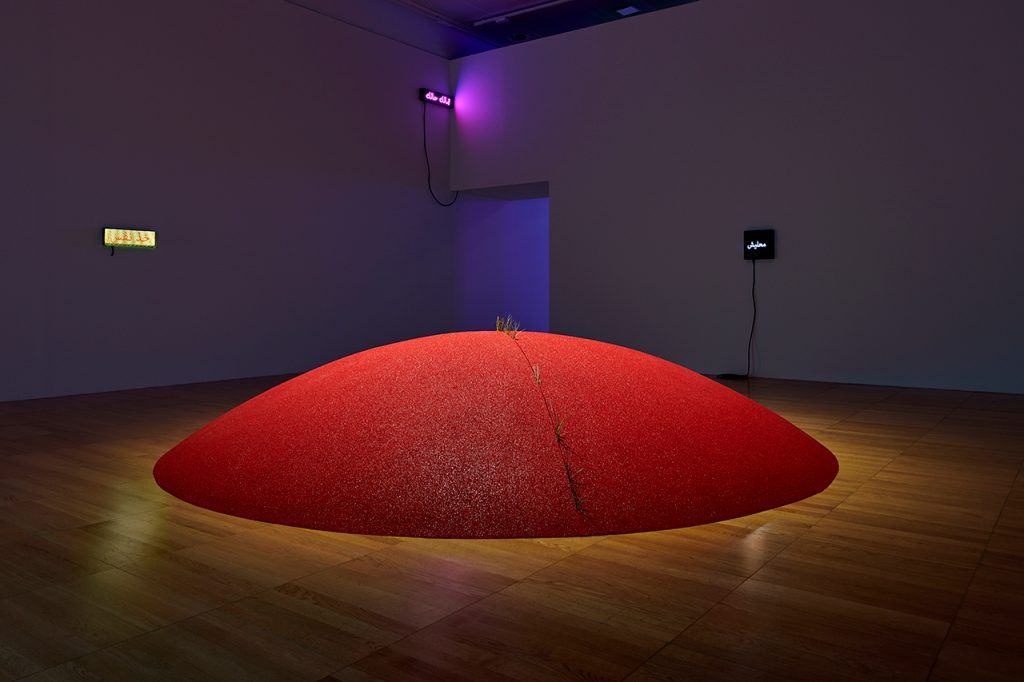
Illustrating how global institutions can rewrite the narratives rather than impose their own, Maya elaborates, “NYU Abu Dhabi developed a new kind of curriculum called The Core, but also rethought the mapping of the world. So the history department is not organised around continents, it’s organised around ocean systems. If you think of the Atlantic and the history, suddenly you are looking at the history of trade, including slave trade, migration from Europe and the UK, and also the history of the colonising of the Americas. Questioning how we think about something that we think we already know became embedded in the founding. They’re rethinking a university curriculum, decentred from the West.”
Maya adds, “Louvre Abu Dhabi is also rethinking how you present an exhibition narrative, so it is semi-chronological but by form and by function, rather than by region. If you think about the intellectual originality of the projects here, we’re not just copying and pasting Louvre or NYU. We have a chance to rethink the blueprint. That is the opportunity here that really has drawn some of the greatest minds to work on these questions.”
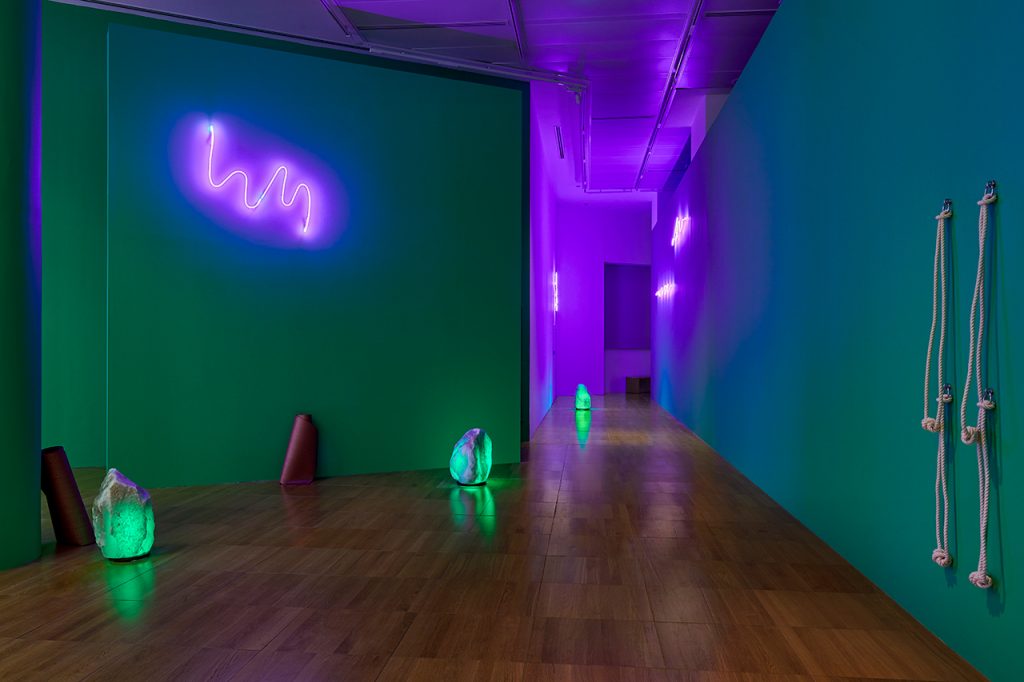
In an observation, the world would do well to remember, Maya concludes, “There is a story that is often missing when it comes to Abu Dhabi’s development. We hear the story very often with this binary, and it is almost never told as a story of gathering together from around the world to innovate to solve some of these deep issues that the whole world is grappling with: trying to figure out sustainability, and figuring out education that is not fundamentally biased towards a Euro-American narrative; trying to figure out museums that are inclusive. All of these questions are part of our thinking, as Abu Dhabi reinvents what it means to be a cultural destination.”
Words by Alison Tay
Photography by John Varghese, Augustine Paredes