
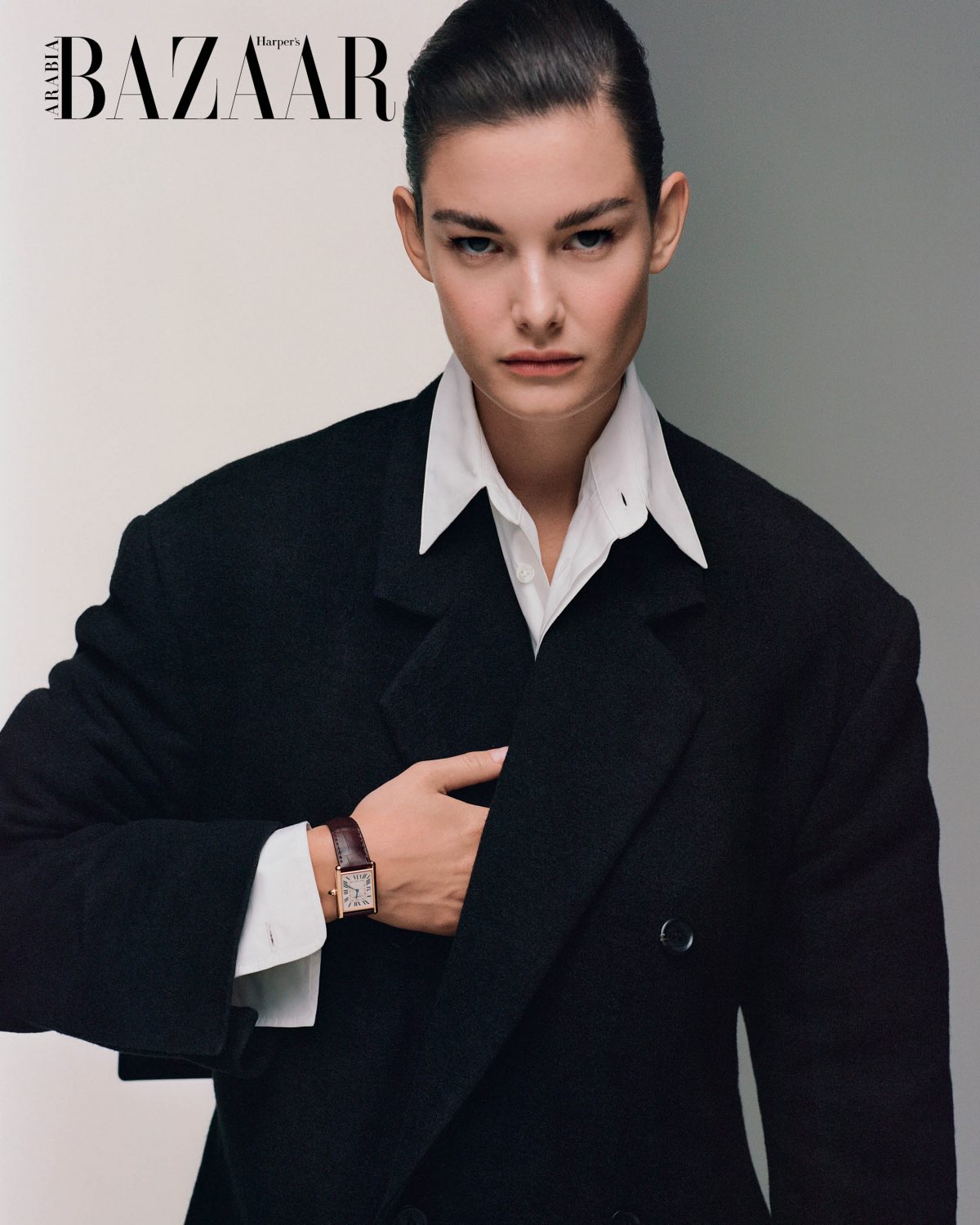
Eternal Classics: A Celebration of Cartier’s Most Cherished Designs
Harper’s Bazaar revisits some of the French luxury jeweller’s most iconic pieces that resist the vagaries of time, constantly evolving yet each remaining true to its unique, original vision
What makes a piece of jewellery iconic? It goes without saying that it must be beautiful, groundbreaking and inspirational. But above all else, an iconic piece is timeless, discovered afresh and given new relevance by each successive generation.
On these pages, our chosen models – young, diverse, cool–wear the new-season looks, accessorised with a selection of Cartier’s most celebrated pieces: the Tank, Ballon Bleu, Panthère and Santos de Cartier watches,theLoveandJusteunCloubracelets, and the Trinity ring. The aesthetic is effortless and edgy; who could believe that several of the designs were first created more than a century ago?
Pierre Rainero, Cartier’s director of image, style and heritage, says the secret of the pieces’ eternal appeal lies in their essential simplicity.
“It’s easy for the eye to catch, but simplicity is probably the most difficult thing to achieve in a design,” he says.

Cartier Juste un Clou Bracelets, Dhs26,100 each, all Cartier. Dress, POA, Gabriela Hearst. Shirt, POA, Dior
The Santos de Cartier watch is a case in point. The first modern wristwatch, it was created in 1904 by Louis Cartier for his friend Alberto Santos-Dumont, the pioneering Brazilian aviator, as a practical solution to the problem of having to look at a pocket watch mid-flight. Although it has been endlessly refashioned in different materials and with new straps, its geometric dial makes it instantly recognisable.
The Tank, too, was conceived more than a century ago, and named after the armoured vehicles that rumbled across the battlefields of WorldWarI, but the sleek linearity of its design has ensured a cult following ever since – its aficionados have included Yves Saint Laurent, Andy Warhol, Jackie Kennedy and Diana, Princess of Wales, all style icons in their own right.
And the Trinity ring, first sold in 1924, appeals to modern lovers by marrying purity of line with emotional significance. The three rings in different shades of gold symbolise friendship, love and fidelity, and are linked in such a way that they roll smoothly over each other, to give the wearer sensual as well as visual pleasure.
A different take on love was introduced by Aldo Cipullo in 1969. Adorned with screws and designed to be secured around the wrist with a screwdriver, the Love bracelet became a visual shorthand for lasting commitment, perfectly adapted to our Instagram age.
“Love was a design that clearly expressed the idea of permanent attachment to someone else,” says Rainero. “The fact that a piece of jewellery is adopted by new generations shows the relevance and the power of the design.”
 Panthère de Cartier Watch, Dhs76,000, Cartier. Jacket, POA, Skirt, POA, both Chanel
Two years later, Cipullo created Juste un Clou, a nail reimagined as a precious jewel to wrap around a wrist. When Cartier reintroduced the design in2012, it took off, beloved for its wit(what practical use does a bent nail serve?)and its industrial elegance. Though Rainero fears that “it may be too soon to call it an icon”, Juste un Clou fulfils all the criteria. It is unmistakable, intimate, easy to wear, and appeals to people of all ages, races, cultures and genders. For as Rainero points out: “Everybody is equal in front of a beautiful object.”
Words: Lydia Slater. Photography: Tina Tyrell. Creative Direction: Jen Brill. Styling: Elissa Santisi. Models: Amira Pinheiro and Ophelie Guillermand at Elite. Ash Foo at NYMM. Mia Brown at Next. Sasha Knysh at Muse. Hair: Tina Outen using Bumble & Bumble. Make-up: Raisa Flowers. Manicurist: Megumi Yamamoto for Susan Price NYC. Casting: David Chen Casting. Producer: William Galusha. Retoucher: Abby Harrison
From Harper’s Bazaar Arabia’s February 2021 issue